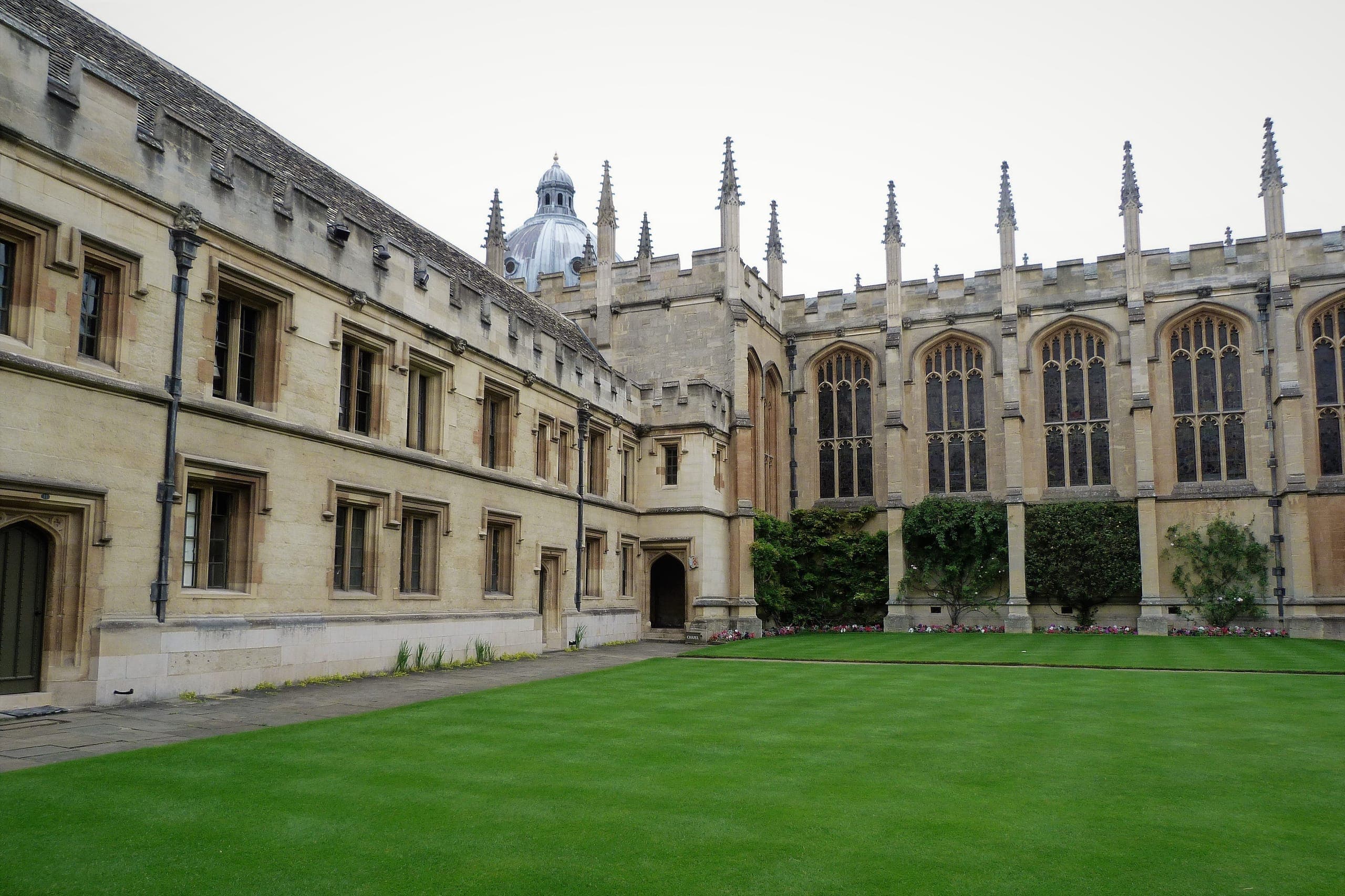
Complete Admissions Guide

Anglo-Saxon, Norse, and Celtic at Cambridge

Our students' Cambridge acceptance rate

65%

Average UK applicant rate

21%

Everything you need to apply for Anglo-Saxon, Norse, and Celtic at University of Cambridge: entry requirements, interviews, typical offers, and insider tips from Cambridge graduates.

Last updated: May 2026

Key Facts · Cambridge

  • A*AATypical Offer
  • 2:1Applicants / Place
  • 22Places / Year
  • 2, 25 min eachInterview
  • #1UK Ranking

Anglo-Saxon, Norse, and Celtic at Cambridge is a three-year BA with a typical A-Level offer of A*AA and UCAS code QQ59. For 2025 entry, Cambridge records 2 applications per place and 22 accepted students; there are no required subjects, but applicants submit two written-work pieces and Clare currently lists a College admission assessment.

01

Section 01

Why Anglo-Saxon, Norse, and Celtic at University of Cambridge?

Cambridge’s official page presents Anglo-Saxon, Norse, and Celtic as an interdisciplinary course covering history, languages, literature and material culture, and the first year has no compulsory papers.

The ranking caveat matters. ASNC is not consistently ranked as a standalone subject, so peer comparisons have to use the nearest published subject table rather than pretending there is a simple ASNC league table. In reality, the more useful comparison is academic fit: Cambridge is distinctive because the course lets you combine early medieval history, language, literature and manuscript work inside one named degree.

The first year has no compulsory papers, and students choose six subjects from a list of ten before being examined in four of them. That flexibility suits applicants who are not trying to choose between History, English and languages too early, but want a course where those disciplines meet.

How It Ranks Against Peers

  • Cambridge

    Guardian
    #3
    CUG
    #1
    Times
    #3
  • Oxford

    Guardian
    #2
    CUG
    #2
    Times
  • St Andrews

    Guardian
    #1
    CUG
    #3
    Times
    #1
  • Durham

    Guardian
    CUG
    #4
    Times

Ranks shown are UK subject-table positions from the three major UK guides. World rankings are not included — UK applicants compare using UK-focused sources.

02

Section 02

International Applicants

International Applicants

Country-specific admissions requirements

FijiTanzaniaW. SaharaCanadaUnited States of AmericaKazakhstanUzbekistanPapua New GuineaIndonesiaArgentinaChileDem. Rep. CongoSomaliaKenyaSudanChadHaitiDominican Rep.RussiaBahamasFalkland Is.NorwayGreenlandFr. S. Antarctic LandsTimor-LesteSouth AfricaLesothoMexicoUruguayBrazilBoliviaPeruColombiaPanamaCosta RicaNicaraguaHondurasEl SalvadorGuatemalaBelizeVenezuelaGuyanaSurinameFranceEcuadorPuerto RicoJamaicaCubaZimbabweBotswanaNamibiaSenegalMaliMauritaniaBeninNigerNigeriaCameroonTogoGhanaCôte d'IvoireGuineaGuinea-BissauLiberiaSierra LeoneBurkina FasoCentral African Rep.CongoGabonEq. GuineaZambiaMalawiMozambiqueeSwatiniAngolaBurundiIsraelLebanonMadagascarPalestineGambiaTunisiaAlgeriaJordanUnited Arab EmiratesQatarKuwaitIraqOmanVanuatuCambodiaThailandLaosMyanmarVietnamNorth KoreaSouth KoreaMongoliaIndiaBangladeshBhutanNepalPakistanAfghanistanTajikistanKyrgyzstanTurkmenistanIranSyriaArmeniaSwedenBelarusUkrainePolandAustriaHungaryMoldovaRomaniaLithuaniaLatviaEstoniaGermanyBulgariaGreeceTurkeyAlbaniaCroatiaSwitzerlandLuxembourgBelgiumNetherlandsPortugalSpainIrelandNew CaledoniaSolomon Is.New ZealandAustraliaSri LankaChinaTaiwanItalyDenmarkUnited KingdomIcelandAzerbaijanGeorgiaPhilippinesMalaysiaBruneiSloveniaFinlandSlovakiaCzechiaEritreaJapanParaguayYemenSaudi ArabiaAntarcticaN. CyprusCyprusMoroccoEgyptLibyaEthiopiaDjiboutiSomalilandUgandaRwandaBosnia and Herz.MacedoniaSerbiaMontenegroKosovoTrinidad and TobagoS. Sudan

Hover to preview · Click to draw route

Select a highlighted country to see the admissions-test, score, and English-language requirements that apply specifically to applicants from that country.

03

Section 03

Entry Requirements

  • A-LevelA*AA
    English (language or literature), History, Languages (ancient or modern) recommended.The 2027-entry requirements are currently subject to change and will be confirmed in May 2026. Some Colleges may set higher grades or specify an A* in a particular subject.
  • IB Diploma41-42 points, with 776 at Higher Level
    Some Colleges may make offers above the minimum offer level and may ask for 777 or a higher points total.
  • Advanced Placement (AP)At least five AP Test scores at Score 5, plus high passing marks in the school qualification and a high SAT or ACT score
    English, History, Languages (ancient or modern) recommended. SAT/ACT: SAT: at least 1460 combined with at least 730 Evidence-Based Reading and Writing for non-Science courses; ACT: 32 out of 36 for all other courses. SAT/ACT alone are not sufficient..AP Capstone is welcomed but is not usually required and usually does not count towards the five AP scores at Score 5.
04

Section 04

Application Process & Key Deadlines

  1. 01

    SPRING — SUMMER

    Build ASNC subject range

    Read across medieval history, literature and languages so your application shows breadth across the Anglo-Saxon, Norse and Celtic worlds. Start identifying school essays that could become submitted written work.

    Tip:Choose written work you would be comfortable discussing closely in interview.

  2. 02

    SEP — 15 OCT

    Finalise and submit UCAS

    Complete your UCAS application for Cambridge, including course code QQ59 and your College choice or an open application. Submit before the 6pm UK-time deadline.

    Tip:Do not wait until deadline day; school references and predicted grades need time.

  3. 03

    22 OCT

    Submit My Cambridge Application

    After UCAS submission, Cambridge sends instructions for My Cambridge Application. Complete it by 6pm UK time and upload any transcript if Cambridge asks for one.

    Tip:Use the optional Cambridge-specific statement only if it adds course-specific context that is not already in your UCAS statement.

  4. 04

    LATE OCT — NOV

    Submit written work

    ASNC applicants need to submit two pieces of written work. Your College will tell you how to submit them and the exact deadline.

    Tip:Keep clean copies and reread them before interview, because they may become discussion material.

  5. 05

    NOV

    Watch for interview invitation

    Most interview invitations are sent in November, though some may arrive in early December. The invitation explains timing, format, and any preparatory reading or College-arranged task.

    Tip:Check email and junk folders regularly and respond promptly to College instructions.

  6. 06

    7 — 18 DEC

    Attend Cambridge interviews

    The main interview period runs from 7 to 18 December 2026. For ASNC, plan for two subject-specific academic discussions of about 25 minutes each unless your College tells you otherwise.

    Tip:Practise thinking aloud with unfamiliar texts or historical/literary material rather than memorising scripted answers.

  7. 07

    MID — LATE JAN

    Winter Pool and decision release

    Some strong applicants may be considered by other Colleges through the Winter Pool, and a small number may be invited to an additional interview. Main-period applicants receive their decision on 27 January 2027.

    Tip:Stay reachable by phone and email in January until your decision is confirmed.

  8. 08

    5 MAY

    Reply to offers in UCAS

    If you receive all university decisions by 31 March, UCAS lists 5 May 2027 as the reply deadline. Cambridge offer-holders normally choose firm and insurance options by the UCAS deadline shown in their Hub.

    Tip:Check your own UCAS Hub because reply deadlines depend on when all your choices respond.

  9. 09

    12 AUG

    Results and confirmation

    A-level results are due to be available to students on 12 August 2027. Conditional offer-holders should check whether they have met their offer and follow Cambridge or UCAS instructions if there is any issue.

    Tip:Have College admissions contact details ready in case your results narrowly miss the offer or need clarification.

05

Section 05

Admissions Test

Cambridge currently lists a Clare-only College admission assessment for Anglo-Saxon, Norse, and Celtic in 2027 entry; there is no centrally registered ASNC provider test. The assessment is arranged by Clare if an applicant is shortlisted for interview there.

No advance registration is required for this College admission assessment, and no standard public modules are listed. The relevant College provides details if the assessment applies.

For international applicants, the practical point is simple: do not prepare for a central ASNC test unless Cambridge or your College tells you to. If you apply to Clare and are shortlisted, treat any College assessment as another way to show close reading, argument and response to unfamiliar material.

06

Section 06

The Interview: What to Expect

Invitation → Decision: the interview timeline

Interview Invitation

Late Nov

Arrival to Interview

Early Dec

Technical Question

Mid Dec

Decision

Early Jan

Question Types You’ll See

Discussion of submitted essays or schoolworkResponse to unseen or pre-interview reading materialQuestions linking personal-statement interests to broader ASNC themesComparison of historical, linguistic or literary evidenceFollow-up prompts testing how the applicant revises an argument

The interview is a supervision-style academic discussion, not a recital of memorised facts.

Expect follow-up questions, including prompts that test how you revise an argument. The sample question types include discussion of submitted essays, response to unseen or pre-interview reading, personal-statement links, and comparison of historical, linguistic or literary evidence.

We recommend preparing by practising short, evidence-led discussion rather than scripting answers. It helps to take one passage, object, place-name or historical claim and ask: what is the evidence, what are its limits, and what alternative interpretation could a tutor reasonably test?

Practise with realistic questions from our free Anglo-Saxon, Norse, and Celtic mock interview bank.

Free Mock Questions
07

Section 07

How Decisions Are Actually Made

Weighting of Admission Factors

100%

  • Admission Test35%
  • Interview30%
  • Predicted Grades20%
  • Personal Statement10%
  • Contextual Factors5%

Indicative — exact balance varies by college and year.

Cambridge Colleges make ASNC decisions holistically, using interview performance, academic record, submitted written work, the personal statement, My Cambridge Application, reference, contextual data and any relevant assessment.

For ASNC, submitted written work matters because applicants must provide two pieces, and those pieces give tutors direct evidence of analytical writing, argument structure and subject engagement. The interview then tests whether the applicant can discuss that kind of material actively rather than simply reproduce a finished essay.

In reality, the best applications usually make the same academic case in several ways: grades show attainment, written work shows argument, reading shows curiosity, and interview discussion shows how the applicant thinks under guidance. That pattern is more persuasive than trying to manufacture a single dramatic hook.

08

Section 08

Personal Statement Tips

For Anglo-Saxon, Norse, and Celtic, the personal statement should not read like a general love letter to the Middle Ages. Use 2 or 3 precise examples: a text, a historical problem, a language feature, a manuscript, a place-name, or an object that made you think differently.

The course has no required A Level subjects, but Cambridge recommends English language or literature, History, and ancient or modern languages. That means the statement has to show subject readiness through the way you handle evidence, not through a single compulsory school syllabus.

It is worth connecting your reading to the structure of ASNC. The first-year course is deliberately broad: students choose six subjects from a list of ten and are examined in four, before later specialisation. A good statement can show why that mix matters to you without repeating the whole paper list.

See a full annotated example with line-by-line expert commentary.

Anglo-Saxon, Norse, and Celtic PS Example
09

Section 09

Supercurriculars & Competitions

Projects

A useful ASNC project should give you something specific to discuss: a passage, source problem, translation difference, object, manuscript image, place-name cluster or historical claim. Keep the scale small enough that you can explain the evidence accurately.

How to present a project:

  1. Why you did it.
  2. What the project is.
  3. How you did it.
  4. What went wrong.
  5. What you did about it.
  6. What you learned.
  • Compare one early medieval text across translations and contexts: Choose a short passage from Beowulf, an Icelandic saga, the Táin, Bede, or another early medieval source. Compare two translations, identify where interpretation changes meaning, and research the historical or manuscript context behind the passage.
  • Build a small place-name, manuscript, or inscription case study: Use a reliable dictionary, manuscript catalogue, museum record, or ASNC school resource to investigate a cluster of names, objects, or texts. The aim is not quantity, but a clear explanation of what the evidence can and cannot show.
  • Test a Viking Age claim against different kinds of evidence: Start with a common claim about the Viking Age, such as raiding, trade, settlement, conversion, or kingship. Compare a chronicle account, archaeological object, saga passage, coin, or place-name, and write a short source-criticism reflection.

Other Supercurriculars

Other supercurriculars should support the same core evidence: curiosity, close reading, language interest and historical judgement. They do not need to be rare or expensive.

  • Primary-source reading notebook: Keep brief notes on translated primary sources, focusing on what the source says, what its limits are, and what questions it raises.
  • Language taster work: Try beginner resources in Old English, Old Norse/Icelandic, Latin, or a Celtic language. The goal is to demonstrate curiosity about language structure, not to become fluent before applying.
  • Museum and manuscript exploration: Use the British Library, museum collections, digitised manuscripts, coins, or inscriptions to practise connecting material evidence with historical interpretation.
  • Essay-prize preparation: Use humanities essay competitions to practise forming a precise question, using evidence carefully, and sustaining an argument beyond the school syllabus.
  • Lecture, podcast, and video reflection: After each lecture or podcast, write down the scholar’s argument, one piece of evidence used, and one question you would ask in a supervision-style discussion.

These are support, not substitute. One carefully reflected activity beats a long list with no argument.

Competitions

Competitions are not required for ASNC. What they do well is stretch your ability to form a question, structure an argument and handle evidence beyond the school syllabus.

  1. Oxford academic competitions for school-aged students tests Independent research, essay structure, and subject curiosity across humanities and related fields. Prepare by: Choose an early medieval, literary, linguistic, or historical question where possible; read beyond introductory sources and practise answering the exact question rather than writing a general topic survey.
  2. John Locke Institute Global Essay Prize tests Original argument, critical reasoning, clarity of expression, and engagement with difficult conceptual questions. Prepare by: Select a humanities-adjacent question, define terms carefully, and use examples from literature, history, language, or culture to support a focused argument.
  3. Trinity College Cambridge Essay Prizes tests High-level essay writing, independent reading, and analytical ambition for sixth-form applicants. Prepare by: For ASNC, prioritise prizes with historical, literary, linguistic, or cultural themes and show evidence-led argument rather than broad storytelling.
  4. Robson History Prize tests Historical argument, use of evidence, and ability to write a substantial essay in response to a set question. Prepare by: Practise building a thesis from primary and secondary evidence; where possible, connect medieval examples to the question without forcing relevance.
  5. Armstrong Arts and Humanities Essay Competition tests Broad arts-and-humanities thinking, research, essay structure, and interpretive judgement. Prepare by: Use the competition to practise interdisciplinary thinking, especially links between language, history, literature, religion, identity, and material culture.

None are required; one or two done well beats five half-attempted.

10

Section 10

Course Structure

  1. Year 1: Part I foundations

    Core disciplines without compulsory papers

    Students begin across the historical, language and literature strands that form Anglo-Saxon, Norse, and Celtic. There are no compulsory papers: students choose six subjects from a list of ten and are examined in four of them.

    No compulsory papers; a choice-led foundation year.

  2. Year 2: Part I continuation and breadth

    Continue or replace papers

    Students can continue with the six subjects chosen in Year 1 and take examinations in all six. Alternatively, they may replace up to three of those subjects with a dissertation and/or one or two papers from related undergraduate courses.

    Ability to replace up to three first-year subjects with a dissertation and/or related-course papers.

  3. Year 3: Part II advanced specialisation

    Advanced papers and dissertation

    Students use the skills developed in Part I to work in more original and specialised ways. They study four subjects selected from a range of 17 papers, with some scope to substitute a paper from another related undergraduate course, and every student writes a 9,000 to 12,000-word dissertation.

    Compulsory independent dissertation within the scope of Anglo-Saxon, Norse, and Celtic.

11

Section 11

Building Anglo-Saxon, Norse, and Celtic Knowledge

Start with Cambridge’s own ASNC introductory reading list, because it anchors preparation in the course’s actual fields. Higham and Martin J. Ryan, and Early Medieval Britain, c. 500–1000 by Rory Naismith as useful starting points.

For the Norse side, The Viking World and Chronicles of the Vikings give you ways into Viking Age evidence and source-led discussion. For the Celtic side, Wales and the Britons, 350–1064 is listed as useful preparation for early medieval Britain beyond England.

Language tasters help because ASNC includes Old English, Old Norse, Medieval Welsh, Medieval Irish, Medieval Latin and Palaeography among first-year options. Old English Online is a beginner route into Old English, while Icelandic Online supports early interest in Old Norse and Icelandic saga culture.

For listening and video, Saga Thing is useful for saga culture, In Our Time models evidence-led academic conversation, and the British Library channel is useful for manuscripts and medieval collections.

12

Section 12

College Choice & Reallocation

29 colleges offer this subject. 25% of applicants submit an open application. 19% of places come through the pool.

College choice affects where an applicant is assessed, accommodation and welfare setting, College-specific entry conditions, and the style of written-work or assessment instructions.

It does not change the ASNC course content, lectures, degree title, or access to the University’s academic resources. Choose a College that fits your needs rather than trying to game admissions statistics.

Cambridge uses the Winter Pool so that strong applicants are not disadvantaged by applying to a College with more competition in that subject.

13

Section 13

Career Prospects

Where graduates of this course head after leaving — by sector, as reported in the university’s destinations survey.

01020304039%
Further study
13%
Research
9%
Communications
3%
Information technology
3%
Publishing
3%
Charity sector
30%
Other destinations / not specified in published ASNC sector list
% of graduatesSector

Full employer lists, median salary bands, and sector notes live on the careers data page.

Cambridge course and careers sources present ASNC as a broad humanities degree: many graduates continue to further study, while others enter research, communications, IT, publishing and charity work. The official undergraduate page also lists museums and libraries, journalism, publishing, banking, law, the Civil Service, industry and business, and software development.

The useful career point is not that ASNC trains for one job. It develops close reading, language learning, historical analysis, evidence-based argument and clear communication. As careers-planning advice, treat those transferable skills as a base and build internships, writing samples or sector exposure alongside the degree.

14

Section 14

Contextual Circumstances

Cambridge says admissions decisions consider academic record, reference, personal statement, submitted written work, any written admissions assessment, contextual data and interview performance, with academic ability and potential central to the decision.

For 2027 entry, disruption or extenuating-circumstances information should normally be included in the UCAS reference or submitted to the relevant College by 22 October 2026 for October applicants, unless later circumstances arise.

Because ASNC is rarely taught as a school subject, contextual assessment should focus on transferable humanities preparation: analytical writing, close reading, historical reasoning, language aptitude and independent subject exploration.

Watch & Learn

Helpful Videos for Anglo-Saxon, Norse, and Celtic at Cambridge

Student vlogs, mock interviews, lecture tasters, and admissions advice.

ASNC: Anglo-Saxon, Norse and Celtic at Cambridge

Official Cambridge overview of the subject and what studying ASNC involves.

Anglo-Saxon, Norse and Celtic at Cambridge

A Cambridge subject video introducing the course and its academic range.

Studying Anglo-Saxon, Norse and Celtic at University of Cambridge

Homerton College subject-focus session for prospective ASNC applicants.

Becky, Anglo-Saxon, Norse, and Celtic (ASNC) - 60 Second Subjects

Short student-facing video giving a quick view of the subject.

ASNC Masterclass with Dr Rory Naismith

Subject masterclass-style lecture content useful for applicants exploring ASNC academically.

All videos are the property of their respective creators.

Frequently Asked Questions

There is no centrally registered ASNC provider test. For 2027 entry, Cambridge lists a Clare-only College admission assessment; no advance registration is required, and Clare provides details if relevant.
Two pieces of written work are required. The College normally confirms the exact deadline, format, and submission process after the UCAS application is received.
No. Cambridge’s ASNC Department says no previous knowledge is expected. Applicants should instead show humanities ability, enthusiasm, analytical writing, and willingness to engage with unfamiliar languages and sources.
There are no required subjects. Cambridge recommends English language, English literature, history, and ancient or modern languages as useful preparation, but these are not compulsory.
The minimum offer is A*AA at A Level. The IB offer listed by Cambridge is 41–42 points overall with 776 at Higher Level.
Yes. International applicants use the same UCAS deadline as UK applicants and must complete the My Cambridge Application. They should check Cambridge’s country-specific qualification guidance, English-language requirements, and Student visa process early.
College choice affects accommodation, pastoral support, interview logistics, College-specific instructions, and sometimes offer conditions. It does not change the ASNC course itself, lectures, degree title, or access to University academic resources.
The ASNC Department lists destinations including graduate study, academia, publishing, banking, teaching, IT, film, marketing, public relations, journalism, law, and business. The degree develops close reading, language learning, historical analysis, and evidence-based argument.

Free Resource

Free Admissions Newsletter

Weekly tips on Anglo-Saxon, Norse, and Celtic admissions, application deadlines, and interview prep — straight from Cambridge graduates.

Get Expert Help With Anglo-Saxon, Norse, and Celtic at Cambridge

Book a free 30-minute consultation with one of our specialist tutors.

Get Started