

Year
01 / 04
1
Part I: language foundations
Intensive written and spoken study of chosen languages with introductory papers linked to East Asia or the Middle East.

Complete Admissions Guide
Asian and Middle Eastern Studies at Cambridge is among the most selective courses in the UK. Get 1-to-1 admissions coaching from Oxford or Cambridge graduates with subject-specific admissions expertise.
Last updated: September 2026
Key Facts
Overview
Asian and Middle Eastern Studies at Cambridge is a 4-year BA (Hons), including a year abroad, with a typical A-level offer of A*AA and UCAS code T620. Students choose their language route when applying; applicants combining AMES with a European language also need to plan for the College-arranged language assessment and submitted-work rules.
Why study Asian and Middle Eastern Studies at Cambridge?
The distinctive feature of this course is the language-combination structure. Students choose languages when applying, and the permitted combinations are defined in advance.
Section 01
Click your country on the map below for country-specific entry guidance - accepted qualifications, expected scores, English-language requirements, and any local context worth knowing before you apply.
International Applicants
Pick a highlighted country to see the admissions-test, score, and English-language requirements that apply for applicants from that country.
Section 02
| Qualification | Typical Offer | Key Requirements |
|---|---|---|
| A-Level | A*AA | A modern or classical language, History, English Literature recommended.Entry requirements are for 2027 entry or deferred 2028 entry and were subject to confirmation in May 2026 on the official page. Some Colleges may set higher offer conditions or specify an A* in a particular subject. |
| IB Diploma | 40–42 with 776 at HL | English (language or literature), History, Languages (ancient or modern) recommended at HL.Some Colleges may ask for 777 or a higher points total, and may require 7 in particular subjects. |
| Advanced Placement (AP) | 5 Advanced Placement (AP) Test scores at Score 5 | AP subjects related to languages, literature, history or other AMES-relevant areas recommended. SAT/ACT: Alongside APs, Cambridge usually expects a high score on the SAT or ACT. For non-science/non-Economics courses, the accepted qualifications page states SAT minimum combined 1460 with Evidence-Based Reading and Writing at least 730; the ACT guidance states 32 out of 36 for all other courses. US applicants are also expected to have a high overall GPA in the US High School Diploma..The course page itself links to other qualifications rather than listing AP details. The University-wide accepted-qualifications and USA international-entry pages provide the AP/SAT/ACT guidance used here. |
Section 03
Jun–Jul 2026
Open days & shortlist colleges
Visit Cambridge in person if you can. Open days run in late June and early July. Begin narrowing your college list and reading first-year reading lists.
Sep 2026
Draft your personal statement
Write for the subject, not the institution. Cambridge admissions tutors look for ~80% academic content and genuine super-curricular engagement.
15 Oct 2026
UCAS deadline
Submit your UCAS application by 18:00 UK time on 15 October 2026.
22 Oct 2026
My Cambridge Application deadline
Complete the My Cambridge Application supplementary questionnaire by 18:00 UK time on 22 October 2026. This replaced the old SAQ.
10 Nov 2026
Submitted written work deadline
Most arts and humanities courses ask for one or two pieces of marked school work. Each college confirms its exact deadline; 10 November is the standard date.
Dec 2026
Interviews
Around three-quarters of applicants are interviewed. Typically 1–2 interviews of 25–45 minutes each at your chosen or allocated college.
27 Jan 2027
Main decisions released
Cambridge releases its main decisions on 27 January 2027. Around a quarter of offers are made through the Winter Pool, strong applicants reconsidered by colleges with remaining places.
Jun–Jul 2026
Open days & shortlist colleges
Visit Cambridge in person if you can. Open days run in late June and early July. Begin narrowing your college list and reading first-year reading lists.
Sep 2026
Draft your personal statement
Write for the subject, not the institution. Cambridge admissions tutors look for ~80% academic content and genuine super-curricular engagement.
15 Oct 2026
UCAS deadline
Submit your UCAS application by 18:00 UK time on 15 October 2026.
22 Oct 2026
My Cambridge Application deadline
Complete the My Cambridge Application supplementary questionnaire by 18:00 UK time on 22 October 2026. This replaced the old SAQ.
10 Nov 2026
Submitted written work deadline
Most arts and humanities courses ask for one or two pieces of marked school work. Each college confirms its exact deadline; 10 November is the standard date.
Dec 2026
Interviews
Around three-quarters of applicants are interviewed. Typically 1–2 interviews of 25–45 minutes each at your chosen or allocated college.
27 Jan 2027
Main decisions released
Cambridge releases its main decisions on 27 January 2027. Around a quarter of offers are made through the Winter Pool, strong applicants reconsidered by colleges with remaining places.
Section 04

Asian and Middle Eastern Studies at University of Cambridge does not require a written admissions test for 2027 entry. Applications are assessed on academic record, personal statement, submitted written work (where requested), and interview performance.
Always verify on the official Oxford admissions tests page.
Section 05
Interview Invitation
Late Nov
Arrival to Interview
Early Dec
Technical Question
Mid Dec
Decision
Early Jan
Interview Invitation
Late Nov
Arrival to Interview
Early Dec
Technical Question
Mid Dec
Decision
Early Jan
Question Types You’ll See
Because applicants choose languages when applying, interview preparation should be tied to the exact language combination in the application. Cambridge describes interviews as academic conversations that help assess subject understanding, readiness for high-level study, critical and independent thinking, curiosity, and enthusiasm.
Most Cambridge applicants have 1 or 2 interviews lasting a total of 35 minutes to an hour, although the exact format depends on the College and course. For AMES, useful practice could include explaining why your chosen language combination makes academic sense, discussing a short source or translation issue, and connecting a regional historical prompt to something you have read.
Do not turn preparation into scripted mini-lectures. A stronger interview approach is to listen carefully, explain your reasoning, and be willing to adjust your view when the prompt or evidence changes.
Practice with realistic questions from our free mock interview question bank.
Free Mock Questions →
Section 06
For applicants combining AMES with a European language, the College-arranged assessment is considered alongside the rest of the application.
In practice, that means you should not optimise for one isolated component. A strong application normally has academic evidence, a specific language rationale, and enough independent reading to sustain a serious interview conversation.
Treat the personal statement, written work where requested, assessment where applicable, and interview as corroborating evidence rather than as separate hurdles with fixed scores.
Our recommendation · weighting of admission factors
Oxbridge Mentors recommendation, drawn from observed offer patterns. University of Cambridge does not publish official weightings - exact balance varies by college, course and year.
Section 07

Your personal statement should make the language choice feel deliberate.
A common weak version says that the applicant is interested in “culture” or “international affairs” without showing what they have actually studied. A stronger version names the questions, texts, periods, languages or regions that have started to shape the applicant's thinking.
For European-language combinations, it is worth showing continued engagement with the European language as well as the Asian or Middle Eastern route. That matters because European-language combinations carry additional subject, submitted-work and College-assessment requirements.
Reflection matters more than volume. For AMES, one precise discussion of a translation choice, a historical source, a literary passage, a language-learning problem or a regional debate is usually stronger than a long list of disconnected books and films.
Section 08
A good AMES project should give you something concrete to discuss. A focused question that connects language, text and context will usually be more useful than a broad topic such as “China” or “the Middle East”.
The project does not need to be complicated. It needs a clear question, a method, and a point at which you changed your mind.
Possible project ideas include comparing two translations of a short text, tracing one political or religious concept across several sources, or building a short annotated reading list around one period, author or region. Keep the scope small enough that you can talk about evidence rather than general impressions.

Section 08
Other supercurricular work should support the same academic thread as the application. It helps to build a reading record that connects language learning with history, literature, religion, politics or anthropology.
These are support, not substitute. They only help if they sharpen the academic case in the rest of the application.
Keep a short vocabulary-and-context notebook for the language route you plan to study.:
Read one introductory history alongside one primary text or translation.:
Compare how 2 academic writers interpret the same event, text or concept.:
Watch lectures only when you take notes and turn them into questions.:
Practice explaining one difficult idea in 3 minutes, then in 30 seconds.:
Section 08
Competitions are not required. What they can do well is stretch your ability to write, argue and think under constraints.
For AMES, a competition or essay is most useful when it strengthens the same language-and-region thread as the application. A tightly argued essay on one source, translation issue, historical debate or cultural question is more persuasive than an unrelated certificate.
None are required; one or two done well beats five half-attempted.
Section 09
Year
01 / 04
1
Intensive written and spoken study of chosen languages with introductory papers linked to East Asia or the Middle East.

Year
02 / 04
2
Continuation of chosen languages with route-specific requirements and optional papers.
Year
03 / 04
3
At least 8 months abroad developing language skills and cultural understanding in the country or countries relevant to the course.
Year
04 / 04
4
Advanced language work, specialist papers and a dissertation.
Section 10
The preparation principle is to build evidence of sustained reading and language engagement. AMES is not just a general interest in travel or current affairs; it is an application to study languages, texts, histories and cultures in depth.
A useful reading record connects what you read to a question you could discuss at interview. For example, you might connect a translation problem to a historical context, or compare how two writers explain the same political, religious or literary concept.
The official course page lists possible language and subject routes including Chinese, Japanese, Arabic, Hebrew and Persian, with further options depending on the route. Use that structure to choose preparation that fits the route you are actually applying for, rather than building a generic humanities reading list.
For foundational reading, The Arabs: A History By Eugene Rogan covers the region from the Ottoman period to the present day, while Orientalism By Edward Said is essential for understanding how modern scholarship approaches the Middle East and Asia. For East Asian routes, A History of Chinese Civilization By Jacques Gernet is the standard historical survey.
For video lectures, SOAS University of London publishes academic talks on Asian and Middle Eastern languages, religions, histories and cultures. In Our Time Has authoritative episodes on Islamic history, Buddhism, Confucianism and key figures such as Avicenna and Saladin.
For language study, Duolingo Builds daily habits for Arabic, Japanese, Chinese, and Hebrew. For a more structured route into Classical Arabic, Introduction to Arabic Language and Culture on Coursera provides an accessible foundation.

Section 11
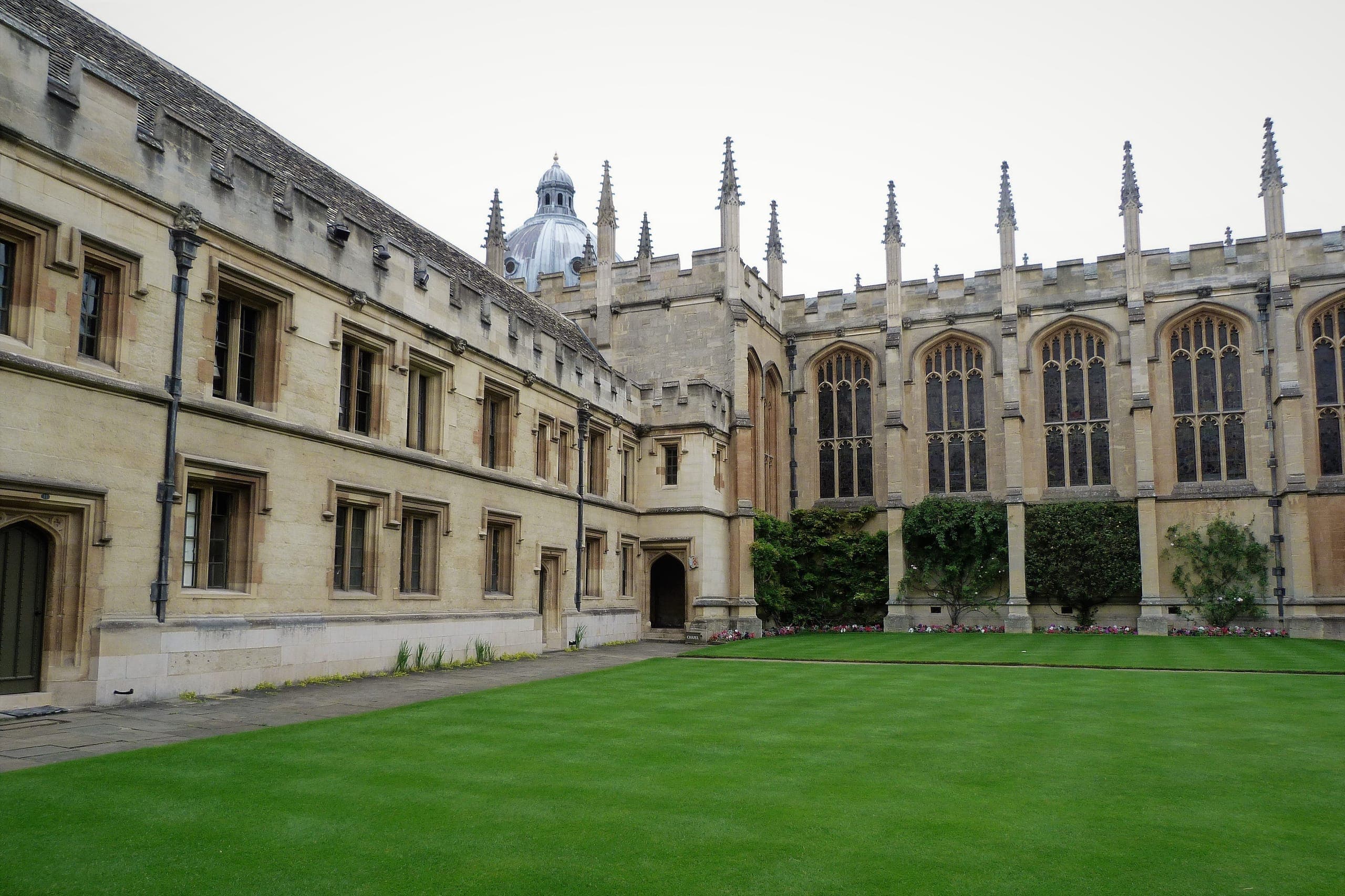
29 colleges offer this subject.
The official course page states that AMES is available at all Colleges, with Robinson College accepting applicants only for Chinese and Japanese. College choice therefore matters less as a shortcut and more as a practical fit, especially if your intended language combination has College-specific written-work or assessment details.
For applicants taking the conditional College admission assessment, the interviewing College arranges the assessment after shortlisting. If you make an open application, Cambridge allocates your application to a College rather than letting you choose one yourself.
Do not choose a College because you think it creates an easier route. Choose on practical and academic fit, then prepare an application that can stand up if it is read by more than one academic.
Section 12
The official Cambridge course page says AMES graduates develop skills including written and verbal communication, independent thinking, research, evidence interpretation, and creative problem solving. It also says many graduates use the subject directly in their career.
Graduate career choices listed by Cambridge include media, business and commerce, the Civil Service, tourism, teaching overseas, academia and non-governmental organisations. Cambridge also lists banking, marketing and law as destinations for graduates who do not stay in a directly related field.
For applicants, the important point is not to reverse-engineer a career claim. The admissions case should still be academic: language learning, textual or historical evidence, and a clear reason for the region and route you want to study.
Section 13
Cambridge states that there are no GCSE or equivalent requirements for entry. Cambridge also says GCSE results are looked at as an indicator of academic performance in the context of the school or college where they were achieved.
If your school did not offer a relevant language, or if your subject choices were constrained, explain the context clearly in the application materials available to you. It helps to show what you did with the opportunities you did have.
For this course, subject availability can matter because European-language combinations require the chosen European language at A level, IB Higher Level or equivalent. Applicants in unusual qualification systems should check the official course page and accepted-qualification guidance before treating any route as equivalent.
Watch & Learn
Student vlogs, mock interviews, lecture tasters, and admissions advice.
All videos are the property of their respective creators.
Further Reading
Super-curricular reading, websites, and tools recommended by our expert tutors.