
Year
01 / 03
1
Year 1
First-year core work, practical classes and fieldwork; assessed by four written papers.

Complete Admissions Guide
Archaeology and Anthropology at Oxford is among the most selective courses in the UK. Get 1-to-1 admissions coaching from Oxford or Cambridge graduates with subject-specific admissions expertise.
Last updated: September 2026
Key Facts
Overview
Archaeology and Anthropology at Oxford is a 3-year BA with UCAS code LV64 and a standard A-level offer of AAA. There is no written admissions test, but applicants submit written work and, if shortlisted, take online December interviews.
Why study Archaeology and Anthropology at Oxford?
Oxford’s verified ranking display is “#1 Anthropology; #2 Archaeology in CUG split tables; #2 Guardian combined table”.
Section 01
Click your country on the map below for country-specific entry guidance - accepted qualifications, expected scores, English-language requirements, and any local context worth knowing before you apply.
International Applicants
Pick a highlighted country to see the admissions-test, score, and English-language requirements that apply for applicants from that country.
Section 02
| Qualification | Typical Offer | Key Requirements |
|---|---|---|
| A-Level | AAA | General Studies, Global Perspectives and Research not accepted. |
| IB Diploma | 38 including core points, with 666 at HL | IBCP not accepted. |
| Advanced Placement (AP) | Four APs at 5, or three APs at 5 plus ACT 31+ or SAT 1460+ |
Section 03
May 2026
Start UCAS preparation
Oxford says applicants can start working on the UCAS form from May 2026.
October 2026
UCAS application deadline
15 October 2026, 6pm UK time
November 2026
Written work deadline
10 November 2026
December 2026
Oxford interviews
Early to mid-December 2026
January 2027
Decisions released
12 January 2027
August 2027
A-level results day
12 August 2027 provisional A-level results day
May 2026
Start UCAS preparation
Oxford says applicants can start working on the UCAS form from May 2026.
October 2026
UCAS application deadline
15 October 2026, 6pm UK time
November 2026
Written work deadline
10 November 2026
December 2026
Oxford interviews
Early to mid-December 2026
January 2027
Decisions released
12 January 2027
August 2027
A-level results day
12 August 2027 provisional A-level results day
Section 04

Archaeology and Anthropology at University of Oxford does not require a written admissions test for 2027 entry. Applications are assessed on academic record, personal statement, submitted written work (where requested), and interview performance.
Always verify on the official Oxford admissions tests page.
Section 05
Interview Invitation
Late Nov
Arrival to Interview
Early Dec
Technical Question
Mid Dec
Decision
Early Jan
Interview Invitation
Late Nov
Arrival to Interview
Early Dec
Technical Question
Mid Dec
Decision
Early Jan
Question Types You’ll See
Oxford verifies online interviews in December for this course, and applicants may be interviewed by more than one college.
The interview format is described as an online academic discussion. In practice, preparation should focus on explaining how you think from evidence, not on rehearsing a speech.
It helps to practice moving between concrete examples and broader interpretation. For this subject, that might mean starting with an object, excavation, image, ritual, burial, landscape or social practice, then asking what kind of claim the evidence can and cannot support.
Practice real Oxford Archaeology and Anthropology interview questions from our free question bank.
Archaeology and Anthropology Interview Questions →
Section 06
The verified decision inputs are interview performance, prior academic attainment and predicted grades, submitted written work, the UCAS personal statement and the academic reference.
There is no written admissions test for this course. For applicants, that makes the written work and interview especially visible evidence of how you build an argument.
The written-work requirement includes two recently marked essays plus one short-response essay of no more than 800 words. The two marked essays should have been written as part of a school or college course within a two-week period or less, preferably in different subjects, and English translations are required if they were not originally written in English. Those pieces should present one coherent academic profile: careful reading, clear reasoning and a genuine interest in people, material culture and social evidence.
Our recommendation · weighting of admission factors
Oxbridge Mentors recommendation, drawn from observed offer patterns. University of Oxford does not publish official weightings - exact balance varies by college, course and year.
Section 07

A weak Archaeology and Anthropology statement treats archaeology as “the past” and anthropology as “different cultures”, with no real connection between the two. A stronger one shows how material evidence, social interpretation and questions about humans can meet in the same line of thought.
It is better to show how your interest works. For example, explain one object, site, text, museum display, ethnographic case or debate that changed how you think.
Because Oxford lists no required subjects, the personal statement can help show intellectual fit across different school backgrounds. Use it to connect archaeology and anthropology directly, rather than writing one paragraph on each as if they were separate applications.
The short-response essay prompt is: “How do you understand the connections between Archaeology and Anthropology? Illustrate your response by reference to what we can learn about people in the past and/or present from their material culture.” Your personal statement should not duplicate that essay, but it should make the same underlying interest credible.
Section 08
For Archaeology and Anthropology, strong super-curricular work should show that you are interested in humans and material culture across time, and that you can connect evidence from artefacts, landscapes, texts, biological data and ethnography.
Use the first-year papers as a reading map: world archaeology, anthropological theory, perspectives on human evolution, and the nature of archaeological and anthropological enquiry. Keep notes on how different kinds of evidence are used and where interpretations differ.
Oxford’s course draws on the Ashmolean Museum, Pitt Rivers Museum and Oxford University Museum of Natural History. Visit local or online museum collections, choose an artefact or specimen, and ask what it can and cannot tell us about the people who made, used or collected it.
The Oxford super-curricular hub frames archaeology as part of researching the past, with resources that explore how evidence is analysed, interpreted and debated. Practice comparing interpretations rather than only collecting facts.
The degree includes at least four weeks of fieldwork, which may take place in field settings, laboratories or museums. Before applying, look for accessible ways to observe methods, such as museum volunteering, local archaeology talks, public digs, online lectures, object-handling sessions or a small independent research project.
After each book, article, lecture or museum visit, write down one claim, one piece of evidence, one limitation and one question you would like to discuss. This gives you material for written work, interviews and the short Oxford essay on connections between Archaeology and Anthropology.
Competitions are not required for a strong application. What they do is demonstrate intellectual curiosity and independent engagement beyond the classroom.

Section 09
Year
01 / 03
1
First-year core work, practical classes and fieldwork; assessed by four written papers.

Year
02 / 03
2
Years 2 and 3 develop core and optional work; Year 2 includes an option essay and fieldwork/practical reports.
Year
03 / 03
3
Final-year assessment includes remaining core/options papers and a double-weighted dissertation.
Section 10
Then read the School of Archaeology’s undergraduate Archaeology and Anthropology page, which is the second verified recommended URL.
Add books, podcasts, museum resources and lecture channels only after a separate link-rot and currentness check.
For now, build knowledge by choosing one theme and following it across evidence types. A good theme might be burial, migration, food, exchange, ritual, kinship, human evolution, heritage or the politics of collecting.
Sapiens: A Brief History of Humankind By Yuval Noah Harari provides a provocative long-view sweep across human evolution and culture. Read it critically: the interview skill is to argue with it as much as to summarise it. The Dawn of Everything By Graeber and Wengrow challenges received narratives about social evolution, which is direct preparation for how Oxford teaches A&A.
For video, Cambridge Archaeology Publishes department lectures on excavation, material culture and archaeological theory. World History Encyclopedia Provides accessible visual content across cultures and periods. For audio, Archaeology Podcast Network Collects research-led field and excavation discussions.
For structured study, Archaeology: A Very Short Introduction By Paul Bahn introduces archaeological theory and method in compact form. Introduction to Human Evolution on edX provides a systematic treatment of the physical anthropology component of the course.

Section 11
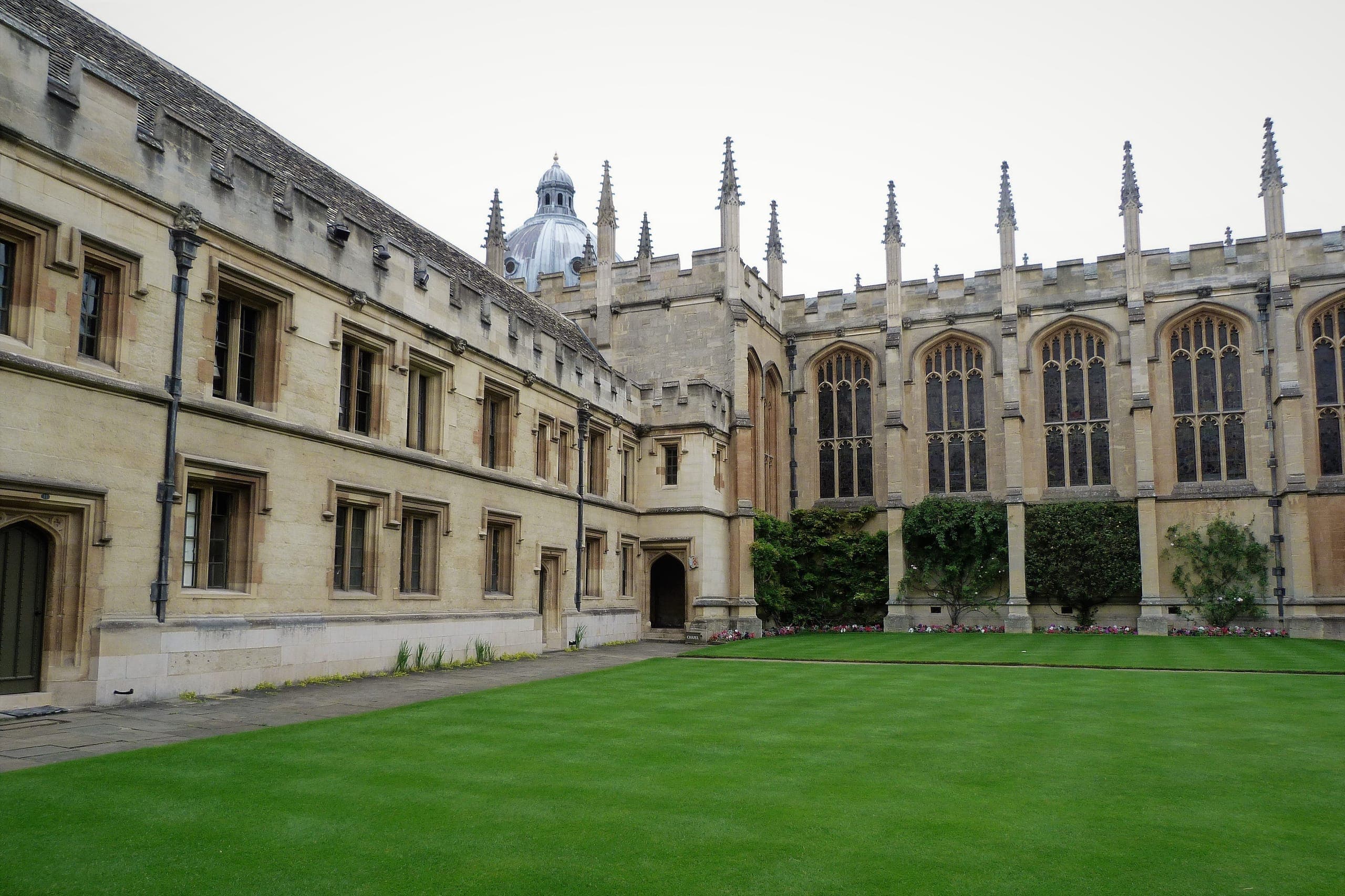
39 colleges offer this subject.
The relevant Oxford process is called reallocation.
Around a third of successful applicants receive an offer from a college other than the one they applied to. That means college choice matters, but it should not be treated as a way to game admissions.
Choose a college where you would be happy to live and work. Your application can still be seen by another college if Oxford thinks that is the right way to balance the field.
Section 12
Discover Uni percentages remain directional because some data is pooled.
The useful preparation here is not to reverse-engineer one career path. It is to develop the habits that transfer: close reading, evidence handling, field awareness, writing under constraint and explaining human behaviour without flattening it.
Section 13
It also confirms there is no specific GCSE requirement and no required school-subject requirement.
That matters for applicants whose schools do not offer archaeology, anthropology or a wide humanities range. In our experience, the stronger application is usually the one that explains what you did with the subjects and resources available.
Applicants lacking conventional essays should contact their college for written-work advice. That is especially important here because written work is a verified requirement for the course.
Watch & Learn
Student vlogs, mock interviews, lecture tasters, and admissions advice.
Official University of Oxford overview of the Archaeology and Anthropology course.
Oxford undergraduate admissions demonstration interview for Archaeology and Anthropology.
Oxford college guidance on preparing and submitting written work as part of an application.
All videos are the property of their respective creators.
Further Reading
Super-curricular reading, websites, and tools recommended by our expert tutors.