
Year
01 / 03
1
Part IA
Foundations
Part IA foundations including Practical Criticism, Shakespeare and period papers.

Complete Admissions Guide
English at Cambridge is among the most selective courses in the UK. Get 1-to-1 admissions coaching from Oxford or Cambridge graduates with subject-specific admissions expertise.
Last updated: September 2026
Key Facts
Overview
Cambridge English (BA Hons, UCAS Q300) is a three-year course built around close reading, literary history and independent critical work. For 2027 entry, the headline profile is A*AA, two pieces of written work and a College-arranged English written assessment if shortlisted.
Why study English at Cambridge?
Cambridge’s course is officially English, BA (Hons), and the course identity should stay as English rather than being renamed English Literature. Its UCAS code is Q300.
Section 01
Click your country on the map below for country-specific entry guidance - accepted qualifications, expected scores, English-language requirements, and any local context worth knowing before you apply.
International Applicants
Pick a highlighted country to see the admissions-test, score, and English-language requirements that apply for applicants from that country.
Section 02
| Qualification | Typical Offer | Key Requirements |
|---|---|---|
| A-Level | A*AA | English Literature required. History, A modern or classical language recommended. |
| IB Diploma | 40–42 with 776 at HL incl. English Literature | HL: English Literature required. |
| Advanced Placement (AP) | 5 AP Tests at score 5 in relevant subjects plus strong GPA and SAT/ACT context |
Section 03
Jun–Jul 2026
Open days & shortlist colleges
Visit Cambridge in person if you can. Open days run in late June and early July. Begin narrowing your college list and reading first-year reading lists.
Sep 2026
Draft your personal statement
Write for the subject, not the institution. Cambridge admissions tutors look for ~80% academic content and genuine super-curricular engagement.
15 Oct 2026
UCAS deadline
Submit your UCAS application by 18:00 UK time on 15 October 2026.
22 Oct 2026
My Cambridge Application deadline
Complete the My Cambridge Application supplementary questionnaire by 18:00 UK time on 22 October 2026. This replaced the old SAQ.
10 Nov 2026
Submitted written work deadline
Most arts and humanities courses ask for one or two pieces of marked school work. Each college confirms its exact deadline; 10 November is the standard date.
Dec 2026
Interviews
Around three-quarters of applicants are interviewed. Typically 1–2 interviews of 25–45 minutes each at your chosen or allocated college.
27 Jan 2027
Main decisions released
Cambridge releases its main decisions on 27 January 2027. Around a quarter of offers are made through the Winter Pool, strong applicants reconsidered by colleges with remaining places.
Jun–Jul 2026
Open days & shortlist colleges
Visit Cambridge in person if you can. Open days run in late June and early July. Begin narrowing your college list and reading first-year reading lists.
Sep 2026
Draft your personal statement
Write for the subject, not the institution. Cambridge admissions tutors look for ~80% academic content and genuine super-curricular engagement.
15 Oct 2026
UCAS deadline
Submit your UCAS application by 18:00 UK time on 15 October 2026.
22 Oct 2026
My Cambridge Application deadline
Complete the My Cambridge Application supplementary questionnaire by 18:00 UK time on 22 October 2026. This replaced the old SAQ.
10 Nov 2026
Submitted written work deadline
Most arts and humanities courses ask for one or two pieces of marked school work. Each college confirms its exact deadline; 10 November is the standard date.
Dec 2026
Interviews
Around three-quarters of applicants are interviewed. Typically 1–2 interviews of 25–45 minutes each at your chosen or allocated college.
27 Jan 2027
Main decisions released
Cambridge releases its main decisions on 27 January 2027. Around a quarter of offers are made through the Winter Pool, strong applicants reconsidered by colleges with remaining places.
Section 04

English at University of Cambridge does not require a written admissions test for 2027 entry. Applications are assessed on academic record, personal statement, submitted written work (where requested), and interview performance.
Always verify on the official Oxford admissions tests page.
Section 05
Interview Invitation
Late Nov
Arrival to Interview
Early Dec
Technical Question
Mid Dec
Decision
Early Jan
Interview Invitation
Late Nov
Arrival to Interview
Early Dec
Technical Question
Mid Dec
Decision
Early Jan
Question Types You’ll See
Cambridge currently records 1 or 2 interviews for most applicants, with the College confirming the exact number. Most applicants have 35 minutes to 1 hour total of interview time.
The verified panel size is 2–3 interviewers. For English, preparation should include talking through unseen or unfamiliar passages, making close-reading observations about language and form, and revising an interpretation when a tutor challenges the premise.
The interview is not a performance of memorised criticism. It helps to practice moving from observation to argument: word choice, form, structure, context and competing readings.
Practice real Cambridge English interview questions from our free question bank.
English Interview Questions →
Section 06
Cambridge has no official numeric weights for English decisions in the verified record. The same verified note says Cambridge considers academic record, reference, personal statement, submitted work, English written assessment where applicable, contextual or extenuating circumstances and interview together.
That means no single component should be treated as a safe substitute for the others. A strong application should be consistent across school achievement, submitted writing, interview discussion and the written assessment if required.
The decision process is holistic rather than formulaic. In practice, the strongest applications usually make the same intellectual habit visible in several places: careful reading, precise evidence and willingness to think again.
Our recommendation · weighting of admission factors
Oxbridge Mentors recommendation, drawn from observed offer patterns. University of Cambridge does not publish official weightings - exact balance varies by college, course and year.
Section 07

Start from the texts and questions that genuinely changed how you read. For Cambridge English, connect those questions to the kind of work the course foregrounds: Practical Criticism, Shakespeare, period range, medieval literature, Tragedy and independent dissertation work.
Avoid turning the statement into a book list. Choose fewer texts and show what you did with them: a comparison, a disagreement with a critic, or a shift in your own interpretation.
Because English Literature is required for entry, the statement should show subject depth rather than general enthusiasm for reading. It helps to include one or two moments where your thinking became more precise.
Section 08
A useful English project starts with a question small enough to answer well. Good starting points include a text, form, period, author, translation issue or critical debate.
The verified record for this pass treats project and competition recommendations as editorial rather than official Cambridge requirements.

Section 08
Other supercurricular work can support an English application when it produces better reading, writing or argument. Activities are most useful when they leave evidence: notes, essays, comparison tables, annotations or short talks.
These are support, not substitute. The application still needs academic evidence, submitted work, interview performance and the written assessment where applicable.
Keep a reading journal that records claims, evidence and changes of mind.:
Compare two critical views of the same passage.:
Rewrite a paragraph after challenging its weakest assumption.:
Practice close reading short passages without secondary material.:
Section 08
Competitions are not required in the verified record. When chosen carefully, they can still be useful because they force a concise argument under constraints.
None are required; one or two done well beats five half-attempted.
Section 09
Year
01 / 03
1
Foundations
Part IA foundations including Practical Criticism, Shakespeare and period papers.
Year
02 / 03
2
Historical range
Part IB historical range, one compulsory medieval paper, further period papers and possible dissertation.
Year
03 / 03
3
Specialist papers and dissertation
Part II specialist papers, Tragedy, Practical Criticism II and compulsory dissertation.
Section 10

Cambridge English requires written work. The verified record requires 2 pieces.
The deadline is College-specific after UCAS submission. Suitable pieces should show close reading, argument structure and teacher-marked academic writing rather than being selected only because they have the highest mark.
Section 11
Build subject knowledge around the course’s verified academic spine: Practical Criticism, Shakespeare, period papers, medieval work, Tragedy, Practical Criticism II and dissertation-style independent argument.
A practical preparation routine is to combine breadth and precision: read across periods, keep notes on form and language, and practice explaining how a small textual detail changes a larger interpretation. This is preparation advice, not an official Cambridge requirement.
Because the resources record is partial, this draft avoids naming linked books, channels, podcasts or courses as verified recommendations.
How to Read Literature Like a Professor by Thomas Foster is an accessible introduction to the intertextual patterns that recur across literary texts. Pair it with Literary Theory: A Very Short Introduction By Jonathan Culler for a compact map of the critical frameworks, structuralism, deconstruction, psychoanalysis, cultural theory, that underpin Cambridge's approach to literature.
For video, Great Writers Inspire Is an Oxford-hosted archive of short talks on canonical authors from Chaucer to Woolf. Faculty of English, University of Oxford Publishes faculty lectures and public talks on literary and critical topics.
For audio, Backlisted rescues neglected books with literate, analytical discussion. For structured study, Modern & Contemporary American Poetry On Coursera models close reading of challenging verse through lively written forum discussion.

Section 12
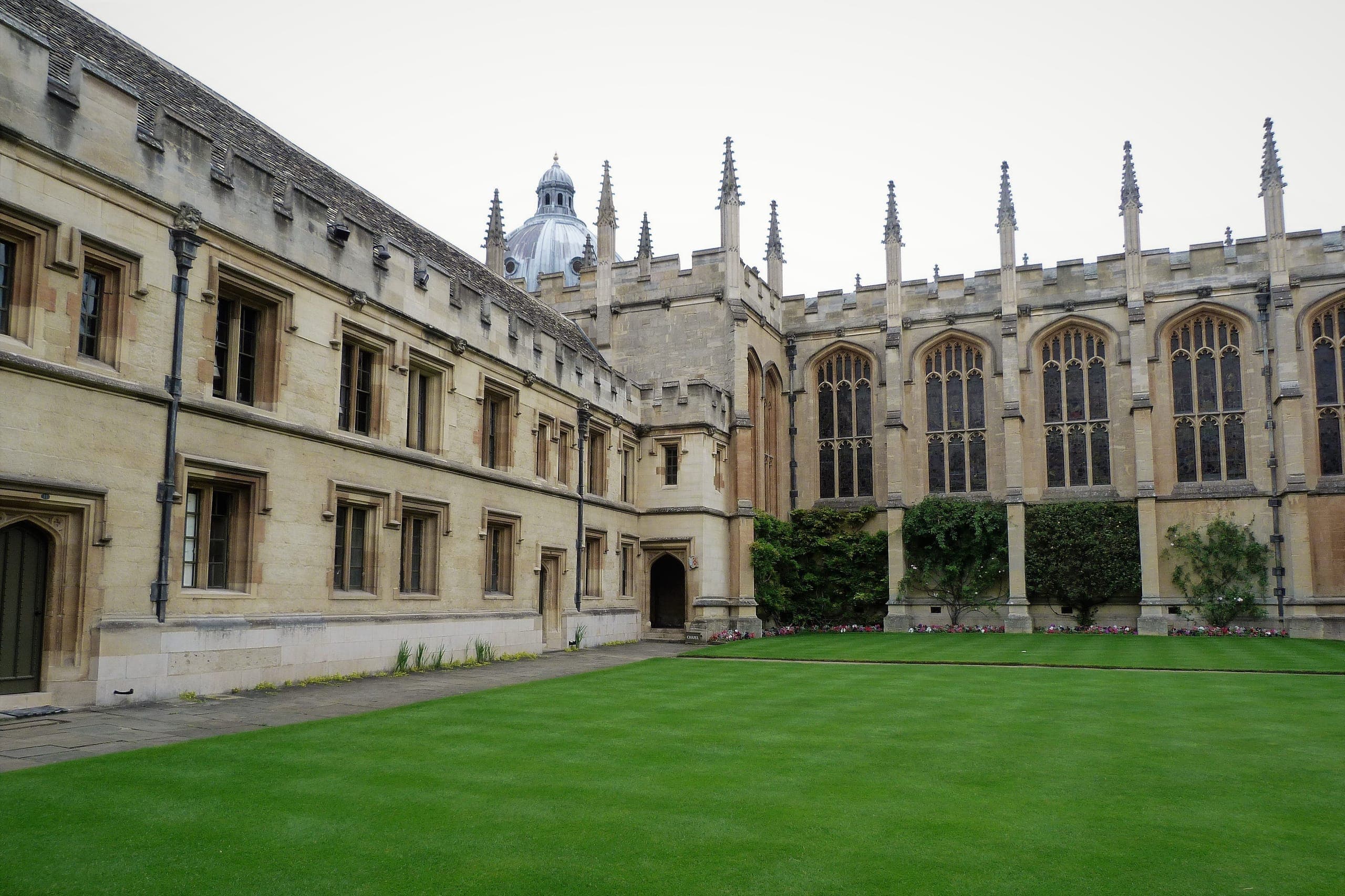
31 colleges offer this subject. 19% of places come through the pool.
Cambridge is collegiate, and the verified record lists 31 colleges. The pooling or reallocation process is the Winter Pool.
The verified record says 19% of October 2024 applicants were placed in the Winter Pool. The open application percentage is unverified in this pass.
Do not choose a College by trying to reverse-engineer small differences in admissions odds. Prioritise practical fit, accommodation, location, atmosphere and whether the College offers the course in the relevant year.
Section 13
The careers record is partial: Faculty careers categories were verified, but Discover Uni percentages should be labelled as occupation-type data if used. This version therefore avoids unverified percentage claims.
A publishable career section should use verified sectors, employers, postgraduate routes or official occupation categories rather than promising a particular outcome. That is an editorial safeguard, not a Cambridge statistic.
Section 14
The verified record says contextual data is used holistically. Extenuating circumstances should use the Cambridge process.
This matters for applicants whose school context, subject availability, illness, disruption or caring responsibilities affected preparation. Serious disruption should be raised through the proper Cambridge route rather than being left only to the personal statement.
Watch & Learn
Student vlogs, mock interviews, lecture tasters, and admissions advice.
All videos are the property of their respective creators.
Further Reading
Super-curricular reading, websites, and tools recommended by our expert tutors.