

Year
01 / 03
1
(Part I)
Introductory papers
In Part I, students take four introductory papers; three are selected from core HSPS subjects and one further paper from the listed options.

Complete Admissions Guide
HSPS at Cambridge is among the most selective courses in the UK. Get 1-to-1 admissions coaching from Oxford or Cambridge graduates with subject-specific admissions expertise.
Last updated: September 2026
Key Facts
Overview
Human, Social, and Political Sciences (HSPS) at the University of Cambridge is a 3-year BA (Hons) with UCAS code L000 and a typical A-Level offer of A*AA. It covers politics and international relations, social anthropology and sociology, with a flexible first year before specialisation in Part II.
Why study HSPS at Cambridge?
Cambridge’s official course page frames HSPS around politics and international relations, social anthropology and sociology, rather than as PPE or as a generic social-science degree.
Section 01
Click your country on the map below for country-specific entry guidance - accepted qualifications, expected scores, English-language requirements, and any local context worth knowing before you apply.
International Applicants
Pick a highlighted country to see the admissions-test, score, and English-language requirements that apply for applicants from that country.
Section 02
| Qualification | Typical Offer | Key Requirements |
|---|---|---|
| A-Level | A*AA | History, Politics, Sociology, A modern language recommended. |
| IB Diploma | 40–42 with 776 at HL | |
| Advanced Placement (AP) | Minimum five AP Tests at score 5 in subjects relevant to the course, plus strong SAT or ACT results and high High School Diploma performance. |
Section 03
Jun–Jul 2026
Open days & shortlist colleges
Visit Cambridge in person if you can. Open days run in late June and early July. Begin narrowing your college list and reading first-year reading lists.
Sep 2026
Draft your personal statement
Write for the subject, not the institution. Cambridge admissions tutors look for ~80% academic content and genuine super-curricular engagement.
15 Oct 2026
UCAS deadline
Submit your UCAS application by 18:00 UK time on 15 October 2026.
22 Oct 2026
My Cambridge Application deadline
Complete the My Cambridge Application supplementary questionnaire by 18:00 UK time on 22 October 2026. This replaced the old SAQ.
10 Nov 2026
Submitted written work deadline
Most arts and humanities courses ask for one or two pieces of marked school work. Each college confirms its exact deadline; 10 November is the standard date.
Dec 2026
Interviews
Around three-quarters of applicants are interviewed. Typically 1–2 interviews of 25–45 minutes each at your chosen or allocated college.
27 Jan 2027
Main decisions released
Cambridge releases its main decisions on 27 January 2027. Around a quarter of offers are made through the Winter Pool, strong applicants reconsidered by colleges with remaining places.
Jun–Jul 2026
Open days & shortlist colleges
Visit Cambridge in person if you can. Open days run in late June and early July. Begin narrowing your college list and reading first-year reading lists.
Sep 2026
Draft your personal statement
Write for the subject, not the institution. Cambridge admissions tutors look for ~80% academic content and genuine super-curricular engagement.
15 Oct 2026
UCAS deadline
Submit your UCAS application by 18:00 UK time on 15 October 2026.
22 Oct 2026
My Cambridge Application deadline
Complete the My Cambridge Application supplementary questionnaire by 18:00 UK time on 22 October 2026. This replaced the old SAQ.
10 Nov 2026
Submitted written work deadline
Most arts and humanities courses ask for one or two pieces of marked school work. Each college confirms its exact deadline; 10 November is the standard date.
Dec 2026
Interviews
Around three-quarters of applicants are interviewed. Typically 1–2 interviews of 25–45 minutes each at your chosen or allocated college.
27 Jan 2027
Main decisions released
Cambridge releases its main decisions on 27 January 2027. Around a quarter of offers are made through the Winter Pool, strong applicants reconsidered by colleges with remaining places.
Section 04

HSPS at University of Cambridge does not require a written admissions test for 2027 entry. Applications are assessed on academic record, personal statement, submitted written work (where requested), and interview performance.
Always verify on the official Oxford admissions tests page.
Section 05
Interview Invitation
Late Nov
Arrival to Interview
Early Dec
Technical Question
Mid Dec
Decision
Early Jan
Interview Invitation
Late Nov
Arrival to Interview
Early Dec
Technical Question
Mid Dec
Decision
Early Jan
Question Types You’ll See
Cambridge describes interviews as academic conversations about the subject, and each interview can differ by course and College.
For HSPS, preparation should focus on thinking aloud about politics, international relations, anthropology and sociology rather than memorising set answers. We recommend practicing with unfamiliar articles, data extracts or arguments, then explaining what you notice and what would change your view.
Cambridge’s listed interview aims include assessing understanding of the chosen subject area, readiness for high-level study, whether the applicant will thrive in the Cambridge learning environment, critical and independent thinking, curiosity and openness to new ideas, and enthusiasm for the subject.
You may be asked to apply knowledge to new situations, materials, problems or scenarios.
It helps to treat the interview like a short supervision. Give a clear first answer, notice objections, and refine your argument when the interviewer adds pressure or new evidence.
Practice real Cambridge HSPS interview questions from our free question bank.
HSPS Interview Questions →
Section 06
Cambridge states that College Admissions Tutors consider all the information available together before making decisions.
The listed decision inputs include academic record, school or college reference, personal statement, any submitted written work, how well you do in your written admissions assessment, contextual data and any extenuating circumstances, and interview performance if interviewed.
Cambridge does not publish percentage weightings for HSPS, so this page should not present the process as a points formula.
In reality, this means your application has to be coherent. Strong grades matter, but your submitted work, interview and written application should point in the same academic direction.
Our recommendation · weighting of admission factors
Oxbridge Mentors recommendation, drawn from observed offer patterns. University of Cambridge does not publish official weightings - exact balance varies by college, course and year.
Section 07

For HSPS, a good personal statement usually has a clear academic thread. We recommend choosing one or two problems that genuinely interest you: democracy and polarisation, nationalism, inequality, social class, gender, religion, migration, criminal justice or the politics of global order.
Do not try to cover politics, sociology and anthropology equally. It is better to show how one question can be approached from more than one discipline.
Use reading as evidence of thinking, not as decoration. A strong paragraph might explain what an author argued, where you agree, where you hesitate, and what you read next because of that hesitation.
Avoid describing HSPS as PPE or as a general social sciences degree. Cambridge’s HSPS course includes politics and international relations, social anthropology and sociology.
See a full annotated example with line-by-line expert commentary.
HSPS PS Example →Section 08
A good HSPS project is small enough to complete and precise enough to discuss. Build it around a question rather than a title.

Section 08
These activities support your application; they do not substitute for careful reading and clear writing.
Keep a reading notebook.:
Practice long-form news analysis.:
Attend public lectures and use podcasts selectively.:
Write timed and untimed essays.:
Build basic methods and data awareness.:
Discuss or debate serious questions with people who disagree with you.:
Section 08
Competitions are not required for HSPS, but essay competitions can practice the argument structure, written precision and source handling that matter when Cambridge reads submitted work.
None are required; one or two done well beats five half-attempted.
Coaching for these competitions
Section 09
Year
01 / 03
1
Introductory papers
In Part I, students take four introductory papers; three are selected from core HSPS subjects and one further paper from the listed options.
Year
02 / 03
2
Choose a single or joint subject track
In second year, students choose one of the HSPS Part II single-subject or two-subject tracks and begin more specialised study.
Year
03 / 03
3
Advanced papers and dissertation option
Students continue in the chosen Part II track. In the third year, one paper can be replaced with a 10,000-word dissertation.
Section 10
Use reading to build comparison. For example, a politics-focused applicant might compare state power and nationalism, while an anthropology-focused applicant might compare everyday social practice with larger institutions.
Thinking Sociologically By Zygmunt Bauman introduces sociology as a mode of questioning everyday assumptions. For political philosophy, An Introduction to Political Philosophy By Jonathan Wolff covers the main HSPS themes of liberty, justice, democracy and authority in an accessible academic register.
For audio, Thinking Allowed Is a BBC Radio 4 sociology programme directly relevant to HSPS. Social Science Bites Gives short research-led interviews on topics across psychology, economics, political science and anthropology.
For structured study, Crash Course Has full series in sociology, psychology, government and economics that give clear overviews of core concepts and evidence. Talking Politics Connects academic political theory to current events, useful for the politics strand of HSPS.

Section 11
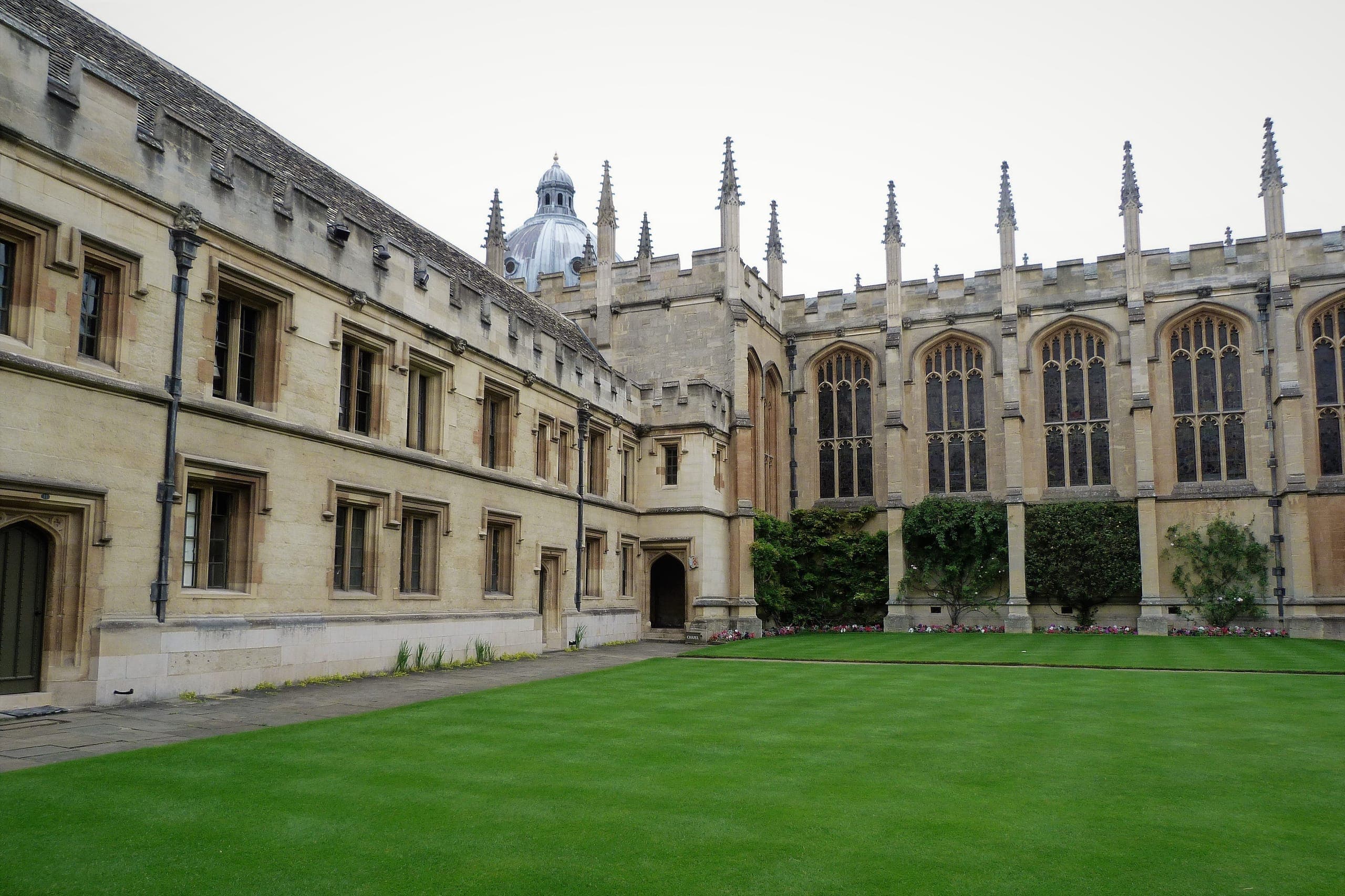
31 colleges offer this subject. 25% of applicants submit an open application. 20% of places come through the pool.
For HSPS, College choice can affect process details because the College assessing or interviewing you supplies interview, submitted-work and any College admission assessment instructions.
It should not be treated as an admissions shortcut. Choose a College for practical fit, accommodation preferences and environment, while making sure you can follow that College’s HSPS instructions carefully.
Section 12
In practical terms, HSPS is a degree for applicants who want to keep several routes open: research, policy, law conversion, communications, public service, consulting, education or further specialist study.
Section 13
Cambridge considers contextual data and any extenuating circumstances as part of application decisions.
Cambridge considers each application individually using all listed information.
This matters for HSPS applicants whose subject choices were constrained by school provision. If your school did not offer politics, sociology, anthropology or a relevant language, show subject development through reading, writing and independent work rather than apologising for what was unavailable.
Where disruption affected exams, coursework, attendance or submitted work, make sure the relevant evidence is included through the appropriate school or application route. The aim is not to excuse weak preparation; it is to make sure Cambridge reads your record in its proper context.
Watch & Learn
Student vlogs, mock interviews, lecture tasters, and admissions advice.
All videos are the property of their respective creators.
Further Reading
Super-curricular reading, websites, and tools recommended by our expert tutors.