

Year
01 / 04
1

Complete Admissions Guide
Modern and Medieval Languages at Cambridge is among the most selective courses in the UK. Get 1-to-1 admissions coaching from Oxford or Cambridge graduates with subject-specific admissions expertise.
Last updated: September 2026
Key Facts
Overview
Modern and Medieval Languages at the University of Cambridge is a 4-year BA (Hons) course with UCAS code R800 and a typical A*AA offer. Students study two languages, spend the third year abroad, and should expect submitted written work, interview discussion and a College admission assessment for 2027 entry.
Why study Modern and Medieval Languages at Cambridge?
Cambridge publishes Modern and Medieval Languages as a 4-year BA (Hons) course with study abroad in the third year. It is not a generic languages degree: all students study two languages, and some combinations with Arabic, Hebrew, Persian, History or Linguistics require applying to different Cambridge courses.
Section 01
Click your country on the map below for country-specific entry guidance - accepted qualifications, expected scores, English-language requirements, and any local context worth knowing before you apply.
International Applicants
Pick a highlighted country to see the admissions-test, score, and English-language requirements that apply for applicants from that country.
Section 02
| Qualification | Typical Offer | Key Requirements |
|---|---|---|
| A-Level | A*AA | A modern language required. English Literature, History, Latin recommended.Some Colleges may make higher offers or specify an A* in a particular subject, usually a language. |
| IB Diploma | 40–42 with 776 at HL incl. A modern language | HL: At least one of the languages you want to study at Higher Level; Higher Level French is required if you want to study French required. Another language, English, History, Mathematics recommended at HL.Some Colleges usually make offers above the minimum offer level. |
| Advanced Placement (AP) | Normally a minimum of 5 AP scores at grade 5 in subjects related to the course, alongside a high SAT or ACT score and a high overall GPA in the US High School Diploma | AP subjects related to the language and cultural areas proposed for study, where available required. English Literature, History, Mathematics, Additional language study recommended. SAT/ACT: Cambridge typically expects a high SAT or ACT score alongside AP results for US applicants..Completion of a US High School Diploma alone is not considered suitable preparation for entry. |
Section 03
Jun–Jul 2026
Open days & shortlist colleges
Visit Cambridge in person if you can. Open days run in late June and early July. Begin narrowing your college list and reading first-year reading lists.
Sep 2026
Draft your personal statement
Write for the subject, not the institution. Cambridge admissions tutors look for ~80% academic content and genuine super-curricular engagement.
15 Oct 2026
UCAS deadline
Submit your UCAS application by 18:00 UK time on 15 October 2026.
22 Oct 2026
My Cambridge Application deadline
Complete the My Cambridge Application supplementary questionnaire by 18:00 UK time on 22 October 2026. This replaced the old SAQ.
10 Nov 2026
Submitted written work deadline
Most arts and humanities courses ask for one or two pieces of marked school work. Each college confirms its exact deadline; 10 November is the standard date.
Dec 2026
Interviews
Around three-quarters of applicants are interviewed. Typically 1–2 interviews of 25–45 minutes each at your chosen or allocated college.
27 Jan 2027
Main decisions released
Cambridge releases its main decisions on 27 January 2027. Around a quarter of offers are made through the Winter Pool, strong applicants reconsidered by colleges with remaining places.
Jun–Jul 2026
Open days & shortlist colleges
Visit Cambridge in person if you can. Open days run in late June and early July. Begin narrowing your college list and reading first-year reading lists.
Sep 2026
Draft your personal statement
Write for the subject, not the institution. Cambridge admissions tutors look for ~80% academic content and genuine super-curricular engagement.
15 Oct 2026
UCAS deadline
Submit your UCAS application by 18:00 UK time on 15 October 2026.
22 Oct 2026
My Cambridge Application deadline
Complete the My Cambridge Application supplementary questionnaire by 18:00 UK time on 22 October 2026. This replaced the old SAQ.
10 Nov 2026
Submitted written work deadline
Most arts and humanities courses ask for one or two pieces of marked school work. Each college confirms its exact deadline; 10 November is the standard date.
Dec 2026
Interviews
Around three-quarters of applicants are interviewed. Typically 1–2 interviews of 25–45 minutes each at your chosen or allocated college.
27 Jan 2027
Main decisions released
Cambridge releases its main decisions on 27 January 2027. Around a quarter of offers are made through the Winter Pool, strong applicants reconsidered by colleges with remaining places.
Section 04

Modern and Medieval Languages at University of Cambridge does not require a written admissions test for 2027 entry. Applications are assessed on academic record, personal statement, submitted written work (where requested), and interview performance.
Always verify on the official Oxford admissions tests page.
Section 05
Interview Invitation
Late Nov
Arrival to Interview
Early Dec
Technical Question
Mid Dec
Decision
Early Jan
Interview Invitation
Late Nov
Arrival to Interview
Early Dec
Technical Question
Mid Dec
Decision
Early Jan
Question Types You’ll See
Cambridge describes interviews as academic discussions and says they assess readiness to study at a high academic level, critical and independent thinking, curiosity, openness to new ideas and enthusiasm for the chosen subject.
The best preparation is not memorising speeches. It helps to practice close reading, translation choices, short argument-building, and discussion of literature, film, history, linguistics or thought that you have actually studied.
You may be asked to discuss submitted written work, school topics, personal-statement material, unfamiliar language or cultural material, and your language choices. We recommend keeping a clean copy of your written work and annotating where your argument could be improved.
Practice real Cambridge Modern and Medieval Languages interview questions from our free question bank.
Modern and Medieval Languages Interview Questions →
Section 06
Cambridge assesses MML applicants using academic record, reference, personal statement, submitted written work, interview performance, contextual information and the College admission assessment recorded in the current 2027-entry.
The page visual uses editorial weights for presentation only, and Cambridge does not publish formal percentage weightings. Do not read the visual as a scoring formula.
Practically, a strong application is consistent across evidence. Your grades, written work, interview discussion and assessment response should all show that you can think carefully about language, argument and culture under academic pressure.
Our recommendation · weighting of admission factors
Oxbridge Mentors recommendation, drawn from observed offer patterns. University of Cambridge does not publish official weightings - exact balance varies by college, course and year.
Section 07

Start with the intellectual choices behind your languages: why this combination, what texts or cultural questions interest you, and what kinds of language problems you want to investigate.
Avoid a travelogue. A better paragraph explains what you read, watched or listened to, what problem it raised, and how it changed your view of a text, language feature, translation choice or cultural moment.
Use your personal statement to connect school study with independent work. It helps to show one or two serious lines of enquiry rather than a long list of books, films and podcasts.
If you are applying to learn one language from scratch, explain the academic reason for that choice. French is the exception: Cambridge requires prior advanced study in French for applicants who want to study it.
Section 08
A useful MML project turns language interest into evidence. We recommend choosing a small question, gathering examples, and writing up what your evidence actually shows.
Another option is a language, film and society case study using 3-5 films alongside reviews, interviews or historical context.
A third option is a mini-corpus of contemporary language change, using examples from newspapers, podcasts, music, advertising or social media in one language. Keep the project manageable enough that you can discuss the evidence in an interview.

Section 08
Use the recommended resources and project ideas as the verified enrichment base instead.
These are support, not substitute.
Read around translation, language history and the Faculty's course information.:
Listen for register, idiom and cultural assumptions in target-language media.:
Keep short notes on how translation choices change meaning.:
Practice writing short analytical paragraphs in English and in the language you are offering.:
Section 08
Competitions are not required. Done well, they can stretch your argument, research discipline and written expression.
None are required; one or two done well beats five half-attempted.
Section 09
Year
01 / 04
1
Year
02 / 04
2
Year
03 / 04
3
Year
04 / 04
4
Section 10

Cambridge's MML course page says applicants need to submit 2 pieces of written work. These should be recent examples of writing completed for school, with one piece in one of the languages the applicant intends to study at university.
The assessing College provides the submission method and deadline after application. We recommend choosing work you can discuss honestly: know the argument, the weaknesses, and what you would revise now.
Section 11
Start with the Cambridge Modern and Medieval Languages course page and the Faculty of Modern and Medieval Languages and Linguistics site, because they anchor your preparation in the actual Cambridge course and Faculty context.
For language history, The Story of French gives a sustained account of one major European language across time. For translation, Introducing Translation Studies is useful because it gives you vocabulary for discussing choices between languages.
For listening habits, The Allusionist can sharpen attention to etymology, usage and register. For structured language practice, Getting started with French 1 is most useful only for applicants beginning a language from scratch or revisiting fundamentals; it is not a substitute for the advanced French required from applicants who want to study French.
The Trinity College Cambridge Essay Prizes Are a useful stretch option for applicants who want a formal essay deadline. Use them to practice concise argument, not to collect badges.

Section 12
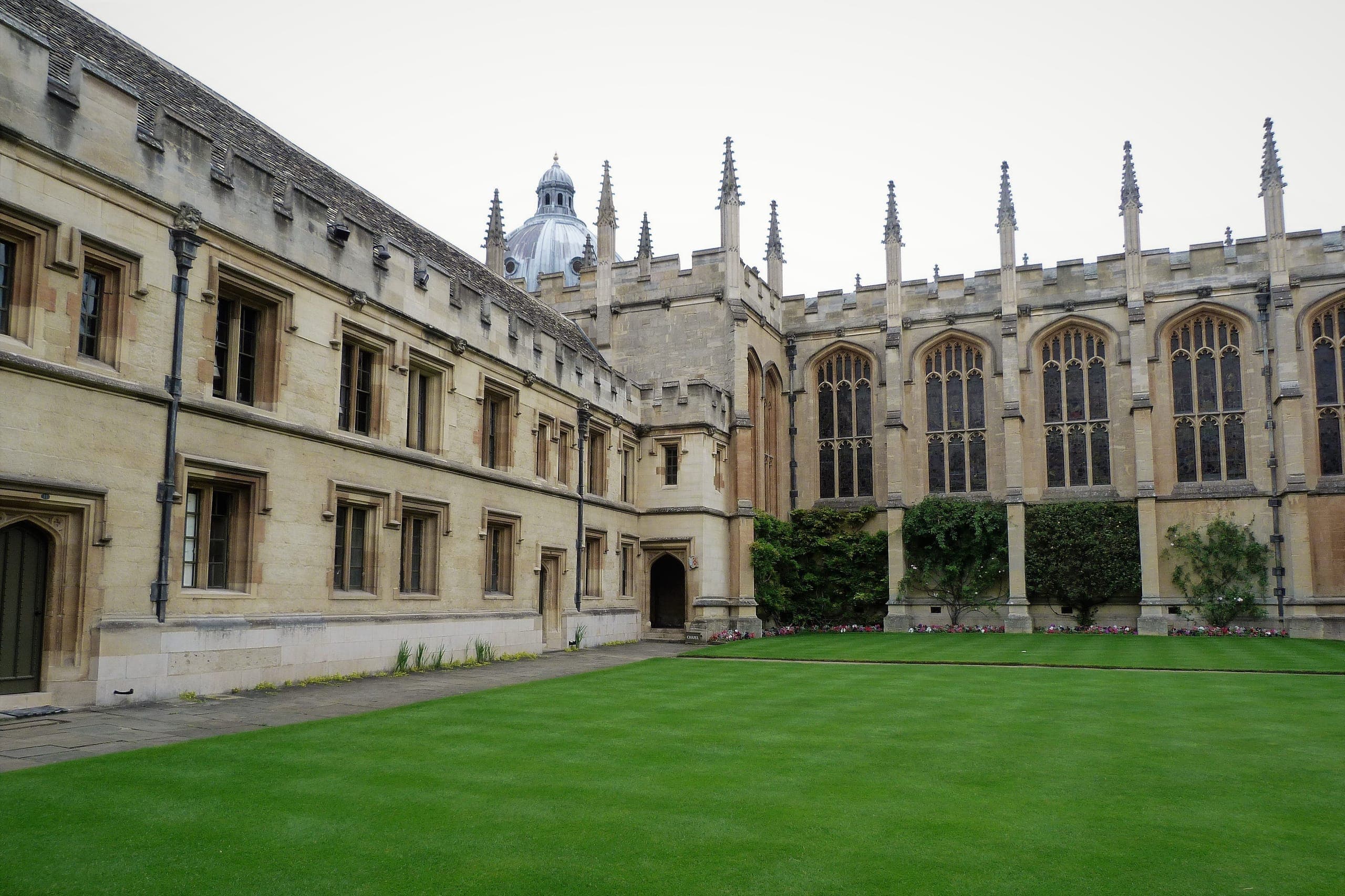
29 colleges offer this subject. ~19% of places come through the pool.
Applicants can choose a College or submit an open application, which is allocated to a College.
An offer may come from the College applied to, the College allocated through an open application, or a different College. Cambridge records the reallocation process as the Winter Pool, and around 19% of applications received in October 2024 were placed in the Winter Pool.
College choice should be based on course availability, offer conditions, interview format once published, accommodation, location, support, community and practical preferences. Do not choose on rumours of admissions advantage.
Section 13
This section should not publish a bar chart or destination claims until a verified `careers.sectors` source is added.
For now, keep the page focused on the admissions evidence Cambridge actually verifies for this course. Do not invent employment outcomes from general language-degree assumptions.
Section 14
Cambridge uses contextual data to build a fuller picture of an applicant's educational and social circumstances, academic performance and assessment performance. It says contextual data is not used systematically to make lower-grade conditional offers or to excuse a poor academic record.
Relevant contextual information may include individual circumstances, area-level data and school or college performance data. For MML, limited access to language teaching should be clearly explained by the referee or through the appropriate Cambridge route, but this does not automatically remove course-specific language requirements.
Watch & Learn
Student vlogs, mock interviews, lecture tasters, and admissions advice.
All videos are the property of their respective creators.
Further Reading
Super-curricular reading, websites, and tools recommended by our expert tutors.