

Year
01 / 03
1
Part IA
Foundations in psychology and behavioural science
You take a total of 4 papers. Three papers are compulsory and one further paper is chosen from around 9 options.

Complete Admissions Guide
Psychological and Behavioural Sciences at Cambridge is among the most selective courses in the UK. Get 1-to-1 admissions coaching from Oxford or Cambridge graduates with subject-specific admissions expertise.
Last updated: September 2026
Key Facts
Overview
Psychological and Behavioural Sciences at Cambridge is a three-year BA (Hons) with UCAS code C800 and a minimum offer level of A*A*A or IB 41–42 with 776 at HL. The course moves from Part IA to Part IB and Part II, with College-set assessment details for some applicants rather than a centrally registered test.
Why study Psychological and Behavioural Sciences at Cambridge?
Cambridge Psychological and Behavioural Sciences is the official course title on the current Undergraduate Study page.
Section 01
Click your country on the map below for country-specific entry guidance - accepted qualifications, expected scores, English-language requirements, and any local context worth knowing before you apply.
International Applicants
Pick a highlighted country to see the admissions-test, score, and English-language requirements that apply for applicants from that country.
Section 02
| Qualification | Typical Offer | Key Requirements |
|---|---|---|
| A-Level | A*A*A | Mathematics, Biology, Chemistry, Physics, Computer Science, Psychology recommended. |
| IB Diploma | 40–42 with 776 at HL | |
| Advanced Placement (AP) | Minimum five AP Tests at score 5 in subjects relevant to the course, plus strong SAT or ACT results and high High School Diploma performance. |
Section 03
Jun–Jul 2026
Open days & shortlist colleges
Visit Cambridge in person if you can. Open days run in late June and early July. Begin narrowing your college list and reading first-year reading lists.
Sep 2026
Draft your personal statement
Write for the subject, not the institution. Cambridge admissions tutors look for ~80% academic content and genuine super-curricular engagement.
15 Oct 2026
UCAS deadline
Submit your UCAS application by 18:00 UK time on 15 October 2026.
22 Oct 2026
My Cambridge Application deadline
Complete the My Cambridge Application supplementary questionnaire by 18:00 UK time on 22 October 2026. This replaced the old SAQ.
10 Nov 2026
Submitted written work deadline
Most arts and humanities courses ask for one or two pieces of marked school work. Each college confirms its exact deadline; 10 November is the standard date.
Dec 2026
Interviews
Around three-quarters of applicants are interviewed. Typically 1–2 interviews of 25–45 minutes each at your chosen or allocated college.
27 Jan 2027
Main decisions released
Cambridge releases its main decisions on 27 January 2027. Around a quarter of offers are made through the Winter Pool, strong applicants reconsidered by colleges with remaining places.
Jun–Jul 2026
Open days & shortlist colleges
Visit Cambridge in person if you can. Open days run in late June and early July. Begin narrowing your college list and reading first-year reading lists.
Sep 2026
Draft your personal statement
Write for the subject, not the institution. Cambridge admissions tutors look for ~80% academic content and genuine super-curricular engagement.
15 Oct 2026
UCAS deadline
Submit your UCAS application by 18:00 UK time on 15 October 2026.
22 Oct 2026
My Cambridge Application deadline
Complete the My Cambridge Application supplementary questionnaire by 18:00 UK time on 22 October 2026. This replaced the old SAQ.
10 Nov 2026
Submitted written work deadline
Most arts and humanities courses ask for one or two pieces of marked school work. Each college confirms its exact deadline; 10 November is the standard date.
Dec 2026
Interviews
Around three-quarters of applicants are interviewed. Typically 1–2 interviews of 25–45 minutes each at your chosen or allocated college.
27 Jan 2027
Main decisions released
Cambridge releases its main decisions on 27 January 2027. Around a quarter of offers are made through the Winter Pool, strong applicants reconsidered by colleges with remaining places.
Section 04

Psychological and Behavioural Sciences at University of Cambridge does not require a written admissions test for 2027 entry. Applications are assessed on academic record, personal statement, submitted written work (where requested), and interview performance.
Always verify on the official Oxford admissions tests page.
Section 05
Interview Invitation
Late Nov
Arrival to Interview
Early Dec
Technical Question
Mid Dec
Decision
Early Jan
Interview Invitation
Late Nov
Arrival to Interview
Early Dec
Technical Question
Mid Dec
Decision
Early Jan
Question Types You’ll See
Cambridge describes interviews as academic conversations.
The interview may ask you to discuss academic interests, respond to unfamiliar material, and reason aloud in an academic conversation.
What matters is not sounding polished. It helps to slow down, define terms, test an explanation, and adjust when the interviewer gives you a new piece of information.
Practice real Cambridge Psychological and Behavioural Sciences interview questions from our free question bank.
Psychological and Behavioural Sciences Interview Questions →
Section 06
Cambridge describes admissions decisions as holistic and based on all available information.
The decision-weight percentages in the visual are indicative, Cambridge does not publish numerical weightings, because Cambridge does not publish numerical weights.
In reality, PBS applicants need evidence across the file: subject preparation, clear thinking, good academic trajectory and enough flexibility to handle unfamiliar material.
Our recommendation · weighting of admission factors
Oxbridge Mentors recommendation, drawn from observed offer patterns. University of Cambridge does not publish official weightings - exact balance varies by college, course and year.
Section 07

Do not make the personal statement a list of famous experiments. Use one or two ideas to show how you think.
A strong PBS paragraph usually starts with a question, gives the evidence you read, and then explains what became more complicated. That is better than saying you have always been fascinated by people.
The course overlaps with anthropology, neuroscience, philosophy and sociology, so it helps to show how you handle connections between disciplines.
Use school psychology, biology, maths or social-science work carefully. The point is not to prove you already know the degree; it is to show that you can ask a precise question and follow evidence.
Section 08
A useful PBS project is not large or dramatic; it is controlled enough for you to explain methods and limits.
Do not overclaim from a tiny sample. Reflection matters more than pretending your project proves a general law of behaviour.

Section 08
Other supercurricular work should strengthen your thinking, not decorate the application.
These are support, not substitute. A weaker activity becomes useful when you can analyse it carefully.
Primary-research reading:
Move beyond popular psychology by reading abstracts, methods and limitations sections from journal papers.
Research methods and statistics:
Build confidence with variables, correlations, sampling, p-values, effect sizes and replication.
Ethics and consent:
When doing any independent project, avoid sensitive personal data and clinical claims.
Interdisciplinary links:
Connect psychology to neuroscience, anthropology, philosophy, education, sociology or computational modelling.
Reflective volunteering or observation:
Volunteering can be useful if reflection stays analytical.
Writing and discussion:
Practice short essays that weigh evidence on both sides of a behavioural claim.
Section 08
Competitions are not required, but they can stretch your writing, research habits and evidence evaluation. Choose one that genuinely develops your PBS thinking.
None are required; one or two done well beats five half-attempted.
Coaching for these competitions
Section 09
Year
01 / 03
1
Foundations in psychology and behavioural science
You take a total of 4 papers. Three papers are compulsory and one further paper is chosen from around 9 options.
Year
02 / 03
2
Specialised training and preparation for research
You take a total of 4 papers. Two papers are compulsory and two further papers are chosen from a broad range.
Year
03 / 03
3
Advanced options and independent research
You complete a research dissertation of 7,000 words and choose a further 3 papers from the available selection.
Section 10
Thinking, Fast and Slow Is useful for judgement and decision-making, while Social Cognition: From Brains to Culture Gives a tighter route into social cognition.
YaleCourses Hosts Paul Bloom's psychology lectures, CrashCourse gives short reviews of core psychology topics, and American Psychological Association Gives research and applied psychology context.
Speaking of Psychology And Under the Cortex Are better for research-led topic choice than generic psychology clips.
Introduction to Psychology And Starting with psychology Are structured starting points for broad psychology foundations and the vocabulary needed to discuss methods, evidence and limitations.
A good preparation pattern is one book, one lecture series and one research-methods habit. After each resource, write short notes on method, evidence and limitations.

Section 11
29 colleges offer this subject. 19% of places come through the pool.
PBS is available at all Colleges except Peterhouse on the current course page.
College choice affects where you are assessed first and can affect practical details such as interview format, College-specific assessment and submitted-work instructions.
Cambridge's Winter Pool is an inter-College moderation process, and around 19% of October 2024 applications were placed in the Winter Pool.
Choose a College for practical fit, not for a guessed admissions advantage. The safer question is whether you understand its PBS assessment and submitted-work requirements.
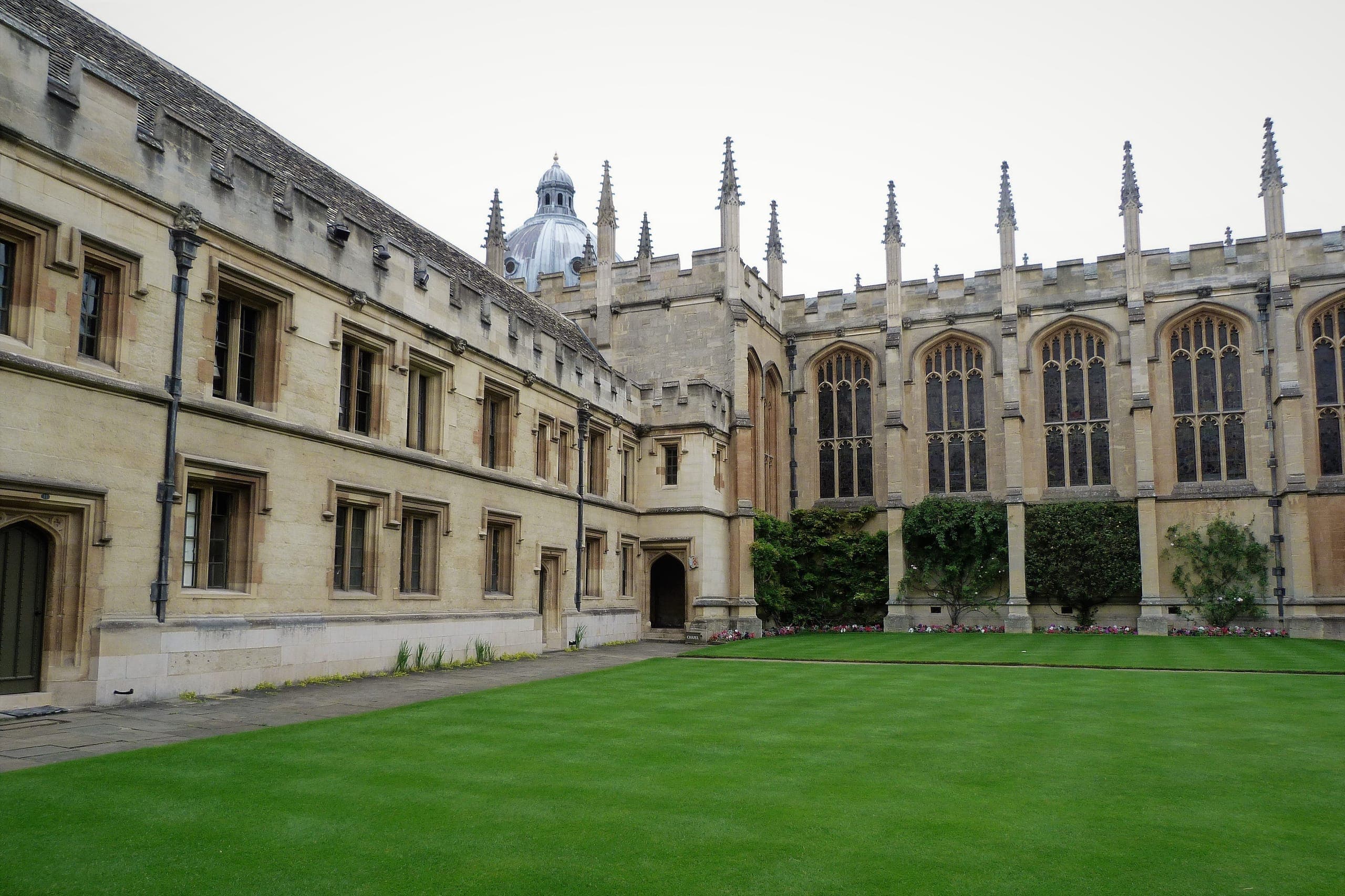
Section 12
The official course-page careers context also includes media, management, the Civil Service, finance, law and business.
Use this section carefully: PBS is useful preparation for many routes, but professional psychology normally requires further accredited training after the undergraduate degree.
Section 13
Cambridge uses contextual data to assess applicants in context, but contextual flags do not guarantee an interview, offer or lower conditional offer.
Academic achievement remains central.
Individual circumstances can be supplied through the UCAS reference or, where needed, Cambridge's disrupted-studies route.
Watch & Learn
Student vlogs, mock interviews, lecture tasters, and admissions advice.
Paul Bloom introduces Yale's Psychology 110.
Lecture linking identity, brain function and psychological explanation.
Overview of psychology's questions, approaches and scope.
Introduces research design and testable questions.
Introduction to neurotransmitters and biological bases of behaviour.
All videos are the property of their respective creators.
Further Reading
Super-curricular reading, websites, and tools recommended by our expert tutors.