

Year
01 / 04
1
Year 1
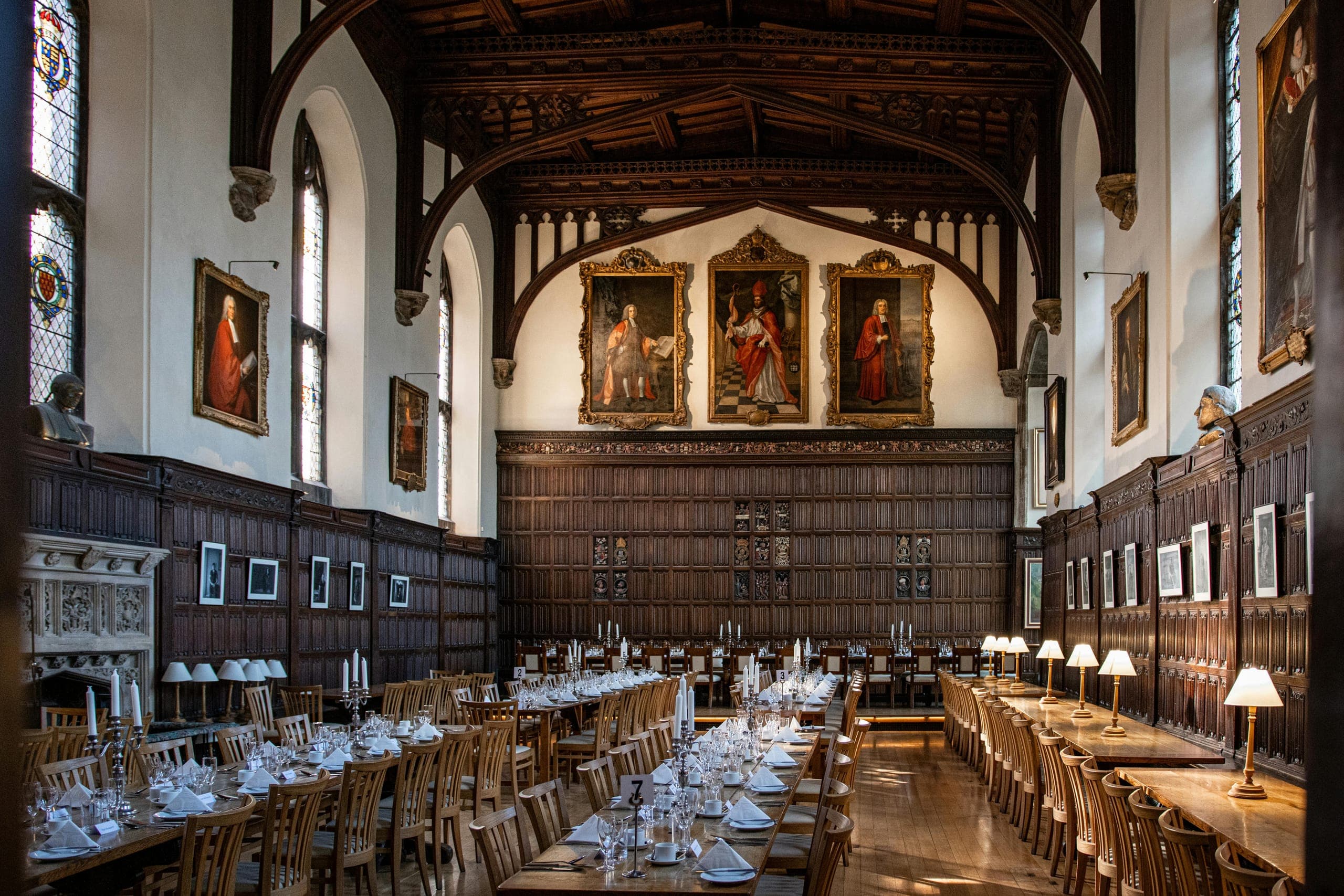
Foundation year across the joint course, building the mathematical, computing and philosophical habits needed for later specialisation.

Complete Admissions Guide
Computer Science and Philosophy at Oxford is among the most selective courses in the UK. Get 1-to-1 admissions coaching from Oxford or Cambridge graduates with subject-specific admissions expertise.
Last updated: September 2026
Key Facts
Overview
Computer Science and Philosophy at Oxford (UCAS IV15) is a 3- or 4-year joint course leading to a BA or MCompPhil. For 2027 entry, the headline offer is A*AA with Mathematics required and Further Mathematics highly recommended where available; applicants must also take TMUA.
Why study Computer Science and Philosophy at Oxford?
Oxford lists Computer Science and Philosophy as a joint course combining Computer Science and Philosophy. The course structure is officially listed as BA/MCompPhil over 3 or 4 years.
Section 01
Click your country on the map below for country-specific entry guidance - accepted qualifications, expected scores, English-language requirements, and any local context worth knowing before you apply.
International Applicants
Pick a highlighted country to see the admissions-test, score, and English-language requirements that apply for applicants from that country.
Section 02
| Qualification | Typical Offer | Key Requirements |
|---|---|---|
| A-Level | A*AA, including A*A in Mathematics and Further Mathematics if available, in any order | Mathematics required. Further Mathematics recommended.If Further Mathematics is not available, Oxford lists alternative offers involving A* in Mathematics and either AS Further Mathematics where available or A*AA with A* in Mathematics. Practical components in relevant science A-levels are expected to be passed. |
| IB Diploma | 39 including core points, with 766 at HL; the 7 must be in HL Mathematics | HL: Mathematics at Higher Level with score 7 required.The IB 7 at HL must be in Mathematics. |
| Advanced Placement (AP) | Either four APs at grade 5 including Calculus BC and two other Mathematics or Science subjects, or three APs at grade 5 in Calculus BC and two other Mathematics or Science subjects plus ACT 32+ or SAT 1470+ with at least 770 in Mathematics | AP Calculus BC, Two other Mathematics or Science AP subjects required. Additional Mathematics or Science AP subjects recommended. SAT/ACT: Not required with four qualifying APs; required with three qualifying APs: ACT 32+ or SAT 1470+ with at least 770 in Mathematics. Optional essay is not required; Oxford does not superscore SAT/ACT..Calculus AB and BC cannot both count as separate subjects. AP Computer Science A and AP Computer Science Principles are counted as separate subjects by the Computer Science department. |
Section 03
June 2026
TMUA registration opens
1 June 2026 (3pm UK time)
July 2026
TMUA booking opens
20 July 2026 (3pm UK time)
September 2026
TMUA booking closes
28 September 2026 (6pm UK time)
October 2026
Submit UCAS application
15 October 2026 (6pm UK time)
October 2026
Sit the TMUA
12-16 October 2026
November 2026
TMUA results released to candidates
16 November 2026
December 2026
Online interviews
December 2026
January 2027
Oxford decisions released
12 January 2027
June 2026
TMUA registration opens
1 June 2026 (3pm UK time)
July 2026
TMUA booking opens
20 July 2026 (3pm UK time)
September 2026
TMUA booking closes
28 September 2026 (6pm UK time)
October 2026
Submit UCAS application
15 October 2026 (6pm UK time)
October 2026
Sit the TMUA
12-16 October 2026
November 2026
TMUA results released to candidates
16 November 2026
December 2026
Online interviews
December 2026
January 2027
Oxford decisions released
12 January 2027
Section 04

For 2027 entry, Oxford Computer Science and Philosophy applicants must take the Test of Mathematics for University Admission (TMUA). Oxford applicants must take both Paper 1: Applications of Mathematical Knowledge and Paper 2: Mathematical Reasoning.
TMUA is delivered by UAT-UK through Pearson test centres. For Oxford applicants, the October 2026 test window is 12–16 October 2026, and booking closes on 28 September 2026 at 6pm UK time.
The test matters because it gives Oxford a common mathematical-reasoning measure across applicants taking different qualifications.
For international applicants, TMUA is one of the main directly comparable parts of the file. Plan the account setup and booking steps early enough to meet the published UAT-UK deadlines.
Full TMUA preparation and tutoring | format, scoring, strategy, and free practice resources.
TMUA Preparation & Tutoring →Section 05
Interview Invitation
Late Nov
Arrival to Interview
Early Dec
Technical Question
Mid Dec
Decision
Early Jan
Interview Invitation
Late Nov
Arrival to Interview
Early Dec
Technical Question
Mid Dec
Decision
Early Jan
Question Types You’ll See
Shortlisted applicants are invited to online interviews in December 2026. The verified format is online academic discussion and problem-solving.
Oxford’s checked criteria include mathematical talent, independent thinking, ability to absorb and use new ideas, logical or analytical approach to philosophy, clarity of argument, and motivation for both subjects. Prepare by practicing out loud: state assumptions, test examples, and explain why a line of reasoning does or does not work.
Do not script answers. In our experience, a good interview performance is usually less about reaching the answer quickly and more about staying precise when the interviewer changes the problem.
Practice real Oxford Computer Science and Philosophy interview questions from our free question bank.
Computer Science and Philosophy Interview Questions →
Section 06
Do not treat any private percentage breakdown as official.
The verified academic evidence includes the Mathematics requirement, the TMUA, and online interviews. The interview criteria also point to independent thinking, new-idea absorption, and clarity of philosophical argument.
Build an application that is consistent across all parts. Your TMUA preparation, personal statement, and interview practice should all point to the same thing: you can reason carefully with formal systems and with arguments.
Our recommendation · weighting of admission factors
Oxbridge Mentors recommendation, drawn from observed offer patterns. University of Oxford does not publish official weightings - exact balance varies by college, course and year.
Section 07

A strong Computer Science and Philosophy personal statement should not read like two separate mini-statements. Use one or two examples where computation and philosophy meet: logic, proof, language, minds, decision procedures, or questions about what machines can and cannot do.
Avoid broad claims about liking technology or enjoying debate. Show the specific problem you followed, the book or project that changed your view, and the next question it raised.
It helps to include evidence of mathematical maturity. That could be a proof you worked through, a small program that forced you to think about abstraction, or a philosophical argument where the structure mattered more than the conclusion.
Section 08
Used well, a project can still give you something concrete to discuss in the personal statement and interview.
Choose projects that force precision. A small theorem prover experiment, a logic puzzle solver, or a comparison between two arguments about artificial intelligence is usually better than a large unfinished app.
Broad project ideas: implement a small search or proof-checking tool; write a short essay comparing two arguments in philosophy of mind; build a program that models a logic puzzle and then explain the assumptions behind the model.

Section 08
Reading, programming, proof practice, and essay writing can all support this application. The point is not volume; it is whether you can explain what changed in your thinking.
These are support, not substitute.
Work through mathematical proofs and rewrite them in your own words.:
Practice programming small, exact tools rather than broad unfinished products.:
Read philosophy with a pen in hand and reconstruct the argument structure.:
Keep a short log of mistakes, false starts, and changes of view.:
Discuss problems with someone who will challenge your reasoning.:
Section 08
This draft should therefore avoid naming competitions as canonical page content until those rows are verified.
What competitions can do well is stretch problem-solving under time pressure. None are required; one or two done well beats five half-attempted.
Coaching for these competitions
Section 09
Year
01 / 04
1
Foundation year across the joint course, building the mathematical, computing and philosophical habits needed for later specialisation.

Year
02 / 04
2
Intermediate study develops both sides of the course and prepares students for more specialised choices.
Year
03 / 04
3
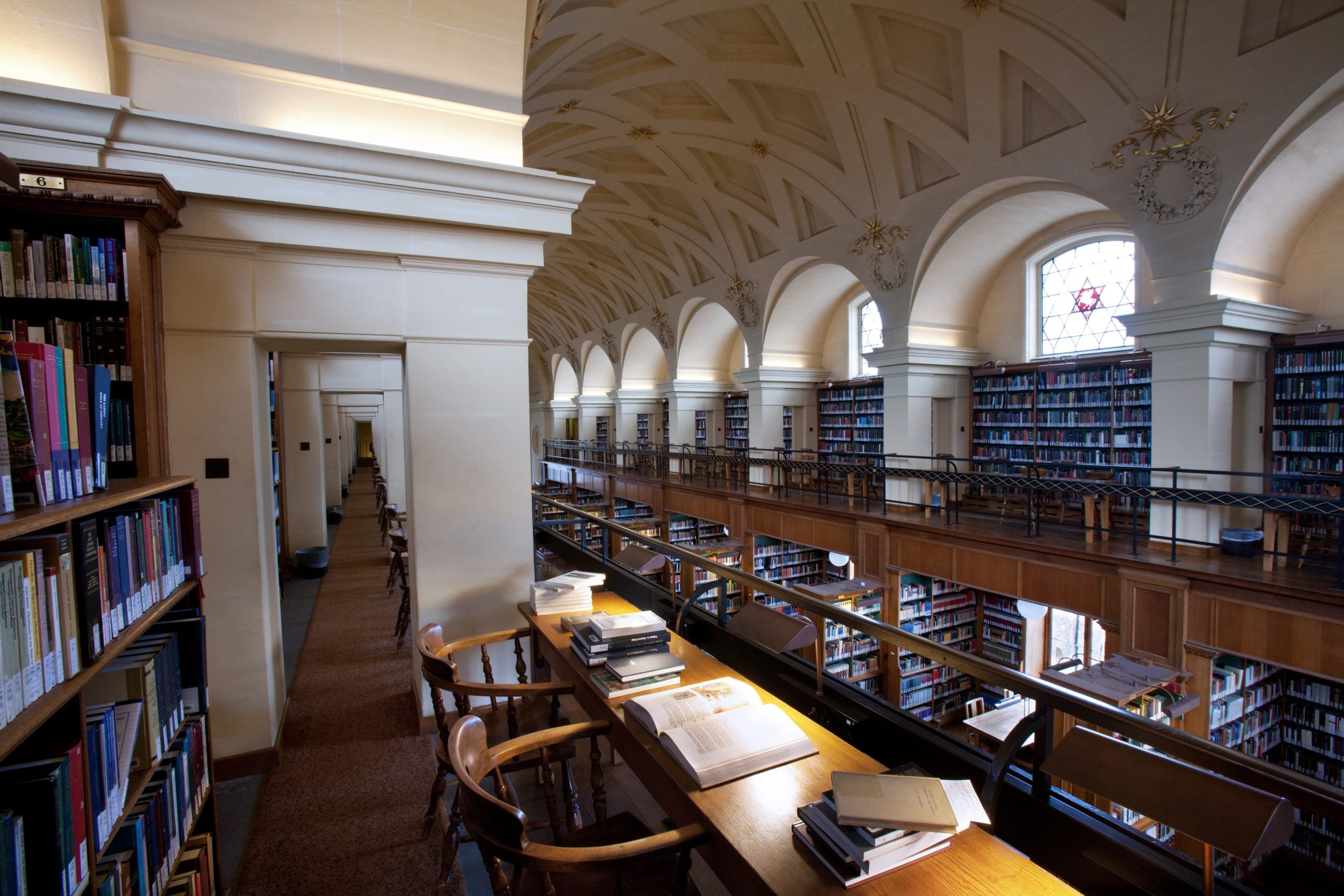
Third year can complete the BA route or prepare for continuation to the fourth-year MCompPhil, subject to the required standard.
Year
04 / 04
4
Fourth-year MCompPhil route for students who continue after meeting the required standard by the end of third year.
Section 10
The resources field is marked as editorial guidance rather than official Oxford endorsement. For this course, the safest preparation pattern is to build three habits: proof-based mathematics, small exact programming, and careful argument reconstruction.
Keep a short notebook. For each topic, write the problem, your first attempt, where the reasoning failed, and what changed after correction. That habit is useful for TMUA preparation and for interview discussion.
Make the preparation course-specific by linking formal and philosophical questions. For example, compare how a proof, a program, and a philosophical argument each depend on definitions; or explore how logic, computability, artificial intelligence, or philosophy of mind changes the way you think about what machines can and cannot do.
Do not try to collect resources for their own sake. It is better to understand one proof, one program, and one philosophical argument properly than to list ten things you cannot discuss.
Gödel, Escher, Bach: An Eternal Golden Braid By Douglas Hofstadter explores the deep connections between formal systems, logic, music and consciousness. It is not a textbook but a sustained argument that models the kind of cross-disciplinary thinking Oxford CS&P rewards. The Philosophical Computer By Grim, Mar and St. Denis shows how computation illuminates problems in logic, mind and language.
For the computer science component, CS50x: Introduction to Computer Science From Harvard builds programming fundamentals through problem sets in C and Python. Computerphile On YouTube covers algorithms, languages, cryptography and AI in a way that connects directly to interview-level technical questions.
For the philosophy component, Philosophy Bites Delivers short, precise interviews on problems in logic, language, mind and ethics. In Our Time: Philosophy has episodes on Gödel's theorem, Turing, the philosophy of language and free will, all directly relevant to CS&P topics.

Section 11
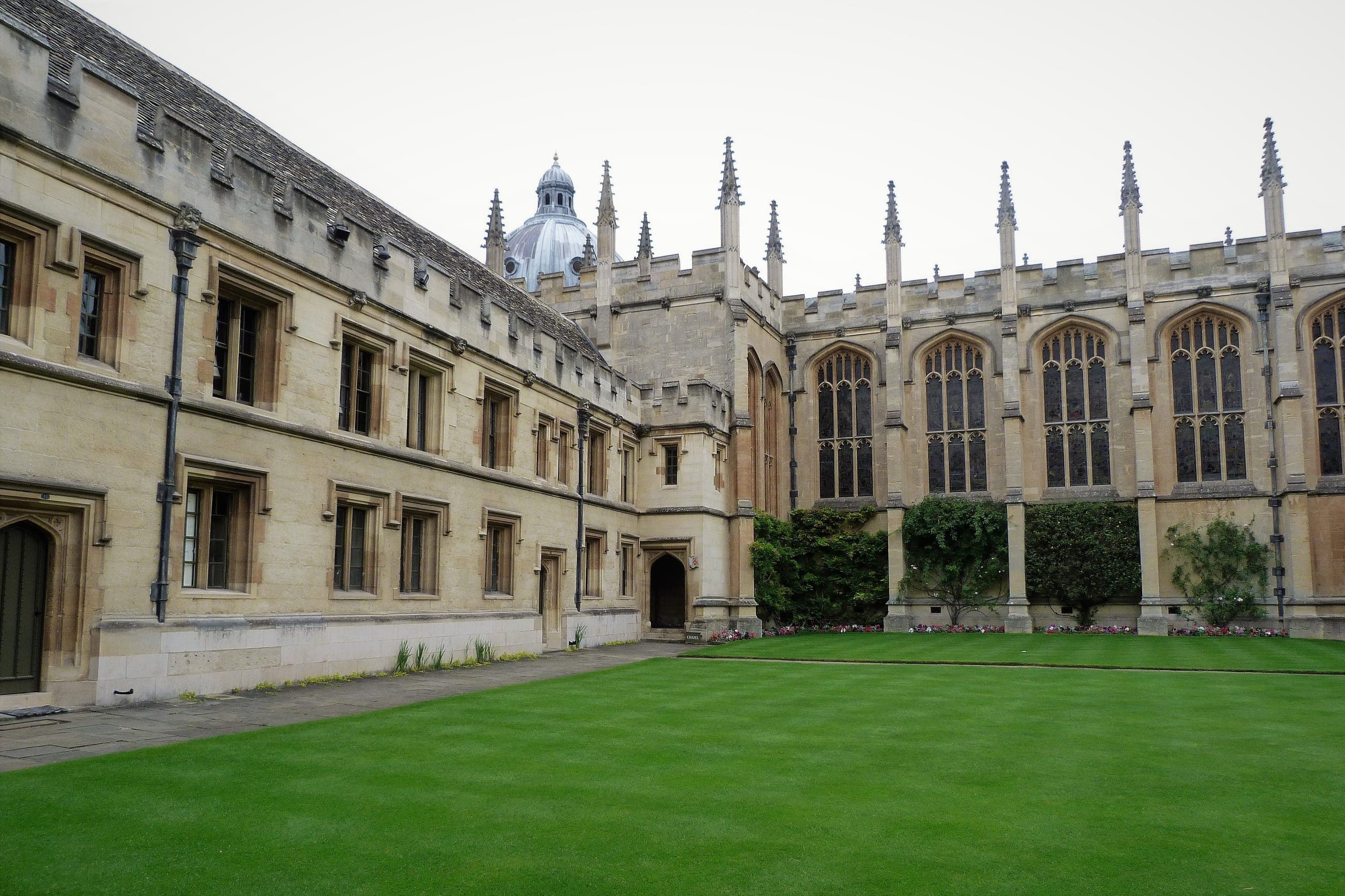
30 colleges offer this subject.
Applicants may choose a college or make an open application; nearly one fifth make open applications.
Oxford uses reallocation, and around one third of successful applicants receive an offer from a college they did not specify. That is why college choice should not be treated as a back-door admissions strategy.
Choose a college for practical reasons: accommodation, location, atmosphere, and whether it offers the course.
Section 12
Oxford describes graduates moving into technical, managerial, academic, financial, and commercial roles. Discover Uni says IV15-specific employment data is too small to publish, so the sector chart should be labelled as Oxford Computer Science subject-group data rather than course-specific Computer Science and Philosophy data.
Section 13
Oxford considers prior attainment in context where possible. This matters if your school context, disruption, or subject availability affected what you could take.
The course-specific Mathematics and Further Mathematics expectations still apply. If Further Mathematics was not available at your school, make that clear through the appropriate school or reference context rather than trying to hide the gap.
Watch & Learn
Student vlogs, mock interviews, lecture tasters, and admissions advice.
All videos are the property of their respective creators.
Further Reading
Super-curricular reading, websites, and tools recommended by our expert tutors.