
Year
01 / 03
1
Preliminary Examination
Foundations in language, literature and literary history
Foundations covering language, early medieval literature and modern literature; Prelims must be passed but do not count toward the final degree.

Complete Admissions Guide
English Literature at Oxford is among the most selective courses in the UK. Get 1-to-1 admissions coaching from Oxford or Cambridge graduates with subject-specific admissions expertise.
Last updated: September 2026
Key Facts
Overview
English Language and Literature at the University of Oxford is a 3-year BA (Hons) course with UCAS code Q300. For 2027 entry, Oxford requires AAA at A-level or IB 38 with 666 at HL, plus one piece of written work and no written admissions test.
Why study English Literature at Oxford?
Oxford is distinctive for applicants who want close reading and literary history to be taught together rather than separated into a literature-only route. The course structure begins with English language and literature, early medieval literature from 650–1350, and modern literature papers from 1830 onwards before students choose between Course I and Course II in Final Honour School.
Section 01
Click your country on the map below for country-specific entry guidance - accepted qualifications, expected scores, English-language requirements, and any local context worth knowing before you apply.
International Applicants
Pick a highlighted country to see the admissions-test, score, and English-language requirements that apply for applicants from that country.
Section 02
| Qualification | Typical Offer | Key Requirements |
|---|---|---|
| A-Level | AAA | English Literature or English Language and Literature required. |
| IB Diploma | 38 with 666 at HL | HL: English Literature or English Language and Literature required. |
Section 03
MAY to SEP
Build and prepare UCAS application
From May 2026, applicants can start their UCAS application; UCAS submission opens in early September.
15 OCT
Submit UCAS
Submit by 6pm UK time on 15 October 2026.
10 NOV
Submit written work
Submit one analytical marked English Literature essay with cover sheet by 10 November 2026.
END NOV to EARLY DEC
Shortlisting
Shortlisting decisions and interview invitations normally arrive in this window.
EARLY to MID DEC
Online interviews
Shortlisted applicants attend online academic interviews in December 2026.
12 JAN
Oxford decision
Oxford decisions for 2027 entry are released via UCAS on 12 January 2027.
05 MAY
UCAS reply deadline
Applicants who receive all decisions by 31 March 2027 must normally reply by 5 May 2027.
AUG
Confirm conditions after results
Offer holders confirm conditions when qualification results are released; exact 2027 A-level results day not verified from official sources in this audit.
18 OCT
Clearing closes
UCAS Clearing opens on 2 July 2027; the final date to add a Clearing choice is 18 October 2027.
MAY to SEP
Build and prepare UCAS application
From May 2026, applicants can start their UCAS application; UCAS submission opens in early September.
15 OCT
Submit UCAS
Submit by 6pm UK time on 15 October 2026.
10 NOV
Submit written work
Submit one analytical marked English Literature essay with cover sheet by 10 November 2026.
END NOV to EARLY DEC
Shortlisting
Shortlisting decisions and interview invitations normally arrive in this window.
EARLY to MID DEC
Online interviews
Shortlisted applicants attend online academic interviews in December 2026.
12 JAN
Oxford decision
Oxford decisions for 2027 entry are released via UCAS on 12 January 2027.
05 MAY
UCAS reply deadline
Applicants who receive all decisions by 31 March 2027 must normally reply by 5 May 2027.
AUG
Confirm conditions after results
Offer holders confirm conditions when qualification results are released; exact 2027 A-level results day not verified from official sources in this audit.
18 OCT
Clearing closes
UCAS Clearing opens on 2 July 2027; the final date to add a Clearing choice is 18 October 2027.
Section 04

English Literature at University of Oxford does not require a written admissions test for 2027 entry. Applications are assessed on academic record, personal statement, submitted written work (where requested), and interview performance.
Always verify on the official Oxford admissions tests page.
Section 05
Interview Invitation
Late Nov
Arrival to Interview
Early Dec
Technical Question
Mid Dec
Decision
Early Jan
Interview Invitation
Late Nov
Arrival to Interview
Early Dec
Technical Question
Mid Dec
Decision
Early Jan
Question Types You’ll See
Oxford describes the English interview as an academic discussion, held online for this course.
Shortlisted applicants usually have two interviews.
The discussion may cover submitted written work, wider reading and possibly unseen prose or verse.
The Faculty says interviewers look for close reading, independent reading, exchange of ideas, clarity of expression, analytical precision, flexibility and independent thinking.
In practice, sample question types may include close reading of an unseen poem, prose passage or short extract; discussion of submitted written work; exploration of wider reading; comparison of alternative interpretations; and thinking aloud about unfamiliar language, form, genre or context.
We recommend practicing aloud with short unseen passages. The goal is not to produce a polished lecture; it is to show how you notice detail, revise an interpretation and respond to a prompt.
Practice real Oxford English Literature interview questions from our free question bank.
English Literature Interview Questions →
Section 06
In practice, a strong application should read consistently: rigorous English work at school, a careful written-work submission, a statement shaped by real reading, and interviews that show live literary thinking.
Our recommendation · weighting of admission factors
Oxbridge Mentors recommendation, drawn from observed offer patterns. University of Oxford does not publish official weightings - exact balance varies by college, course and year.
Section 07

We recommend building the statement around a few literary problems rather than a long list of texts. For English Language and Literature, a useful sentence often starts with a question: why a form works, how a voice changes, or what a critic helped you notice.
Avoid writing as if Oxford wants a survey of the canon. It helps to choose a small number of texts, make precise claims about language or structure, and show how your thinking changed after reading criticism or comparing contexts.
Because the course includes language as well as literature, you can use the statement to show attention to diction, syntax, metre, genre, narrative voice or language change. Do not add linguistics terminology unless it genuinely helps your argument.
Tutors will also see the written-work submission, so avoid using the personal statement to repeat the same essay; let the two pieces show related but not identical evidence of close reading and independent thought.
See a full annotated example with line-by-line expert commentary.
English Literature PS Example →Section 08
We recommend one substantial project over several disconnected mini-activities. It should create evidence that you can choose a question, handle texts closely and revise your view.

Section 08
These are support, not substitute: one activity only matters if it changes how you read, write or argue.
Independent reading beyond syllabus:
Close reading practice:
Critical essays and literary theory:
Lectures, podcasts and public talks:
Writing and rewriting:
Discussion groups or reading circles:
Section 08
Competitions are not required. Their main value is that they force you to produce a sustained argument under an external brief.
None are required; one or two done well beats five half-attempted.
Section 09
Year
01 / 03
1
Foundations in language, literature and literary history
Foundations covering language, early medieval literature and modern literature; Prelims must be passed but do not count toward the final degree.
Year
02 / 03
2
Literary-historical breadth or earlier literature and language
Final Honour School papers in literary history through Course I or earlier literature and language through Course II.
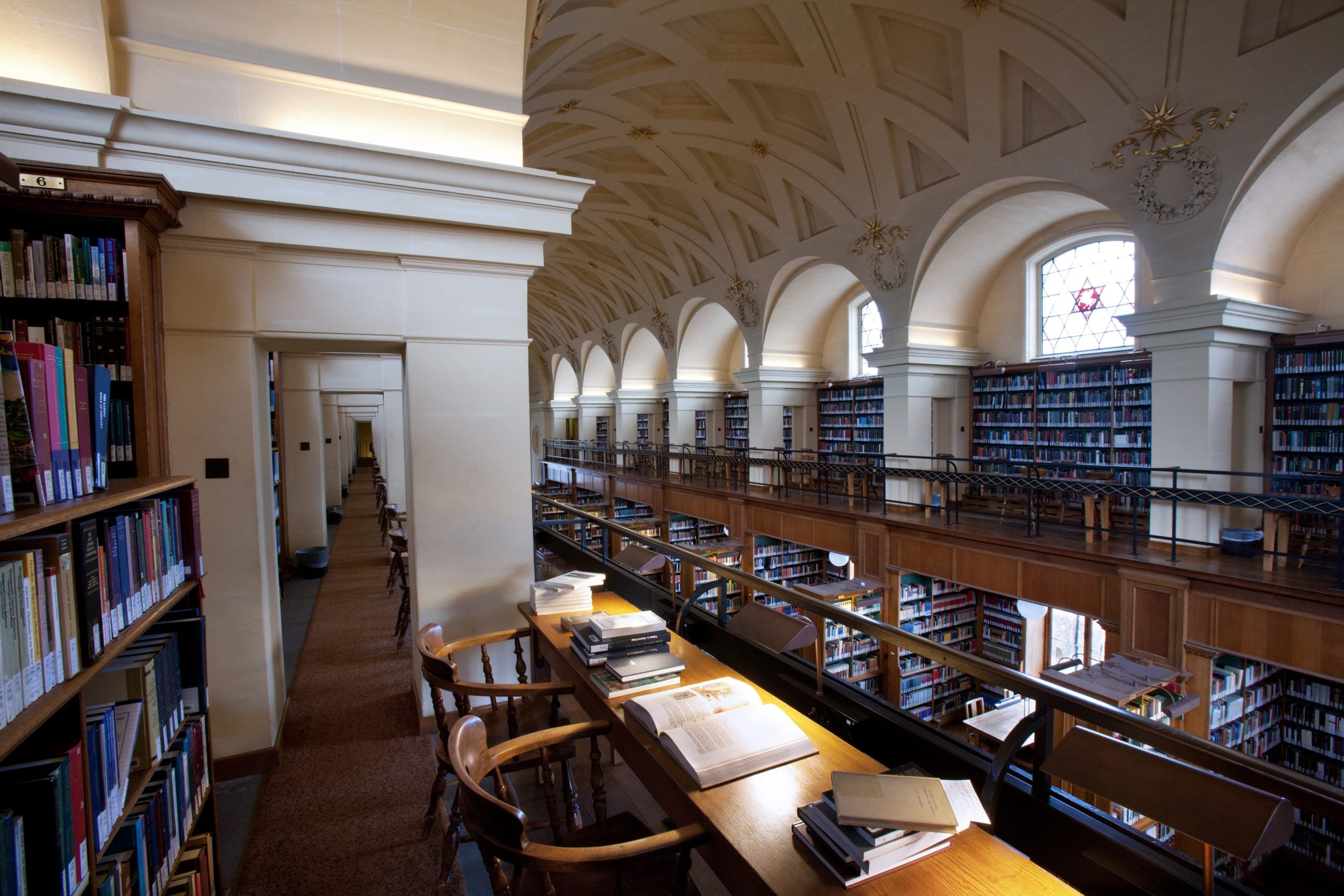
Year
03 / 03
3
Special options, Shakespeare or material text, and dissertation
Shakespeare or The Material Text, special options and an 8,000-word dissertation complete the degree.
Section 10

Oxford requires written work for English Language and Literature.
The required submission is one piece of marked analytical school or college work on an English Literature topic, no more than 2,000 words.
It should not be rewritten specially for Oxford, and it is normally submitted with teacher marks or comments and a cover sheet.
Choose the essay that best shows careful handling of language and interpretation, not the essay with the most impressive-sounding title.
Section 11
Start with the English Language and Literature course page For requirements and course facts. Then read Faculty of English: What we look for To understand the selection criteria.
The Faculty of English: About the course Gives the clearest route into the papers and assessment pattern. Great Writers Inspire Is an Oxford-hosted archive of audio and textual resources on canonical English writers.
For preparation, use resources to generate better questions rather than to collect names. A useful reading note should record the passage, the claim you made, the evidence for it and the objection that would test it.

Section 12
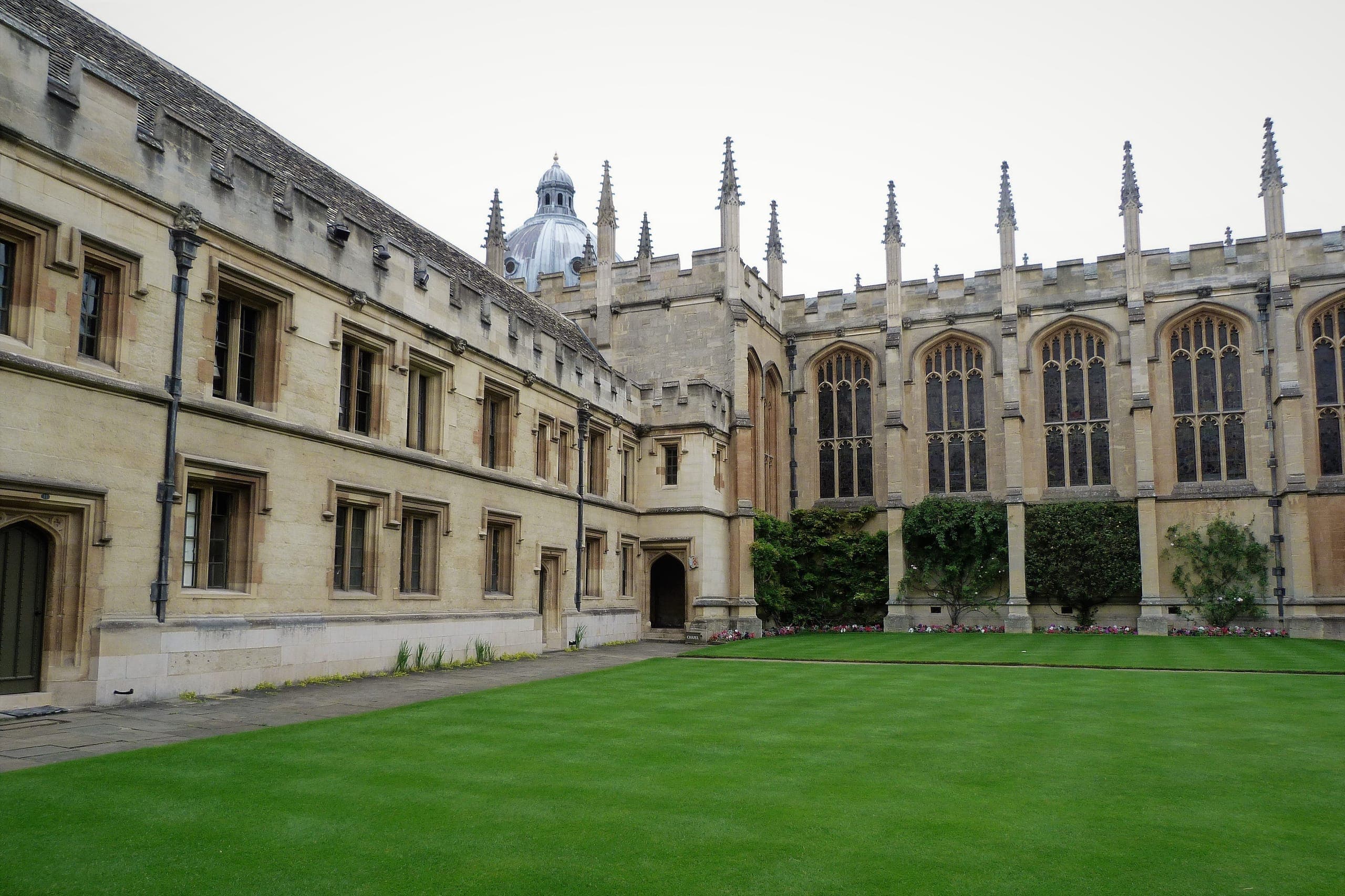
39 colleges offer this subject. ~20% of applicants submit an open application. ~33% of places come through the pool.
Open applications are assigned to a college or hall with fewer applications, and Oxford reallocates some applicants to balance the number of candidates per place across colleges.
College choice can affect living and community experience, but it should not be treated as a tactical admissions shortcut.
Section 13
Discover Uni reports that 86% of BA English Language and Literature graduates were in work and/or study 15 months after the course, with 77% of employed respondents in highly skilled work.
Oxford lists fields including law, advertising, acting, publishing, politics, teaching, librarianship, public relations, journalism, writing, further research, management consultancy and finance.
The most useful way to read these outcomes is breadth, not a single pipeline. English at Oxford trains close reading, written argument and movement between textual evidence and interpretive claim.
Section 14
Oxford considers GCSE results, where available, in the context of the school at which they were achieved.
Applicants without GCSEs are not penalised simply for lacking them.
Available contextual information is considered in shortlisting and final decisions.
Written work is useful evidence for applicants from systems where literary analysis is assessed differently from UK A-level English Literature.
Watch & Learn
Student vlogs, mock interviews, lecture tasters, and admissions advice.
A supercurricular video chosen to extend your reading beyond the syllabus.
A supercurricular video chosen to extend your reading beyond the syllabus.
A supercurricular video chosen to extend your reading beyond the syllabus.
A supercurricular video chosen to extend your reading beyond the syllabus.
A supercurricular video chosen to extend your reading beyond the syllabus.
All videos are the property of their respective creators.
Further Reading
Super-curricular reading, websites, and tools recommended by our expert tutors.