




Complete Admissions Guide

Geography at University of Oxford

Our students' Oxford acceptance rate

65%

Average UK applicant rate

17%

Everything you need to apply for Geography at University of Oxford: entry requirements, interviews, typical offers, and insider tips from Oxford graduates.

Last updated: May 2026

Key Facts · Oxford

  • A*AATypical Offer
  • 5:1Applicants / Place
  • 76Places / Year
  • Online academic discus…Interview
  • #1UK Ranking

Oxford Geography is a single-subject 3-year BA with UCAS code L700. The 2027-entry offer is A*AA at A-level or 39 in the IB with 766 at HL; Geography is recommended but not required. There is no written admissions test or written-work submission.

01

Section 01

Why Geography at University of Oxford?

The course has a broad structure: Year 1 covers earth systems processes, human geography, geographical controversies and geographical techniques. Years 2 and 3 move into geographical thought, foundational choices across human, physical and environmental geography, options, fieldwork and a dissertation.

Compared with a course that asks you to specialise early, Oxford Geography is better if you want to keep human, physical and environmental questions in conversation. We recommend it for applicants who enjoy moving between evidence types: maps, data, field observations, policy arguments, academic texts and current events.

How It Ranks Against Peers

  • University of Oxford

    Guardian
    #1
    CUG
    #1
    Times
  • University of St Andrews

    Guardian
    #2
    CUG
    #4
    Times
  • University of Cambridge

    Guardian
    #3
    CUG
    #3
    Times
  • Durham University

    Guardian
    CUG
    #2
    Times
    #1
  • London School of Economics and Political Science

    Guardian
    CUG
    #5
    Times
  • UCL

    Guardian
    CUG
    #6
    Times

Ranks shown are UK subject-table positions from the three major UK guides. World rankings are not included — UK applicants compare using UK-focused sources.

02

Section 02

International Applicants

International Applicants

Country-specific admissions requirements

FijiTanzaniaW. SaharaCanadaUnited States of AmericaKazakhstanUzbekistanPapua New GuineaIndonesiaArgentinaChileDem. Rep. CongoSomaliaKenyaSudanChadHaitiDominican Rep.RussiaBahamasFalkland Is.NorwayGreenlandFr. S. Antarctic LandsTimor-LesteSouth AfricaLesothoMexicoUruguayBrazilBoliviaPeruColombiaPanamaCosta RicaNicaraguaHondurasEl SalvadorGuatemalaBelizeVenezuelaGuyanaSurinameFranceEcuadorPuerto RicoJamaicaCubaZimbabweBotswanaNamibiaSenegalMaliMauritaniaBeninNigerNigeriaCameroonTogoGhanaCôte d'IvoireGuineaGuinea-BissauLiberiaSierra LeoneBurkina FasoCentral African Rep.CongoGabonEq. GuineaZambiaMalawiMozambiqueeSwatiniAngolaBurundiIsraelLebanonMadagascarPalestineGambiaTunisiaAlgeriaJordanUnited Arab EmiratesQatarKuwaitIraqOmanVanuatuCambodiaThailandLaosMyanmarVietnamNorth KoreaSouth KoreaMongoliaIndiaBangladeshBhutanNepalPakistanAfghanistanTajikistanKyrgyzstanTurkmenistanIranSyriaArmeniaSwedenBelarusUkrainePolandAustriaHungaryMoldovaRomaniaLithuaniaLatviaEstoniaGermanyBulgariaGreeceTurkeyAlbaniaCroatiaSwitzerlandLuxembourgBelgiumNetherlandsPortugalSpainIrelandNew CaledoniaSolomon Is.New ZealandAustraliaSri LankaChinaTaiwanItalyDenmarkUnited KingdomIcelandAzerbaijanGeorgiaPhilippinesMalaysiaBruneiSloveniaFinlandSlovakiaCzechiaEritreaJapanParaguayYemenSaudi ArabiaAntarcticaN. CyprusCyprusMoroccoEgyptLibyaEthiopiaDjiboutiSomalilandUgandaRwandaBosnia and Herz.MacedoniaSerbiaMontenegroKosovoTrinidad and TobagoS. Sudan

Hover to preview · Click to draw route

Select a highlighted country to see the admissions-test, score, and English-language requirements that apply specifically to applicants from that country.

03

Section 03

Entry Requirements

  • A-LevelA*AA
  • IB Diploma39 (including core points) with 766 at HL
  • Advanced Placement (AP)Either four APs at grade 5 (including any subjects required for the course) or three APs at grade 5 (including any subjects required for the course) plus ACT 32+ or SAT 1470+.
04

Section 04

Application Process & Key Deadlines

  1. 01

    YEAR 12

    Build Geography readiness

    Develop broad subject knowledge across physical, human and environmental geography, and practise connecting case-study evidence to larger concepts. Use reading, lectures, maps, data and current affairs to build material you can discuss analytically.

    Tip:Prioritise evidence-led thinking: for each article, book or lecture, note the claim, evidence, scale and counterargument.

  2. 02

    12 MAY

    UCAS application opens

    UCAS applications for 2027 entry open in May 2026. Applicants can begin drafting their course choices, personal statement responses, education history and reference arrangements.

    Tip:Ask your referee early because the reference must be complete before the application can be sent.

  3. 03

    01 SEP

    Completed UCAS applications can be submitted

    From 1 September 2026, completed 2027-entry UCAS applications can be submitted. This is the point to move from drafting to final checks.

    Tip:Leave time for school or centre approval rather than treating 15 October as your personal finishing date.

  4. 04

    15 OCT

    Submit UCAS

    Oxford Geography applicants must submit their UCAS application by 6pm UK time on 15 October 2026. Geography does not require a separate written admissions test or written work submission.

    Tip:Check the UCAS choices, course code L700, predicted grades, reference and personal statement responses before your school or centre sends the form.

  5. 05

    NOV

    Watch for shortlisting and interview instructions

    Shortlisted candidates may receive limited notice before interview and should check emails carefully. Geography interviews are online, so applicants should prepare a reliable device, internet connection, quiet space and Microsoft Teams access.

    Tip:Do a technology rehearsal and keep paper, pens and any requested pre-reading ready.

  6. 06

    EARLY — MID DEC

    Attend online interviews

    Oxford expects undergraduate interviews for 2027 entry to take place online in December 2026. The checked official sources support early-to-mid December as the general interview period; a Geography-specific final timetable/date range was not verified in this audit.

    Tip:Treat the interview as an academic conversation: explain your reasoning, respond to prompts and revise your view when new evidence is introduced.

  7. 07

    12 JAN

    Receive Oxford decision

    Shortlisted applicants for 2027 entry are due to receive the outcome of their Oxford application through UCAS on 12 January 2027, with colleges following up directly later that day.

    Tip:If unsuccessful, feedback may be requested from the college that considered the application before Oxford’s stated February feedback deadline.

  8. 08

    MAY

    Reply to UCAS offers

    Applicants who have received all decisions by the spring UCAS deadline normally need to choose firm and insurance offers by the UCAS reply deadline. For most Oxford offer holders, this is the point to decide whether to make Oxford the firm choice.

    Tip:Check UCAS Hub for your individual reply deadline, as it depends on when all your universities respond.

  9. 09

    AUG

    Meet offer conditions and confirm place

    Conditional offer holders have their place confirmed through UCAS if they meet all offer conditions. Oxford states that applicants who miss conditions are reviewed by their college, while Oxford does not participate in UCAS Clearing or Extra.

    Tip:Have your college contact details ready in case your results require review or clarification.

05

Section 05

Admissions Test

Admissions Test

There is no written admissions test for Oxford Geography in the current Oxford course information. Applicants also do not need to submit written work for this course.

Because there is no test, preparation should focus on the UCAS application, academic reference, predicted and achieved qualifications, wider geographical reading, and readiness for an academic interview.

06

Section 06

The Interview: What to Expect

Invitation → Decision: the interview timeline

Interview Invitation

Late Nov

Arrival to Interview

Early Dec

Technical Question

Mid Dec

Decision

Early Jan

Question Types You’ll See

Interpreting a map, graph, image or short data stimulusApplying a familiar geographical concept to an unfamiliar place or scenarioDiscussing a current environmental, social or geopolitical issue across different scalesExplaining and challenging an argument from personal reading or the UCAS personal statementComparing physical and human geography perspectives on the same problem

The exact Geography-specific count and duration were not verified, so do not prepare around a fixed 2 x 25-minute format.

The interview is an academic discussion rather than a recital of memorised case studies. It may involve interpreting a map, graph, image or short data stimulus, applying a concept to an unfamiliar place, or discussing a current environmental, social or geopolitical issue across scales.

Practise with a map, graph, satellite image or short data extract: start with what you observe, separate evidence from interpretation, say what you cannot yet conclude, and explain what further data would test your answer. Be willing to revise your view when the interviewer adds new information.

Practise with realistic questions from our free Geography mock interview bank.

Free Mock Questions
07

Section 07

How Decisions Are Actually Made

Weighting of Admission Factors

100%

  • Admission Test35%
  • Interview30%
  • Predicted Grades20%
  • Personal Statement10%
  • Contextual Factors5%

Indicative — exact balance varies by college and year.

Oxford Geography decisions should be treated as holistic rather than formulaic.

There is no written admissions test and no written-work submission for Geography. In reality, that means the interview, academic record and UCAS evidence have to do more work than they would for a course with a separate test.

We recommend treating every part of the application as evidence of the same thing: whether you can think geographically with precision, flexibility and evidence.

08

Section 08

Personal Statement Tips

A strong Geography personal statement should not read like a travel diary. We recommend building it around two or three problems you have investigated: climate risk, migration, urban inequality, water, geopolitics, conservation, development, remote sensing or another topic you can analyse with evidence.

The personal statement may matter as a source of interview discussion, so the best statements make it easy for a tutor to ask a hard follow-up question.

Use specific reading, data, maps or field observations. It is worth showing how your view changed after comparing sources, rather than listing books without explaining what you did with them.

See a full annotated example with line-by-line expert commentary.

Geography PS Example
09

Section 09

Supercurriculars & Competitions

Projects

Projects are useful because they show method, not just interest. We recommend choosing a narrow question and producing something tangible: a map, short report, annotated dataset, fieldwork write-up or mini-dissertation.

How to present a project:

  1. Why you did it.
  2. What the project is.
  3. How you did it.
  4. What went wrong.
  5. What you did about it.
  6. What you learned.
  • Local climate-risk atlas: Choose one neighbourhood and combine public flood, heat, air-quality, land-use and deprivation data into a short GIS or map-led report explaining who is most exposed and why.
  • Migration, housing and inequality case study: Compare two cities or boroughs using census data, policy reports and academic articles to test how migration, housing markets and planning decisions interact.
  • Fieldwork micro-dissertation: Design a small field investigation using transects, land-use surveys, interviews or observational mapping, then write up methods, limitations and findings in a research-note style.

Other Supercurriculars

Other supercurriculars should widen your evidence base and sharpen your questions. Use them to build chains of reading rather than a long activity list.

  • Field observation: Keep a field notebook that links everyday observations to concepts such as place, scale, landscape, risk, mobility and inequality.
  • GIS and data skills: Practise mapping with open datasets and explain the methodological choices behind each map rather than just producing visuals.
  • Long-form reading: Read across human and physical geography, then write short synoptic notes that compare methods, evidence and assumptions.
  • Lectures and public talks: Use RGS, university and museum events to build a chain of questions for further reading rather than treating attendance as the endpoint.
  • Essay writing: Enter or practise with essay competitions to develop an argument under constraints, especially on climate, development, geopolitics or urban change.

These are support, not substitute: one careful project with reflection beats five activities you cannot discuss.

Competitions

Competitions are not required for Oxford Geography. They can still stretch your reading, argument and data-handling if you choose a question that genuinely fits your interests.

  1. Oxford Essay Prize tests Independent research, structured argument and the ability to go beyond the school syllabus. Prepare by: Use Oxford's academic competitions hub to identify a relevant humanities/social-science essay question, then build a reading list before drafting.
  2. John Locke Institute Essay Prize tests Analytical essay writing on questions that often overlap with politics, economics, history, philosophy and social geography. Prepare by: Choose a question with a clear spatial or environmental angle, define terms precisely and support claims with named evidence.
  3. Trinity College Cambridge essay prizes tests Discipline-specific critical writing for sixth-form students, useful for developing source-led arguments. Prepare by: Select a relevant humanities or social-science question and practise building a balanced argument from academic rather than purely journalistic sources.
  4. Nuffield Research Placements tests Research design, data handling, scientific reasoning and reflective communication. For Geography, it is most relevant when the project involves environmental fieldwork, GIS or spatial data, climate evidence, remote sensing or physical-geography methods. Prepare by learning basic data skills, reading around environmental science or spatial analysis, and keeping a clear project log.
  5. RES Young Economist Essay tests Evidence-led analysis of current economic problems, often useful for development, urban, environmental and geopolitical topics. Prepare by: Frame the essay around a real-world spatial issue, use diagrams or data where appropriate and evaluate policy trade-offs.

None are required; one or two done well beats five half-attempted.

10

Section 10

Course Structure

  1. Year 1: Preliminary Examination

    Foundations across human and physical geography

    The first year gives all students a shared grounding in physical systems, human geography, geographical debate and geographical techniques. It also introduces field-based work through Dorset, Oxford and Wytham Woods exercises, so students begin linking conceptual study with observation, data and place-based analysis.

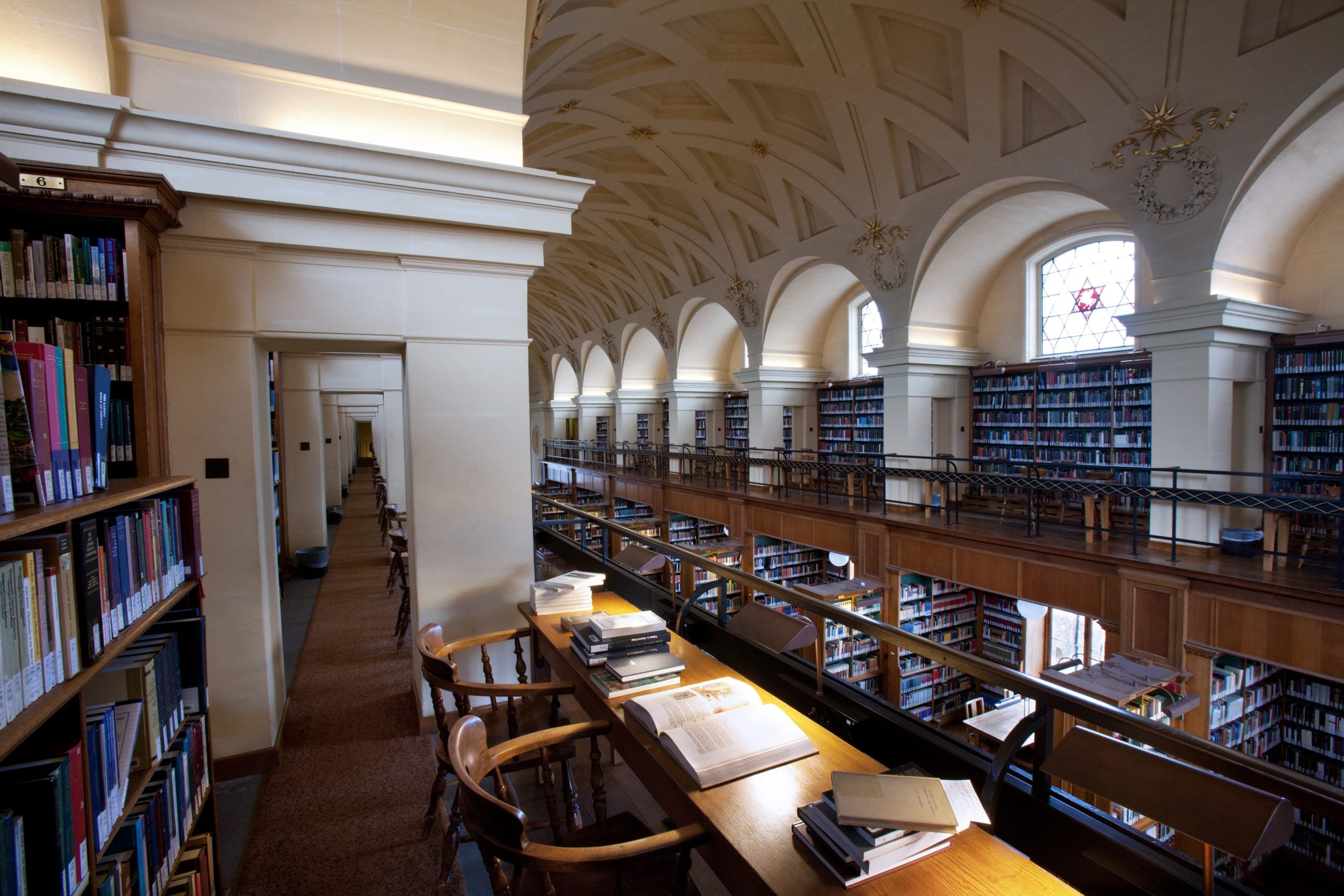
    Early funded fieldwork introduces Oxford-style geographical enquiry in both human and physical settings.

  2. Year 2: Final Honour School begins

    Core theory, methods and emerging specialisation

    The second year begins the Final Honour School phase. Students take the shared core paper in geographical thought, choose two foundational courses from the physical, human and environmental geography strands, and begin building a more specialised profile through options and fieldwork.

    A funded week-long overseas residential field course is currently offered in locations such as the Netherlands and Tenerife.

  3. Year 3: Final Honour School completion

    Advanced options and independent research

    The final year consolidates specialist work through advanced options and the dissertation. Students complete independent research that may be field-based, geocomputational, laboratory-based, remote-sensing-led or archival, depending on the research question.

    The dissertation is the major independent research element and can draw on field, laboratory, archival, geocomputational or remote-sensed evidence.

11

Section 11

Building Geography Knowledge

For a foundation in the discipline, start with Geography: A Very Short Introduction, Human Geography: A Very Short Introduction, Prisoners of Geography, The Invention of Nature, Adventures in the Anthropocene, Why Geography Matters. These books help you move between geographical method, human geography, geopolitics, environmental change and the history of geographical thought.

For video-led enrichment, use Oxford Geography, Royal Geographical Society, NASA Earth Observatory, Our Changing Climate, The Economist. The stronger use of these channels is not passive watching; make notes on evidence, scale, uncertainty and alternative explanations.

For audio, try Ask the Geographer, Geographical Podcast, GeogPod, The Inquiry, Geography Is Everything. Podcasts work best when you turn one episode into a follow-up reading question or a case study you can analyse.

For practical skills, use Geographic Information Systems (GIS) Specialization, Getting Started with QGIS, Getting started with the climate crisis, Fundamentals of Remote Sensing, Nature-based Solutions to Global Challenges Foundation Course. We recommend building one small map-led or data-led project from these courses, because Oxford Geography includes techniques, fieldwork and dissertation work.

12

Section 12

College Choice & Reallocation

30 colleges offer this subject. around a fifth of applicants make open applications of applicants submit an open application. around a third of successful applicants receive an offer from a college they did not originally specify of places come through the pool.

Oxford is collegiate, and applicants can either choose a college or make an open application.

College choice affects where you may live, receive college tutorials and belong socially, but it should not be treated as a shortcut to admission. Oxford uses reallocation so strong applicants are not disadvantaged by choosing a more oversubscribed college.

We recommend choosing a college for practical reasons, not because you think it will be easier.

13

Section 13

Career Prospects

Where graduates of this course head after leaving — by sector, as reported in the university’s destinations survey.

0102020%
Conservation and environment professionals
25%
Business, public service and project management professionals
15%
Research, science and administrative professionals
10%
Finance and IT professionals
5%
Teaching professionals
5%
Managers, directors and senior officials
20%
Other, unknown and rounding balance
% of graduatesSector

Full employer lists, median salary bands, and sector notes live on the careers data page.

Oxford Geography graduates move into environmental, public-sector, business, research, finance, technology and education roles.

14

Section 14

Contextual Circumstances

Oxford uses contextual data to understand an applicant's achievements in the context of educational and socio-economic background. For UK applicants, this includes school performance information, neighbourhood data, care-experience status, free-school-meal history and participation in Oxford widening-participation programmes.

Applicants identified as most disadvantaged are strongly recommended for shortlisting where they are likely to achieve the standard offer and meet any required course-test threshold; Geography has no written test. Tutors can consider individual circumstances, but disruption or mitigating circumstances should be made clear through the appropriate UCAS or school-reference route.

Watch & Learn

Helpful Videos for Geography at Oxford

Student vlogs, mock interviews, lecture tasters, and admissions advice.

Geography at Oxford

Official overview of the Oxford undergraduate Geography degree from the School of Geography and the Environment.

Open Day 2025 - Geography at Oxford: Where Will it Take You?

Open-day video introducing the course and the destinations it can lead to.

Going Places with Geography Part 1

Royal Geographical Society careers video showing how geography skills translate into varied careers.

NASA's Earth Observatory: 25 Years, 25 Images

A visual introduction to Earth-observation imagery and environmental change.

Are we using the wrong world map?

BBC World Service explainer on map projections and how maps shape perception.

All videos are the property of their respective creators.

Frequently Asked Questions

No. The official Oxford Geography course page states that there is no written admissions test for this course.
No. The official Oxford Geography course page states that written work is not required.
The official Oxford course page lists A-level A*AA, IB 39 with 766 at Higher Level, or equivalent international qualifications. Geography is recommended but not required.
Oxford lists 15 October 2026 as the application deadline for Geography 2027 entry; international applicants follow the same UCAS deadline.
The official course page lists 75% interviewed, 22% successful and an average intake of 76 across 2023-2025. This means many applicants are shortlisted, but final selection remains competitive.
Not reliably. Oxford says colleges do not specialise by subject, no college is easier to get into for a course, and reallocation is used so that strong applicants are not penalised for applying to oversubscribed colleges.
Oxford says tutors look for a strong academic record, ability to deploy knowledge with initiative, awareness of the world around you and readiness to engage with unfamiliar ideas; interviews are not simple knowledge tests.
They should check that their qualification is accepted, that they can meet the same 15 October deadline, that they understand the English-language requirement or waiver route, and that they have time to arrange a Student visa if they receive an offer.

Free Resource

Free Admissions Newsletter

Weekly tips on Geography admissions, application deadlines, and interview prep — straight from Oxford graduates.

Get Expert Help With Geography at Oxford

Book a free 30-minute consultation with one of our specialist tutors.

Get Started