

Year
01 / 04
1
Year 1
Closely structured first year with oral, grammar and translation work plus introductory literature teaching.

Complete Admissions Guide
Modern Languages at Oxford is among the most selective courses in the UK. Get 1-to-1 admissions coaching from Oxford or Cambridge graduates with subject-specific admissions expertise.
Last updated: September 2026
Key Facts
Overview
Oxford Modern Languages is a 4-year BA, and the official course identity is “Modern Languages”. The UCAS code should be shown as “See course codes” because Oxford lists separate course codes by language combination rather than one course-wide code.
You can study one modern language or two languages together, including some beginners’ routes. It is not usually possible to study two beginners’ languages or a beginners’ language on its own, and beginners’ courses are not available for French or Spanish.
Most routes include a year abroad of at least 24 weeks in an immersive target-language environment, while routes involving Beginners’ Russian or a Middle Eastern language use a different year-abroad structure. The official 2023–25 course-page average intake is 141.
Why study Modern Languages at Oxford?
Oxford’s Modern Languages course sits under a course family rather than a single fixed language route: applicants choose from single-language, two-language and some beginners’ combinations. In our view, that structure is strongest for applicants who want language, literature and culture to reinforce each other rather than sit in separate boxes.
Section 01
Click your country on the map below for country-specific entry guidance - accepted qualifications, expected scores, English-language requirements, and any local context worth knowing before you apply.
International Applicants
Pick a highlighted country to see the admissions-test, score, and English-language requirements that apply for applicants from that country.
Section 02
| Qualification | Typical Offer | Key Requirements |
|---|---|---|
| A-Level | AAA; applicants continuing a language are usually expected to have that language to A-level or equivalent, unless applying for a beginner's course. | A modern language required. |
| IB Diploma | 38 (including core points) with 666 at HL; applicants continuing a language are usually expected to have that language at Higher Level or equivalent, unless applying for a beginner's course. | |
| Advanced Placement (AP) | Either four APs at grade 5 (including any subjects required for the course) or three APs at grade 5 plus ACT 31+ or SAT 1460+. |
Section 03
YEAR 12
Build language and culture depth
Start reading, listening and viewing beyond the school syllabus in the language(s) and culture(s) you may apply for. Oxford Modern Languages tutors look for motivation, curiosity, literary aptitude and critical engagement, not only classroom fluency.
12 MAY to SEP
Prepare UCAS and choose college/open application
UCAS 2027 entry applications open on 12 May 2026 and completed undergraduate applications can be submitted from 1 September 2026. Use this period to choose your language combination, decide whether to name a college or make an open application, draft your personal statement and secure your academic reference.
15 OCT
Submit UCAS
Submit your UCAS application by 18:00 UK time on 15 October 2026. The reference must be complete before the application can be sent.
LATE OCT to NOV
Check post-application requirements
For 2027 entry, Modern Languages applicants do not need to take a written admissions test and do not need to submit written work. Monitor college emails and begin setting up a quiet interview space and reliable online interview technology.
MID NOV to EARLY DEC
Watch for shortlisting and prepare
Interview invitations are usually sent between mid-November and early December, and applicants may receive as little as one week's notice. Re-read your personal statement, refresh grammar fundamentals and practice discussing unfamiliar short texts aloud.
8 to 17 DEC
Attend online interviews
Modern Languages first-college interviews are scheduled for 8–11 December 2026. If a second-college interview is needed, applicants are told by 14:00 on 12 December and those interviews run on 15–17 December.
12 JAN
Receive Oxford decision
Shortlisted candidates for 2027 entry will receive their outcome via UCAS on 12 January 2027, with colleges following up directly later that day.
AUG 2027
Results and confirmation
If your Oxford offer is conditional on exam results, confirmation depends on meeting the offer conditions when results are released. The exact 2027 JCQ/A-level results day was not verified in official sources consulted, so check UCAS and your exam board nearer the time.
YEAR 12
Build language and culture depth
Start reading, listening and viewing beyond the school syllabus in the language(s) and culture(s) you may apply for. Oxford Modern Languages tutors look for motivation, curiosity, literary aptitude and critical engagement, not only classroom fluency.
12 MAY to SEP
Prepare UCAS and choose college/open application
UCAS 2027 entry applications open on 12 May 2026 and completed undergraduate applications can be submitted from 1 September 2026. Use this period to choose your language combination, decide whether to name a college or make an open application, draft your personal statement and secure your academic reference.
15 OCT
Submit UCAS
Submit your UCAS application by 18:00 UK time on 15 October 2026. The reference must be complete before the application can be sent.
LATE OCT to NOV
Check post-application requirements
For 2027 entry, Modern Languages applicants do not need to take a written admissions test and do not need to submit written work. Monitor college emails and begin setting up a quiet interview space and reliable online interview technology.
MID NOV to EARLY DEC
Watch for shortlisting and prepare
Interview invitations are usually sent between mid-November and early December, and applicants may receive as little as one week's notice. Re-read your personal statement, refresh grammar fundamentals and practice discussing unfamiliar short texts aloud.
8 to 17 DEC
Attend online interviews
Modern Languages first-college interviews are scheduled for 8–11 December 2026. If a second-college interview is needed, applicants are told by 14:00 on 12 December and those interviews run on 15–17 December.
12 JAN
Receive Oxford decision
Shortlisted candidates for 2027 entry will receive their outcome via UCAS on 12 January 2027, with colleges following up directly later that day.
AUG 2027
Results and confirmation
If your Oxford offer is conditional on exam results, confirmation depends on meeting the offer conditions when results are released. The exact 2027 JCQ/A-level results day was not verified in official sources consulted, so check UCAS and your exam board nearer the time.
Section 04

Modern Languages at University of Oxford does not require a written admissions test for 2027 entry. Applications are assessed on academic record, personal statement, submitted written work (where requested), and interview performance.
Always verify on the official Oxford admissions tests page.
Section 05
Interview Invitation
Late Nov
Arrival to Interview
Early Dec
Technical Question
Mid Dec
Decision
Early Jan
Interview Invitation
Late Nov
Arrival to Interview
Early Dec
Technical Question
Mid Dec
Decision
Early Jan
Question Types You’ll See
They may include a short unseen text, a grammar or language-analysis exercise, discussion of wider reading, target-language discussion for an advanced language, or literary and cultural interpretation.
What matters is how you think aloud. We recommend practicing with short passages you have not seen before, then explaining your interpretation, uncertainties and changes of mind.
The interview can test reading response, linguistic ability or aptitude, and spoken competence where relevant. It can also test clarity in English, breadth of reading, curiosity, critical engagement, motivation and commitment. Preparation should therefore combine grammar refresh, regular target-language listening or reading, and discussion of texts or films beyond the syllabus.
Practice real Oxford Modern Languages interview questions from our free question bank.
Modern Languages Interview Questions →
Section 06
Oxford Modern Languages decisions are made holistically rather than by a published points formula. For 2027 entry, there is no written admissions test and no written work, so the main subject-specific evidence comes through online interviews, supported by academic record, predicted or achieved grades, UCAS personal statement, teacher reference and contextual information.
Oxford does not publish a fixed numerical weighting formula for 2027 Modern Languages decisions, so the visual should be read as editorial guidance rather than official scoring.
In practice, you should treat every part of the application as capable of helping or hurting. Strong language ability without reflective reading is thin; wide reading without accurate language work is also thin.
Our recommendation · weighting of admission factors
Oxbridge Mentors recommendation, drawn from observed offer patterns. University of Oxford does not publish official weightings - exact balance varies by college, course and year.
Section 07

A strong Modern Languages personal statement should make your academic interests specific. Do not write only that you “love languages”; show what you have read, watched, translated or investigated, and what problem it raised.
We recommend choosing two or three focused examples rather than listing every activity. For Oxford Modern Languages, a translation problem or commentary can be especially useful because it lets you discuss tone, syntax, idiom, register and cultural reference in a concrete way.
Avoid turning the statement into a travel diary. For Oxford, the stronger route is usually close analysis: a word that did not translate cleanly, a theme that changed across texts, or a cultural claim you found difficult.
See a full annotated example with line-by-line expert commentary.
Modern Languages PS Example →Section 08
Projects work best when they produce evidence of thought, not just evidence of effort. For Modern Languages, that usually means translation commentary, close reading, cultural comparison, or language-in-use analysis.

Section 08
Work through official Oxford resources, then turn them into notes, questions or short comparative responses rather than passive browsing.
These activities support your application; they do not substitute for accurate language work, careful reading and clear academic discussion.
Use the Oxford Modern Languages Digital Resources hub for official subject and admissions material.:
Use Oxplore Modern Languages for prompts that connect language and culture to larger questions.:
Use New College Oxford Modern Languages Resources for reading and preparation suggestions.:
Keep the official Oxford Modern Languages Course page as the admissions baseline.:
Section 08
Competitions are not required. What they do well is stretch your translation, essay-writing or cultural-analysis habits under a defined brief.
None are required; one or two done well beats five half-attempted.
Section 09
Year
01 / 04
1
Closely structured first year with oral, grammar and translation work plus introductory literature teaching.
Year
02 / 04
2
Further Oxford-based language, literature and culture study, with no formal examinations in this year for the standard route.
Year
03 / 04
3
Year abroad for most routes, normally at least 24 weeks in an immersive target-language environment.
Year
04 / 04
4
Final Oxford year leading to Final University examinations.
Section 10

No written work is required for Oxford Modern Languages for 2027 entry.
Section 11
Start with the Oxford Modern Languages Digital Resources because it is the official faculty resource hub for subject, tutorial, admissions and interview material.
Use Oxplore Modern Languages when you want prompts that connect language, culture and wider questions beyond the classroom. New College Oxford Modern Languages Resources is useful as a college-level preparation page with reading and preparation suggestions.
For translation practice, the Anthea Bell Prize for Young Translators Gives a concrete way to practice close reading and translation commentary. Keep the Oxford Modern Languages Course page bookmarked for entry requirements, interviews, course structure and official statistics.

Section 12
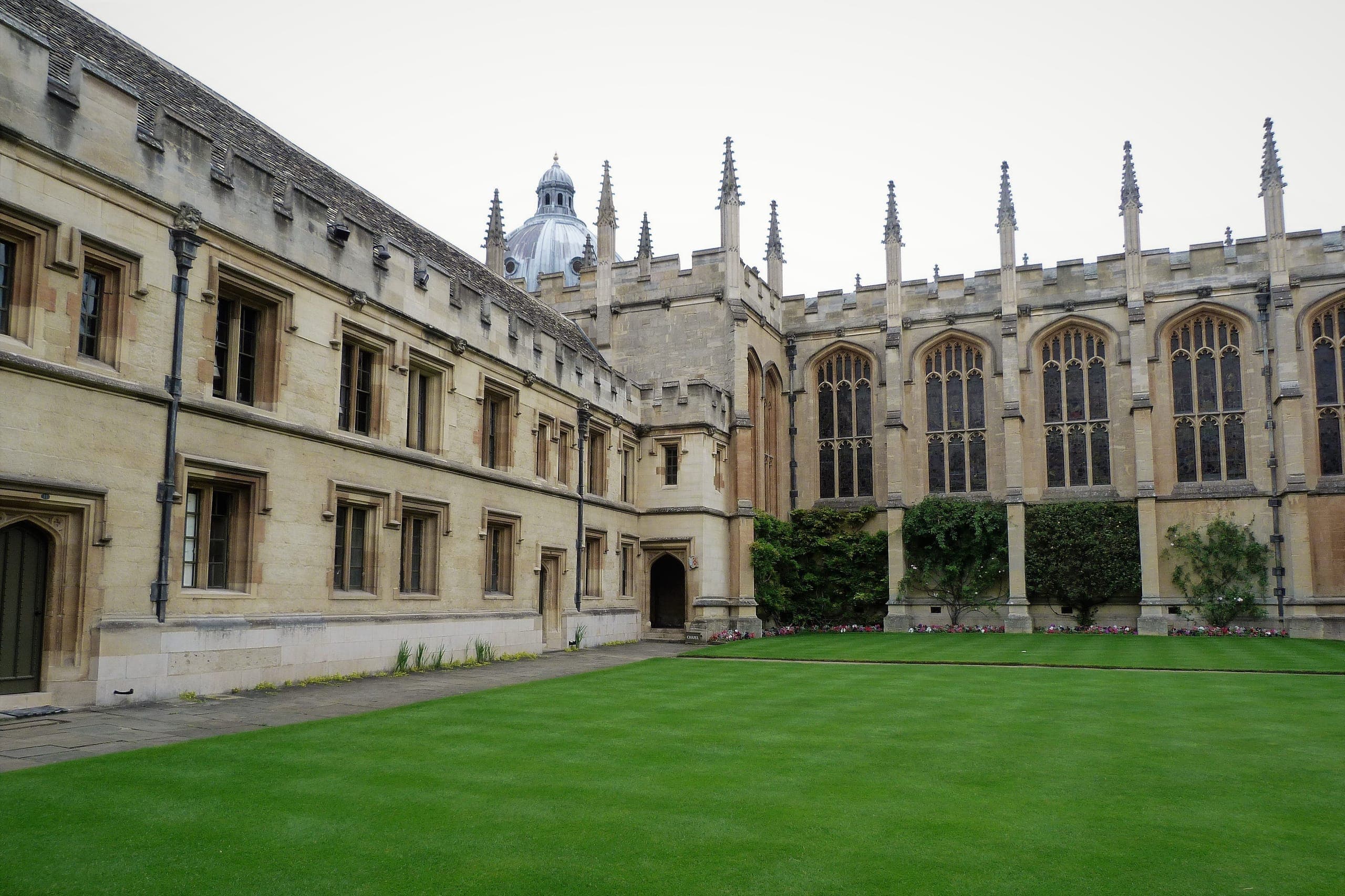
39 colleges offer this subject.
Applicants may choose a college or make an open application, and open applications are assigned to a college or hall with relatively fewer applications for that course.
Oxford may reallocate shortlisted applicants so that each college interviews roughly the same number of applicants per available place. A successful applicant may receive an offer from a college other than the one they named.
We recommend choosing for practical fit: accommodation, location, community, facilities and tutorial tutors.
Section 13
Oxford presents Modern Languages as a degree with high-level linguistic training and broad transferable skills. The Faculty careers page lists paths including journalism, management, law, teaching and lecturing, arts and administration, civil and diplomatic service, and environmental and development work, while the Careers Service material also points to communications, business, public service, charity, language services and cultural sectors. The Careers Service infographic gives approximate outcomes six months after leaving for Modern Languages graduates including joint-honours students: 58% employed, 29% in further study, 6% looking for work and 7% unavailable for work. These should be read as broad infographic outcomes, not precise course-by-course labour-market guarantees.
Section 14
Oxford says applicants’ grades are considered in context wherever possible. GCSEs and IGCSEs are not required for Modern Languages, but where applicants have taken them Oxford may use them as evidence of prior attainment in context.
International applicants who have not taken GCSEs or IGCSEs are assessed using the course selection criteria and predicted or achieved equivalent qualifications. Applicants should use the UCAS reference and relevant school evidence to explain educational disruption, limited subject availability, illness, disability or other contextual circumstances.
For continuing-language options, Oxford usually expects the language to have been studied to A-level, Advanced Higher, IB Higher Level or equivalent; where an applicant’s qualification route does not include the language, CEFR B1 may be relevant. Beginners’ routes exist for several languages, but not French or Spanish.
Watch & Learn
Student vlogs, mock interviews, lecture tasters, and admissions advice.
All videos are the property of their respective creators.
Further Reading
Super-curricular reading, websites, and tools recommended by our expert tutors.