

Year
01 / 04
1
Year 1
Prelims year combining core philosophy and modern-language work.

Complete Admissions Guide
Philosophy and Modern Languages at Oxford is among the most selective courses in the UK. Get 1-to-1 admissions coaching from Oxford or Cambridge graduates with subject-specific admissions expertise.
Last updated: September 2026
Key Facts
Overview
Philosophy and Modern Languages at Oxford is a 4-year BA with a compulsory year abroad and an AAA typical A-level offer. For 2027 entry, Oxford’s central pages record no admissions test and no written-work requirement; UCAS codes vary by language option.
Why study Philosophy and Modern Languages at Oxford?
There is no single national league table for Philosophy and Modern Languages, because the joint school is counted under Philosophy in some tables and Modern Languages in others. Compare the Philosophy and Modern Languages subject tables separately, and use Oxford's own course page for the current entry profile.

Section 01
Click your country on the map below for country-specific entry guidance - accepted qualifications, expected scores, English-language requirements, and any local context worth knowing before you apply.
International Applicants
Pick a highlighted country to see the admissions-test, score, and English-language requirements that apply for applicants from that country.
Section 02
| Qualification | Typical Offer | Key Requirements |
|---|---|---|
| A-Level | AAA; applicants continuing a modern language are usually expected to have that language to A-level or equivalent, unless applying for a beginner's course. | A modern language required. |
| IB Diploma | 39 (including core points) with 666 at HL; applicants continuing a modern language are usually expected to have that language at Higher Level or equivalent, unless applying for a beginner's course. | |
| Advanced Placement (AP) | Either four APs at grade 5 (including any subjects required for the course) or three APs at grade 5 plus ACT 31+ or SAT 1460+. |
Section 03
Start preparing the UCAS application
Choose course and college/open application, draft the personal statement, and organise the academic reference.
UCAS submission opens
Oxford’s timeline says applications can be submitted from early September.
UCAS deadline
Final Oxford application deadline for 2027 entry.
Written-work deadline not applicable
Oxford’s general written-work deadline exists, but Philosophy and Modern Languages has no written-work requirement.
Shortlisting begins
Oxford’s timeline says shortlisting takes place from the end of November.
First college interviews
Published timetable window for Philosophy and Modern Languages first college interviews.
Second college interview decisions
Applicants are told whether second college interviews are needed.
Second college interviews
Published timetable window for any second college interviews.
Decisions released
Oxford’s published decision date for 2027 entry.
Start preparing the UCAS application
Choose course and college/open application, draft the personal statement, and organise the academic reference.
UCAS submission opens
Oxford’s timeline says applications can be submitted from early September.
UCAS deadline
Final Oxford application deadline for 2027 entry.
Written-work deadline not applicable
Oxford’s general written-work deadline exists, but Philosophy and Modern Languages has no written-work requirement.
Shortlisting begins
Oxford’s timeline says shortlisting takes place from the end of November.
First college interviews
Published timetable window for Philosophy and Modern Languages first college interviews.
Second college interview decisions
Applicants are told whether second college interviews are needed.
Second college interviews
Published timetable window for any second college interviews.
Decisions released
Oxford’s published decision date for 2027 entry.
Section 04

Philosophy and Modern Languages at University of Oxford does not require a written admissions test for 2027 entry. Applications are assessed on academic record, personal statement, submitted written work (where requested), and interview performance.
Always verify on the official Oxford admissions tests page.
Section 05
Interview Invitation
Late Nov
Arrival to Interview
Early Dec
Technical Question
Mid Dec
Decision
Early Jan
Interview Invitation
Late Nov
Arrival to Interview
Early Dec
Technical Question
Mid Dec
Decision
Early Jan
Question Types You’ll See
All shortlisted applicants will be invited to online interviews in December. The published Philosophy and Modern Languages timetable lists first college interviews on Monday 8, Tuesday 9, Wednesday 10 and Thursday 11 December, with any second college interviews on Monday 15, Tuesday 16 and Wednesday 17 December.
For Philosophy and Modern Languages, preparation should connect argument with language study. It helps to practice explaining a philosophical claim clearly, then testing it against a passage, example, or counterargument.
Do not try to script answers. In our experience, stronger preparation comes from reading actively, making precise distinctions, and being able to revise a view when a tutor challenges one premise.
Practice real Oxford Philosophy and Modern Languages interview questions from our free question bank.
Philosophy and Modern Languages Interview Questions →
Section 06
We recommend avoiding any claim that grades, interviews, written work, or tests carry fixed percentages.
In reality, a strong application needs consistency. Your achieved or predicted grades, submitted application, teacher reference, and interview discussion should all point in the same academic direction.
For this course, intellectual fit means showing that you can move between philosophical abstraction and close language work: defining terms carefully, noticing textual detail, and defending a view without ignoring historical, literary, or linguistic context.
Our recommendation · weighting of admission factors
Oxbridge Mentors recommendation, drawn from observed offer patterns. University of Oxford does not publish official weightings - exact balance varies by college, course and year.
Section 07

Do not write a generic statement about loving philosophy and languages. We recommend making the link between the two subjects visible: for example, how a text changes in translation, how a concept behaves differently in another language, or how philosophical argument depends on exact wording.
Use fewer examples and go deeper. It is better to analyse one philosophical problem or one language-related textual question carefully than to list several books without reflection.
Avoid claiming certainty too early. A good statement can show curiosity, disagreement, and development: what you first thought, what challenged that view, and what you now want to investigate.
Section 08
A useful project for this course should connect close reading with argument. We recommend choosing something small enough to analyse properly: one concept, one passage, one translation problem, or one philosophical question across two authors.
Possible project directions include comparing a translated passage with the original, tracing one philosophical concept across two texts, or writing a short argument map for a problem raised by a language text.

Section 08
Other supercurricular work should support the application rather than decorate it.
These are support, not substitute.
Keep a reading log with objections, not just summaries.:
Practice translating short passages and noting what cannot be carried over neatly.:
Discuss one philosophical problem with a teacher or reading group.:
Write short reflections that turn reading into argument.:
Revisit earlier notes after two weeks and record what changed.:
Section 08
Competitions are not required. What they can do well is give you a deadline, a sharper question, and a reason to write with precision.
For this course, a philosophy essay prize or a language-focused competition can be useful only if it produces close reasoning or stronger language analysis; one or two done well beats five half-attempted.
Coaching for these competitions
Section 09
Year
01 / 04
1
Prelims year combining core philosophy and modern-language work.

Year
02 / 04
2
Oxford-based study before the year abroad, with core philosophy options and modern-language/literature work.

Year
03 / 04
3
Compulsory year abroad for Modern Languages students.
Year
04 / 04
4
Final Oxford-based year completing advanced options and final assessment.
Section 10
We recommend avoiding named books, channels, podcasts, or courses in the CMS copy until they have been verified in the resources.
A good preparation pattern is still clear. Build one strand in philosophy, one strand in the target language, and one strand where the two meet; at Oxford, that might mean using the official course page to understand the Prelims shape, then practicing the kind of close textual attention the course description emphasises.
Reflection matters more than volume. Keep notes on what a text made you think, where an argument was weak, and how your view changed after rereading.
Think: A Compelling Introduction to Philosophy By Simon Blackburn is the clearest entry point for the core problems of mind, knowledge, freedom and reality. Pair it with In Other Words By Jhumpa Lahiri, a linguistically precise memoir about inhabiting a second language that speaks to both the philosophy-of-language and modern-languages sides of this degree.
For philosophy preparation, Philosophy Bites Gives short, precise interviews on specific philosophical problems, and In Our Time: Philosophy covers major figures from Wittgenstein to de Beauvoir. For the modern languages component, Oxford Modern Languages Publishes faculty talks on language, literature and translation.
For language practice, Duolingo Builds daily vocabulary habits. For a structured course in philosophy, Introduction to Philosophy from the University of Edinburgh covers knowledge, reality and ethics with strong written exercises that develop the analytical style Oxford PML interviews expect.

Section 11
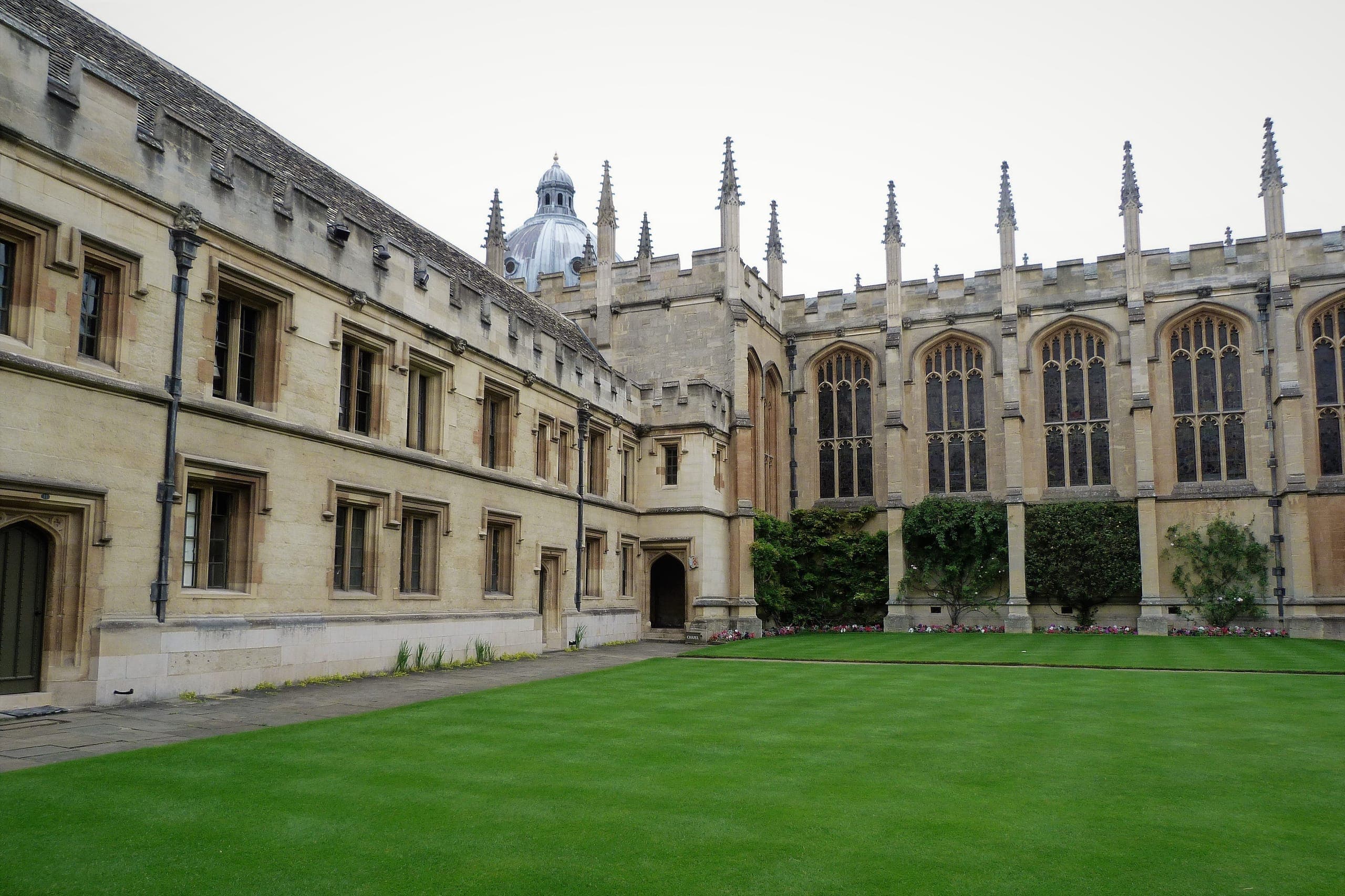
29 colleges offer this subject.
We recommend keeping this section advisory rather than numerical until the college block is verified.
Use college choice as a fit question, not a ranking exercise. Because Philosophy and Modern Languages availability depends on the chosen language combination, applicants should check the current college options for their specific language route rather than assuming every college offers every combination.
Do not over-optimise. A carefully chosen college can be sensible, but a strong application should not depend on trying to game the college system.
Section 12
In our view, Philosophy and Modern Languages can be framed as training in argument, interpretation, language ability, and written communication; employer names and percentages should wait for verified data.
The Oxford faculty page lists broad graduate paths including academic teaching and research, teaching, commerce, banking and financial services, journalism and communications, but this draft avoids turning those examples into percentages.
Section 13
Use this section to explain genuine educational context. It can include school subject availability, disruption, caring responsibilities, illness, or other circumstances that affected preparation.
We recommend being specific and restrained. The strongest contextual information tells admissions tutors what happened, when it happened, and how it affected academic opportunity.
Do not turn context into an excuse. Present it as information that helps readers interpret the rest of the application fairly.
Watch & Learn
Student vlogs, mock interviews, lecture tasters, and admissions advice.
All videos are the property of their respective creators.
Further Reading
Super-curricular reading, websites, and tools recommended by our expert tutors.