

Year
01 / 04
1
Year 1
Mathematical and physical foundations
First-year time is approximately equally divided between mathematics and physics, with lectures, tutorials and practical laboratories.

Complete Admissions Guide
Physics at Oxford is among the most selective courses in the UK. Get 1-to-1 admissions coaching from Oxford or Cambridge graduates with subject-specific admissions expertise.
Last updated: September 2026
Key Facts
Overview
Oxford Physics (UCAS F303) is a standalone MPhys / BA course with 3- and 4-year routes; all applicants apply first for the four-year MPhys. For 2027 entry, the typical A-level offer is A*AA and applicants must take ESAT Mathematics 1, Mathematics 2 and Physics.
Why study Physics at Oxford?
These rankings use different methods and subject categories, so they should be read as a comparative snapshot rather than a measure of individual fit.

Section 01
Click your country on the map below for country-specific entry guidance - accepted qualifications, expected scores, English-language requirements, and any local context worth knowing before you apply.
International Applicants
Pick a highlighted country to see the admissions-test, score, and English-language requirements that apply for applicants from that country.
Section 02
| Qualification | Typical Offer | Key Requirements |
|---|---|---|
| A-Level | A*AA to include Mathematics and Physics. The A* must be in Mathematics, Physics or Further Mathematics. | Physics, Mathematics required. Further Mathematics recommended. |
| IB Diploma | 39 (including core points) with 766 at HL; the 7 should be in either Physics or Mathematics. | |
| Advanced Placement (AP) | Either four APs at grade 5 (including any subjects required for the course) or three APs at grade 5 plus ACT 32+ or SAT 1470+. For Mathematics requirements, Calculus BC is recommended where available; Calculus AB is accepted if BC is unavailable. |
Section 03
01 JUN
Open UAT-UK account and request support
UAT-UK account creation, access-arrangement requests and bursary requests open on 1 June 2026 at 3pm UK time.
20 JUL - 28 SEP
Book the ESAT
Book during the Oxford 2027-entry booking window. Booking closes on 28 September 2026 at 6pm UK time.
01 SEP - 15 OCT
Submit UCAS
Completed UCAS applications for 2027 entry can be submitted from 1 September 2026; Oxford applications must reach UCAS by 15 October 2026 at 6pm UK time.
12 - 16 OCT
Sit the ESAT
Oxford Physics applicants sit ESAT in the October window and must take Mathematics 1, Mathematics 2 and Physics.
LATE NOV / EARLY DEC
Check shortlisting outcome
Oxford says shortlisted applicants may receive only about a week's notice; Physics shortlisting uses ESAT as the primary criterion interpreted with contextual data.
10 - 17 DEC
Attend online Physics interviews
Physics first-college interviews run on 10, 11, 12 and 15 December 2026, with second-college interviews on 16 and 17 December 2026.
12 JAN
Receive Oxford decision
Shortlisted candidates for 2027 entry are informed via UCAS on 12 January 2027; colleges follow up directly later that day.
AUG
Results and confirmation
Conditional offer holders are confirmed through UCAS if they meet all conditions; if conditions are missed, the college reviews results and makes a final decision. The exact 2027 results-day date is unverified.
01 JUN
Open UAT-UK account and request support
UAT-UK account creation, access-arrangement requests and bursary requests open on 1 June 2026 at 3pm UK time.
20 JUL - 28 SEP
Book the ESAT
Book during the Oxford 2027-entry booking window. Booking closes on 28 September 2026 at 6pm UK time.
01 SEP - 15 OCT
Submit UCAS
Completed UCAS applications for 2027 entry can be submitted from 1 September 2026; Oxford applications must reach UCAS by 15 October 2026 at 6pm UK time.
12 - 16 OCT
Sit the ESAT
Oxford Physics applicants sit ESAT in the October window and must take Mathematics 1, Mathematics 2 and Physics.
LATE NOV / EARLY DEC
Check shortlisting outcome
Oxford says shortlisted applicants may receive only about a week's notice; Physics shortlisting uses ESAT as the primary criterion interpreted with contextual data.
10 - 17 DEC
Attend online Physics interviews
Physics first-college interviews run on 10, 11, 12 and 15 December 2026, with second-college interviews on 16 and 17 December 2026.
12 JAN
Receive Oxford decision
Shortlisted candidates for 2027 entry are informed via UCAS on 12 January 2027; colleges follow up directly later that day.
AUG
Results and confirmation
Conditional offer holders are confirmed through UCAS if they meet all conditions; if conditions are missed, the college reviews results and makes a final decision. The exact 2027 results-day date is unverified.
Section 04

Oxford Physics requires the Engineering and Science Admissions Test (ESAT) for 2027 entry. Applicants must take Mathematics 1, Mathematics 2 and Physics.
The Oxford Physics ESAT window is 12-16 October 2026. UAT-UK account creation, access-arrangement requests and bursary requests open on 1 June 2026 at 3pm UK time, test booking opens on 20 July 2026 at 3pm BST, and booking closes on 28 September 2026 at 6pm UK time.
Oxford Physics says ESAT is compulsory and the primary shortlisting criterion, interpreted with contextual data, but Oxford does not publish a fixed pass mark, cutoff or weighting. For international applicants, the test gives Oxford a common academic signal across different school systems, and China, Hong Kong and Macau ESAT delivery is limited to 12-13 October 2026.
We recommend building ESAT preparation around timed problem-solving, clean written reasoning and fast recovery from mistakes. The aim is not to memorise tricks; it is to become quicker at recognising which physical principle and which mathematical tool the question needs.
Full ESAT preparation and tutoring | format, scoring, strategy, and free practice resources.
ESAT Preparation & Tutoring →Section 05
Interview Invitation
Late Nov
Arrival to Interview
Early Dec
Technical Question
Mid Dec
Decision
Early Jan
Interview Invitation
Late Nov
Arrival to Interview
Early Dec
Technical Question
Mid Dec
Decision
Early Jan
Question Types You’ll See
The verified interview format is an online academic, problem-based mathematics and physics discussion. The interview tests physics and mathematics problem-solving, basic principles in unfamiliar situations, mathematical formulation, logical reasoning, response to hints and clear oral explanation.
Expect the conversation to feel more like a short tutorial than a school oral exam. You may be given a mechanics, electromagnetism, graph, limiting-case or multi-step algebra problem and asked to think aloud.
We recommend practicing with unfamiliar problems rather than rehearsing polished speeches. A good answer often includes a false start, a correction and a clearer second attempt.
Practice real Oxford Physics interview questions from our free question bank.
Physics Interview Questions →
Section 06
For Oxford Physics, the most decision-shaping evidence is the combination of ESAT and interview performance, but Oxford does not publish a fixed formula. Predicted grades, achieved academic record, reference, personal statement and contextual circumstances remain supporting and moderating evidence.
Physics procedures identify ESAT as the primary shortlisting signal and describe post-interview scoring using ESAT and interview scores, moderated with contextual information. Oxford also considers academic record, predicted grades, school reference, personal statement, admissions-test evidence where required and interview evidence for shortlisted applicants.
Do not read any weighted visual on the page as an official Oxford formula.
Our recommendation · weighting of admission factors
Oxbridge Mentors recommendation, drawn from observed offer patterns. University of Oxford does not publish official weightings - exact balance varies by college, course and year.
Section 07

Oxford considers the UCAS personal statement and academic reference as part of the application evidence. Your statement should therefore support the academic case, not repeat a list of achievements.
We recommend choosing two or three physics ideas and showing how your understanding changed. A paragraph on a book, lecture or problem set is stronger when it explains the question you followed, the equation or concept that mattered, and what you still do not fully understand.
Avoid claims that could apply to any STEM applicant. “I have always loved physics” is less useful than a short account of how you modelled a physical system, found a limit in your first approach, and changed the model.
It helps to connect your wider reading to mathematical reasoning. Oxford Physics is not just looking for enthusiasm; it is looking for evidence that you can use mathematics as a language for physics.
See a full annotated example with line-by-line expert commentary.
Physics PS Example →Section 08
We recommend building at least one project that makes you quantify a physical system.
In our view, a useful project does not need expensive equipment. It needs a question, assumptions, a method, some mathematics and a clear account of what did not work.

Section 08
Other useful supercurricular activities should strengthen the same core skills: mathematical fluency, physical intuition and clear explanation.
These are support, not substitute. ESAT and interview preparation still need direct, timed problem-solving.
Work through Olympiad and challenge problems.:
Build mathematical fluency beyond routine exam questions.:
Run a practical investigation with measurements and uncertainty.:
Watch lectures or read beyond the school syllabus.:
Explain physics aloud without hiding behind memorised phrases.:
Section 08
Competitions are not required, but they can stretch you if you review the solutions properly. One or two done well is better than five half-attempted.
Coaching for these competitions
Section 09
Year
01 / 04
1
Mathematical and physical foundations
First-year time is approximately equally divided between mathematics and physics, with lectures, tutorials and practical laboratories.

Year
02 / 04
2
Core physics and mathematical methods
Second year covers thermal physics, electromagnetism, quantum physics and mathematical methods with practical work.

Year
03 / 04
3
Advanced core physics, projects and options
Third year includes advanced topics and computational or experimental project work; BA and MPhys assessment routes differ.
Year
04 / 04
4
MPhys research specialism
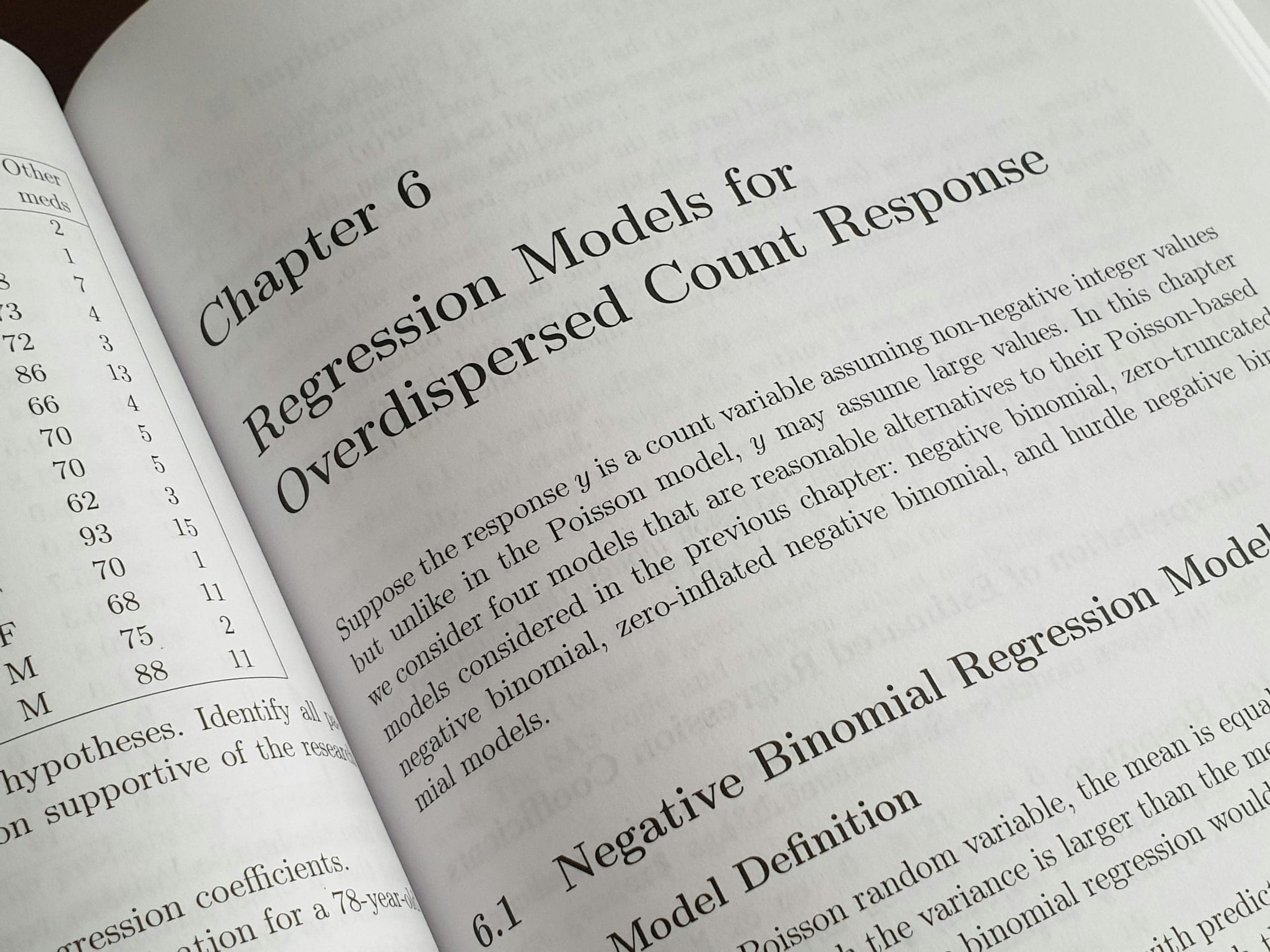
Fourth year consists of two major option courses and an MPhys project.
Section 10
Use the resource list as a preparation sequence rather than a link dump. Start with official Oxford and UAT-UK pages for requirements and deadlines, then use problem practice and reading to build the habits tested by ESAT and interviews.
For Oxford Physics Preparation, keep notes on assumptions, variables, limiting cases and why each equation applies. That is more useful for ESAT and tutorial-style interview thinking than simply recording final answers.

Section 11
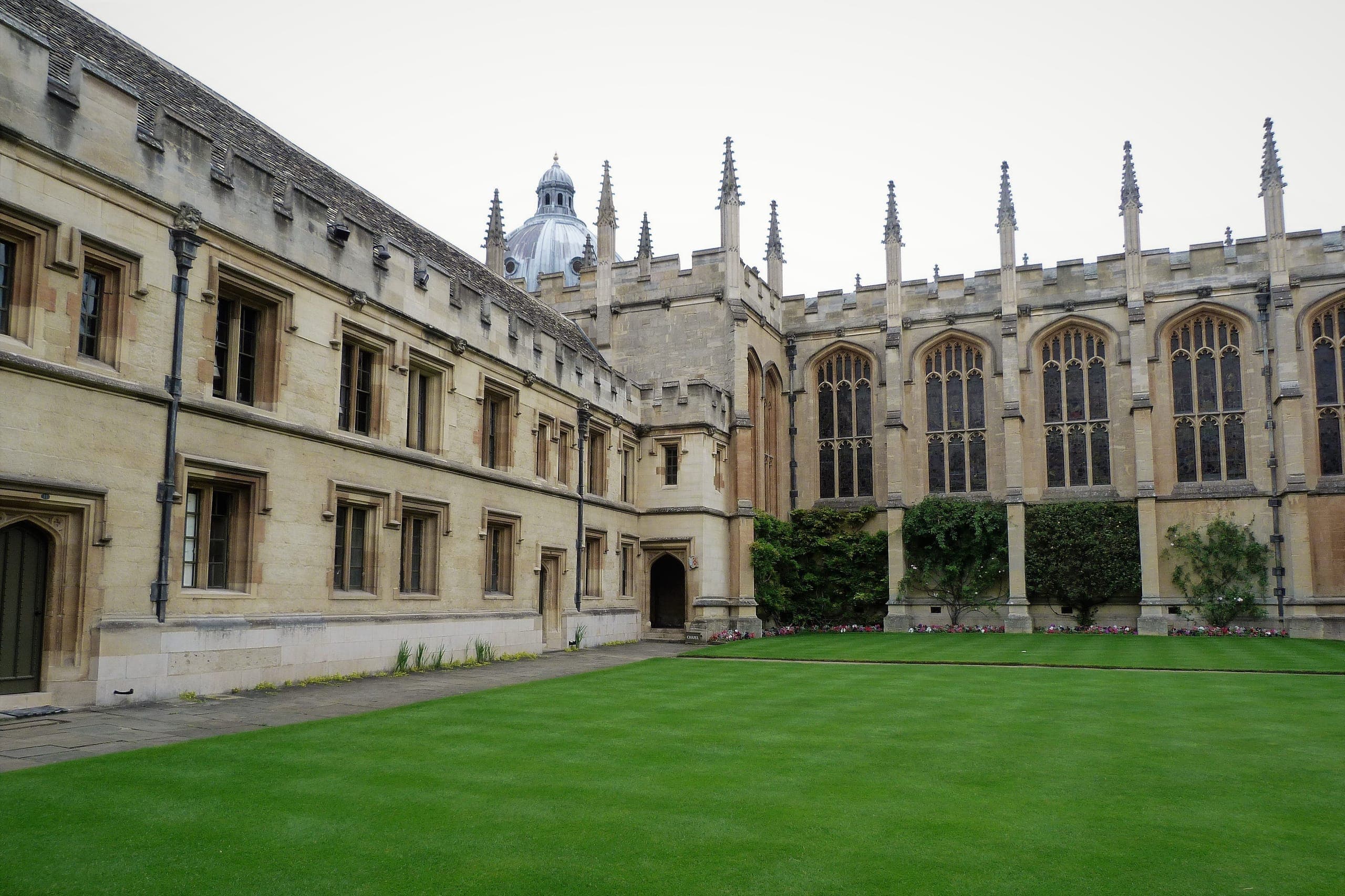
39 colleges offer this subject. ~20% of applicants submit an open application. ~33% of places come through the pool.
Around a fifth of applicants make an open application, and around a third of successful applicants receive an offer from a college they did not specify.
Oxford calls this process reallocation, and colleges work together under a Common Framework for Admissions. College choice affects living, pastoral and tutorial community, but should not be treated as a route to an easier Physics place.
We recommend choosing a college for practical reasons: accommodation, location, atmosphere and whether you would be happy living there. Do not over-optimise based on rumours about admissions odds.
Section 12
Oxford describes Physics graduates as progressing into higher degrees, universities, industry, research and development, technical consultancy, manufacturing, science education and wider professions such as finance and business.
The important point is breadth. Physics can lead to research, technical roles, data-heavy work, teaching, finance or consultancy, but the common thread is quantitative reasoning.
Section 13
Oxford assesses applications using academic record, predicted grades, school reference, personal statement, admissions-test performance where required and interview evidence for shortlisted applicants. For Physics, Mathematics and Physics are required, Further Mathematics is helpful but not required, and the Mechanics module is highly recommended where available.
Educational disruption, illness, caring responsibilities, school-level disadvantage and subject-access limitations should be evidenced through the UCAS reference and Oxford contextual admissions mechanisms. International applicants should check academic equivalency and English-language evidence early.
Four-year Physics applicants who need a Student visa should account for ATAS timing before applying for the visa. We recommend presenting context through the UCAS reference and Oxford’s contextual admissions mechanisms, so tutors can interpret your academic record under the Common Framework rather than treating the context as a personal statement theme.
Watch & Learn
Student vlogs, mock interviews, lecture tasters, and admissions advice.
All videos are the property of their respective creators.
Further Reading
Super-curricular reading, websites, and tools recommended by our expert tutors.