
Year
01 / 03
1
Part I
Foundation across a wide range of linguistic subfields
You take 4 papers.

Complete Admissions Guide
Linguistics at Cambridge is among the most selective courses in the UK. Get 1-to-1 admissions coaching from Oxford or Cambridge graduates with subject-specific admissions expertise.
Last updated: September 2026
Key Facts
Overview
Cambridge Linguistics is a 3-year BA (Hons) with UCAS code Q100 and a typical A-Level offer of A*AA. The course starts with 4 foundation papers before optional Part IIA papers and a Part IIB dissertation. Some Colleges use a Linguistics Admissions Assessment and some ask for submitted written work.
Why study Linguistics at Cambridge?
Cambridge lists Linguistics, BA (Hons) as a 3-year full-time degree with UCAS code Q100. The course page also records Cambridge as #1 in the UK for Linguistics in The Complete University Guide 2026.
Section 01
Click your country on the map below for country-specific entry guidance - accepted qualifications, expected scores, English-language requirements, and any local context worth knowing before you apply.
International Applicants
Pick a highlighted country to see the admissions-test, score, and English-language requirements that apply for applicants from that country.
Section 02
| Qualification | Typical Offer | Key Requirements |
|---|---|---|
| A-Level | A*AA | A modern or classical language, Mathematics, English Language recommended. |
| IB Diploma | 40–42 with 776 at HL | |
| Advanced Placement (AP) | Usually at least 5 AP Scores at grade 5 in subjects related to the course, plus a high SAT or ACT score and a high overall GPA in the US High School Diploma. |
Section 03
Jun–Jul 2026
Open days & shortlist colleges
Visit Cambridge in person if you can. Open days run in late June and early July. Begin narrowing your college list and reading first-year reading lists.
Sep 2026
Draft your personal statement
Write for the subject, not the institution. Cambridge admissions tutors look for ~80% academic content and genuine super-curricular engagement.
15 Oct 2026
UCAS deadline
Submit your UCAS application by 18:00 UK time on 15 October 2026.
22 Oct 2026
My Cambridge Application deadline
Complete the My Cambridge Application supplementary questionnaire by 18:00 UK time on 22 October 2026. This replaced the old SAQ.
10 Nov 2026
Submitted written work deadline
Most arts and humanities courses ask for one or two pieces of marked school work. Each college confirms its exact deadline; 10 November is the standard date.
Dec 2026
Interviews
Around three-quarters of applicants are interviewed. Typically 1–2 interviews of 25–45 minutes each at your chosen or allocated college.
27 Jan 2027
Main decisions released
Cambridge releases its main decisions on 27 January 2027. Around a quarter of offers are made through the Winter Pool, strong applicants reconsidered by colleges with remaining places.
Jun–Jul 2026
Open days & shortlist colleges
Visit Cambridge in person if you can. Open days run in late June and early July. Begin narrowing your college list and reading first-year reading lists.
Sep 2026
Draft your personal statement
Write for the subject, not the institution. Cambridge admissions tutors look for ~80% academic content and genuine super-curricular engagement.
15 Oct 2026
UCAS deadline
Submit your UCAS application by 18:00 UK time on 15 October 2026.
22 Oct 2026
My Cambridge Application deadline
Complete the My Cambridge Application supplementary questionnaire by 18:00 UK time on 22 October 2026. This replaced the old SAQ.
10 Nov 2026
Submitted written work deadline
Most arts and humanities courses ask for one or two pieces of marked school work. Each college confirms its exact deadline; 10 November is the standard date.
Dec 2026
Interviews
Around three-quarters of applicants are interviewed. Typically 1–2 interviews of 25–45 minutes each at your chosen or allocated college.
27 Jan 2027
Main decisions released
Cambridge releases its main decisions on 27 January 2027. Around a quarter of offers are made through the Winter Pool, strong applicants reconsidered by colleges with remaining places.
Section 04

Linguistics at University of Cambridge does not require a written admissions test for 2027 entry. Applications are assessed on academic record, personal statement, submitted written work (where requested), and interview performance.
Always verify on the official Oxford admissions tests page.
Section 05
Interview Invitation
Late Nov
Arrival to Interview
Early Dec
Technical Question
Mid Dec
Decision
Early Jan
Interview Invitation
Late Nov
Arrival to Interview
Early Dec
Technical Question
Mid Dec
Decision
Early Jan
Question Types You’ll See
Cambridge describes interviews as academic conversations about the subject you want to study. They are used to assess potential for the chosen course and readiness to study at a high academic level.
For Linguistics, expect the discussion to test how you analyse unfamiliar patterns rather than how much terminology you can recite.
Practice aloud with new examples. It helps to explain what you notice, what hypothesis you are testing, and what would change your mind.
Practice real Cambridge Linguistics interview questions from our free question bank.
Linguistics Interview Questions →
Section 06
Cambridge does not publish fixed component weights for Linguistics decisions.
The listed criteria include academic record, school or college reference, personal statement, any submitted written work, any written admissions assessment, contextual data and any extenuating circumstances, and interview performance if interviewed. Submitted written work is relevant where a College asks for it, and the written admissions assessment is relevant where a College asks Linguistics applicants to take it.
In practice, this means you should not build the application around one isolated component. A strong application makes the same academic case through grades, reference, written explanation, interview reasoning, and any College-specific written task.
Our recommendation · weighting of admission factors
Oxbridge Mentors recommendation, drawn from observed offer patterns. University of Cambridge does not publish official weightings - exact balance varies by college, course and year.
Section 07

A Cambridge Linguistics personal statement should show sustained interest in how language works. Use examples that connect to phonetics, syntax, semantics, language change, acquisition, typology or computational linguistics, because these are all represented in the course options.
Avoid a statement that only says you like learning languages. Show how you have analysed language: a puzzle you solved, a pattern you noticed, a text you annotated, or a small comparison you carried out.
Reflection matters more than volume. It helps to make 2 or 3 examples precise, then explain what question each example left you with.
Section 08
A useful Linguistics project gives you a small body of evidence and a clear question. Choose something narrow enough that you can explain your method and limitations.
These are not required activities. They are ways to make your thinking visible.

Section 08
These are support, not substitute. They help only if they sharpen your academic thinking.
Work through UKLO and IOL-style puzzles.:
Read a broad linguistics textbook and keep notes by subfield.:
Try IPA transcription, Praat, corpus searches or simple Python text analysis where relevant.:
Keep a short record of the question, evidence and conclusion for each activity.:
Link one activity to a course area such as Phonetics, Syntax or Computational Linguistics.:
Section 08
Competitions are not required; what they do well is give you unfamiliar material to think through under pressure.
None are required; one or two done well beats five half-attempted.
Section 09
Year
01 / 03
1
Foundation across a wide range of linguistic subfields
You take 4 papers.
Year
02 / 03
2
Optional papers
You take 4 papers from a wide range of options.
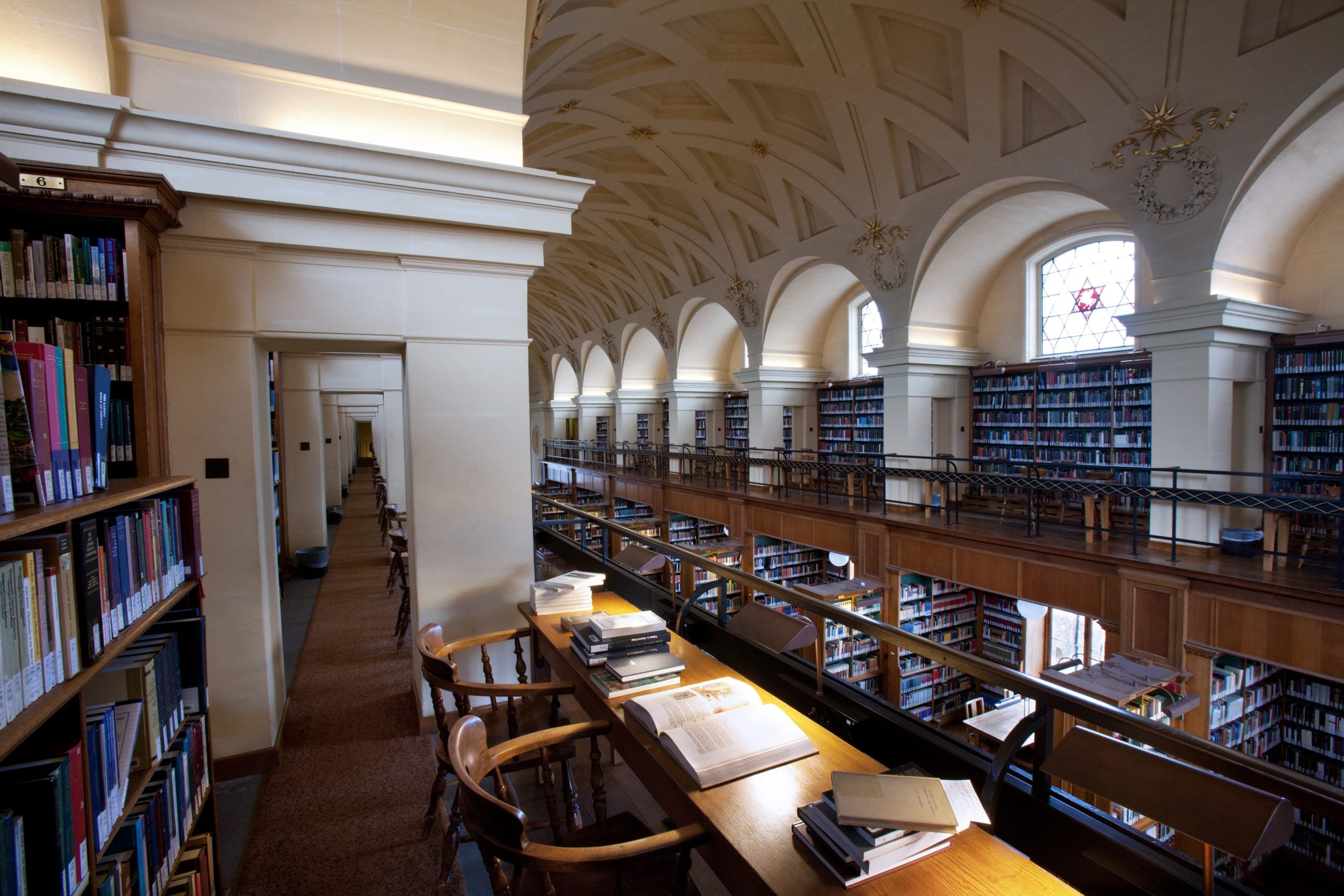
Year
03 / 03
3
Advanced papers and dissertation
You take 3 papers and write a dissertation of 8,000 to 10,000 words.
Section 10
Start with The Study of Language by George Yule if you want an accessible introduction. Use Language Files if you want a problem-rich introduction with exercises.
For a more rigorous introductory route, Linguistics: An Introduction to Language and Communication gives a broader technical foundation. Pair reading with puzzle work from the UK Linguistics Olympiad and the International Linguistics Olympiad.
Use the Cambridge Linguistics, BA (Hons) page as the primary official source when checking course details.

Section 11
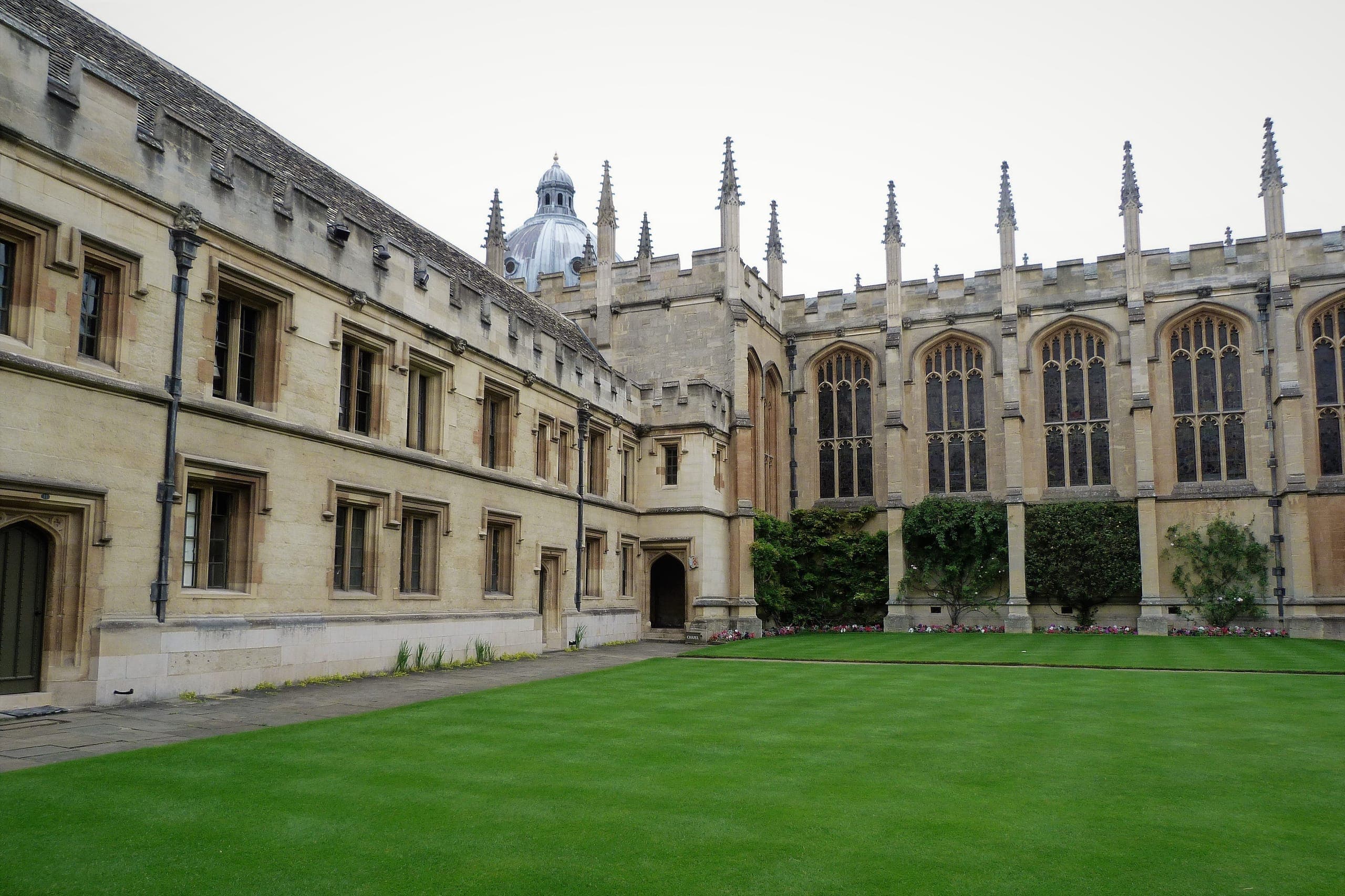
29 colleges offer this subject.
In the 2024 cycle, 10.2% of Cambridge applications were open applications, calculated as 2,257 open applications out of 22,153 total applications.
The Winter Pool matters because 20.7% of 2024 offers were via the Winter Pool, with 986 Winter Pool offers out of 4,760 total offers. Cambridge says that if a College is impressed by an application but does not have a place, it may share the application with other Colleges to consider.
For Linguistics, College choice can affect offer conditions, whether an admissions assessment is used, submitted-work requirements and interview arrangements.
Section 12
Cambridge says Linguistics graduates find employment in a wide range of professions and that the course develops transferable skills sought by employers. Cambridge lists recent graduates taking technology and computational language roles at Google, Amazon and Facebook.
Treat the employer examples as Cambridge-listed destinations rather than a guaranteed pathway from the degree.
Section 13
Cambridge considers contextual data and any extenuating circumstances. All applications are assessed carefully by the Cambridge Colleges, and College Admissions Tutors consider all available information together before making decisions.
Cambridge says it is most interested in academic ability, as shown in the applicant's most recent and relevant performance. If your school did not offer an essay-based subject, or if there was disruption affecting your study, make sure the relevant context is visible through the reference or Cambridge's appropriate process.
Watch & Learn
Student vlogs, mock interviews, lecture tasters, and admissions advice.
All videos are the property of their respective creators.
Further Reading
Super-curricular reading, websites, and tools recommended by our expert tutors.