Oxford Biological Sciences interview preparation

Free Interview Resources

Oxford Biological Sciences Interview Questions

Free practice questions, preparation advice, and expert insights for Biological Sciences interviews at Oxford.

2 interviews · tutorial-styleFormat

Sample Oxford Biological Sciences Interview Questions

Real Biological Sciences interview questions in the style Oxford asks. Try answering each one aloud before you reveal the hint.

01

Why do some habitats support higher biodiversity than others?

Problem-Solving

mid

Hint

Start by proposing measurable variables such as energy input, niche diversity, disturbance and isolation, then decide what evidence would distinguish them.

02

Describe what you can infer from a cactus specimen and a close-up photograph of its surface.

Problem-Solving

entry

Hint

Make observations first, then connect each visible feature to water balance, defence, photosynthesis or habitat.

03

Would you expect the compound shown to be more soluble in octanol or in water?

Problem-Solving

hard

Hint

Identify polar and non-polar regions, then reason from intermolecular interactions rather than trying to name the molecule.

04

Interpret the graph shown and explain what might account for the pattern.

Problem-Solving

hard

Hint

Describe the axes and trend first, then connect the pattern to ionisation, pH and solubility.

05

Why is sugar in your urine a good indicator that you might have diabetes?

Problem-Solving

mid

Hint

Link blood glucose, kidney filtration, reabsorption thresholds and insulin regulation before naming the condition.

Tutorial-style interviews with subject-specific problems, often involving unfamiliar material.

Oxford interviews typically take place at the college you applied to. You will usually have two or three interviews of around 20-30 minutes each, sometimes at different colleges if you are pooled. The atmosphere is meant to resemble a tutorial: the interviewer gives you a problem and watches how you reason through it.

20-30 minutes per interview2-3 interviews, sometimes at different colleges
  • -Expect to be given a passage, diagram, or problem you have not seen before and asked to think through it.
  • -Interviewers at Oxford will often push you until you get stuck. This is deliberate and is designed to see how you handle difficulty.
  • -Oxford tutorials involve deep 1-to-1 discussion, so showing you can engage in academic conversation is key.

Invitation → Decision: the interview timeline

Interview Invitation

Late Nov

Arrival to Interview

Early Dec

Technical Question

Mid Dec

Decision

Early Jan

Problem-Solving

2 questions
01

What is the concentration of water?

hard

Hint

Convert pure water from mass per litre to moles per litre, making your assumptions explicit.

02

How would you find out which colours a rat can distinguish?

mid

Hint

Design an experiment with controls, incentives, repeat trials and a way to rule out smell or brightness as confounds.

Conceptual & Discussion

8 questions
01

Why do many animals have stripes?

entry

Hint

List several possible functions before choosing the evidence that would separate camouflage, signalling, thermoregulation and parasite avoidance.

02

Is it easier for organisms to live in the sea or on land?

mid

Hint

Compare the physical constraints of each environment: support, desiccation, oxygen availability, reproduction, temperature and movement.

03

Why do a cat's eyes appear to glow in the dark?

entry

Hint

Think about eye anatomy, light reflection and the adaptive value of improving sensitivity in low light.

04

What is the significance of the human genome project?

mid

Hint

Distinguish scientific, medical, technological and ethical significance rather than giving a single headline benefit.

05

What problems do fish face underwater?

entry

Hint

Think across respiration, osmoregulation, buoyancy, movement, pressure, sensing and reproduction.

06

What evidence is there to suggest that humans are still evolving?

mid

Hint

Separate evidence for genetic change from cultural change, and try to name possible selection pressures or population-genetic signals.

07

What would you define as a species?

mid

Hint

Compare biological, morphological, phylogenetic and ecological species concepts, then test them against edge cases.

08

Explain the differences between bacteria and viruses.

entry

Hint

Compare structure, metabolism, reproduction, genome, treatment and dependence on host cells.

Personal Statement

1 questions
01

Why do you want to study Biology?

entry

Hint

Anchor the answer in a specific biological problem, reading or observation rather than in a generic love of science.

Curveball

3 questions
01

Why do lions have manes?

mid

Hint

Treat the mane as a trait with costs and benefits, then compare sexual selection, protection and signalling hypotheses.

02

Ladybirds are red. So are strawberries. Why?

mid

Hint

Do not assume the same explanation for both; compare warning colouration, attraction, dispersal and the visual systems of different receivers.

03

Why are there only twenty amino acids?

hard

Hint

Consider the genetic code, biochemical diversity, evolutionary history and whether the premise is strictly true.

Ethical & Judgement

2 questions
01

If you could save either the rainforests or the coral reefs, which would you choose?

mid

Hint

Define the decision criteria before answering: biodiversity, ecosystem services, irreversibility, human dependence and feasibility of intervention.

02

Would it matter if tigers became extinct?

mid

Hint

Separate ecological consequences from cultural, economic and moral arguments, then decide which evidence would change your answer.

12+ weeks

foundational breadth

  • Re-read core A-level Biology topics as mechanisms: evolution, genetics, cell biology, ecology, physiology and biochemistry.
  • Start a reading log for books, lectures, articles and podcasts, adding one reflection and one question for each item.
  • Identify two areas outside your current specification, such as conservation genetics, host-microbe biology or plant physiology.
  • Practise explaining one biological concept each week to a non-specialist without using memorised textbook wording.

8-12 weeks

data and experimental reasoning

  • Interpret unfamiliar graphs from biological articles, textbooks or public datasets and say your reasoning aloud.
  • Write mini experimental designs for questions about animal behaviour, adaptation, disease, ecology or genetics.
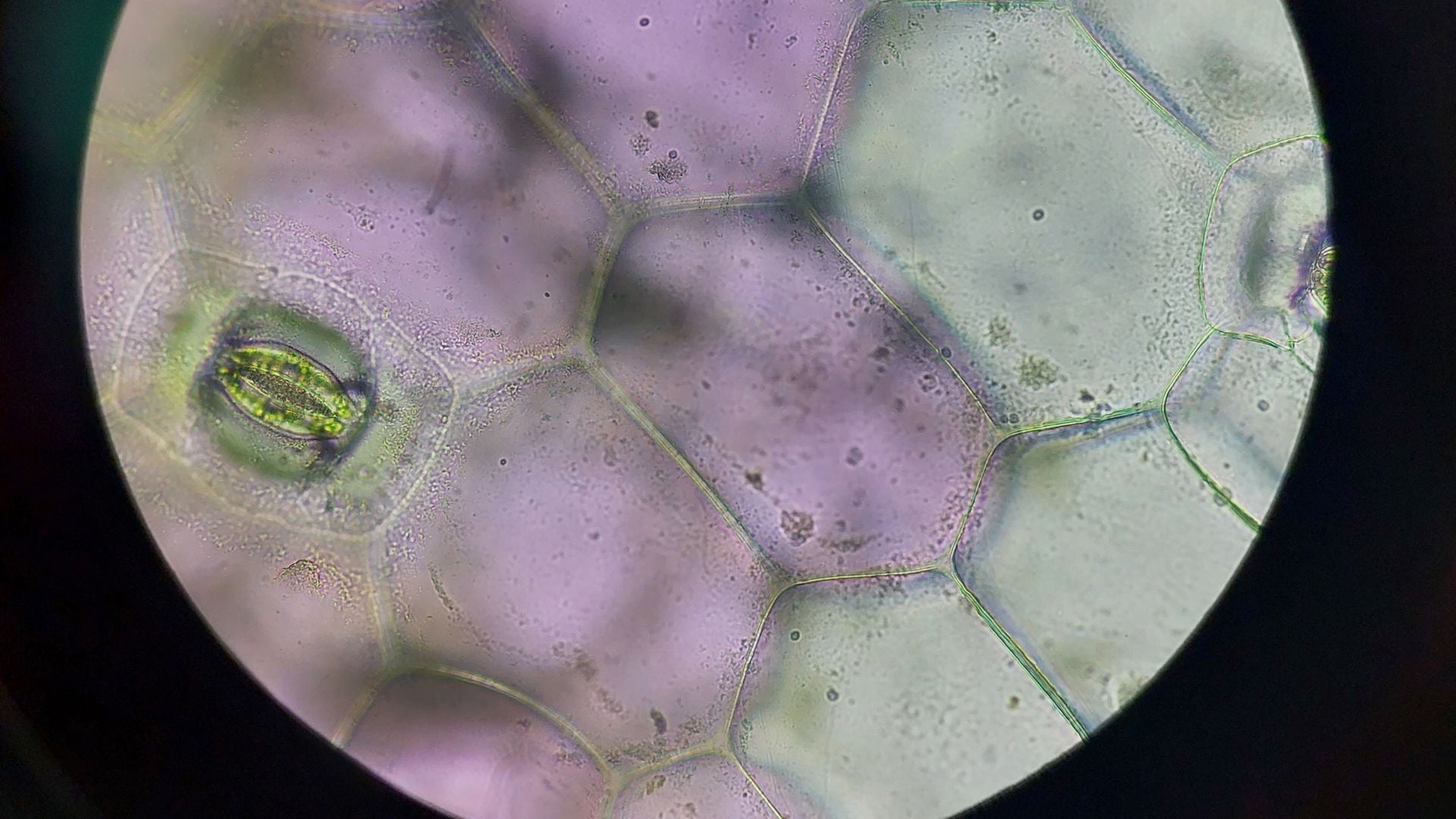
  • Practise observation-first prompts using organism photographs, microscope images or simple biological diagrams.
  • Create a bank of examples showing trade-offs, selection pressures and limitations of evidence.

4-6 weeks

tutorial-style discussion

  • Do weekly mock interviews where the interviewer interrupts, changes assumptions or asks for an alternative hypothesis.
  • Practise Oxford-style sample questions from the official Biology interview page without scripting final answers.
  • Revisit your personal statement and prepare to discuss every book, experiment, article or claim in it critically.
  • Record yourself answering a graph or diagram prompt, then check whether you described evidence before interpreting it.

1-2 weeks

online interview readiness

  • Check Microsoft Teams, microphone, camera, internet connection and the quiet place you will use for the interview.
  • Run one mock in the same room, device and setup you plan to use in December.
  • Review your reading log and personal statement for precise examples, not memorised speeches.
  • Practise calmly saying what you are thinking when stuck, including asking for clarification where appropriate.

the week of

logistics and composure

  • Confirm interview times, college communications and any additional-interview instructions.
  • Prepare paper, pens, water, ID if requested, and a printed or accessible copy of your personal statement for personal review only.
  • Sleep normally and avoid starting new Biology topics at the last minute.
  • Warm up with two short graph or observation prompts, then stop and preserve energy for the interview.

Unlock the full guide

  • The full Biological Sciences question bank, by category, with hints
  • A week-by-week preparation roadmap
  • The common mistakes that cost offers - and how to avoid them

Free Resource

The Complete Oxford Biological Sciences Interview Guide

Enter your email to unlock the full question bank, worked approaches, a week-by-week prep roadmap, and the mistakes that cost offers.

No spam. Unsubscribe anytime.

Watch & Learn

Oxford Biological Sciences Interview Videos

MBiol Biology course talk

Official department course talk embedded on the Oxford Biology undergraduate page.

All videos are the property of their respective creators.

Further Reading

Recommended Resources

Book

The Selfish Gene

by Richard Dawkins

Useful for gene-centred evolutionary reasoning, adaptation and debate around levels of selection.

Book

Life Ascending: The Ten Great Inventions of Evolution

by Nick Lane

Good preparation for linking molecular, cellular and evolutionary explanations across biological scale.

Book

Dr Tatiana's Sex Advice to All Creation

by Olivia Judson

Strong for evolutionary trade-offs, sexual selection and unusual organism examples that can generate interview discussion.

Book

The Serengeti Rules

by Sean B. Carroll

Connects molecular regulation with ecological regulation and helps students reason about systems and feedback.

Book

The Tangled Tree

by David Quammen

Helpful for thinking about evolution, microbes, horizontal gene transfer and how biological classifications change with evidence.

Website

Oxford Biology course page

by University of Oxford

Primary source for entry requirements, course structure, admissions statistics and interview/written-test status.

Website

Oxford Department of Biology undergraduate study page

by Department of Biology, University of Oxford

Adds department-level detail on tutorials, course aims, admissions process and Biology-specific interview expectations.

Website

Oxford Biology sample interview questions

by University of Oxford

Best official preparation source for the style of questions Biology tutors use.

Website

Oxford Supercurricular hub

by University of Oxford

Useful framework for exploring, engaging and reflecting on subject material beyond the curriculum.

Website

Oxford interview technology guidance

by University of Oxford

Confirms Biology is Tier 1 and helps candidates prepare the online setup.

Frequently Asked Questions

Use Biology. The live Oxford course page lists the course as Biology with UCAS code C100.
No. The official Biology course page states that there is no written test.
No. The official Biology course page states that written work is not required.
The Department of Biology states that candidates are always invited to interview at two different colleges. Oxford's central guidance also notes that applicants may have more than one interview and may be interviewed by more than one college.
Yes for the target cycle covered here. Oxford's 2027-entry guide states that shortlisted applicants will be invited to online interviews in December 2026, and Biology is listed as a Tier 1 online-interview subject.
For 2027 entry, the official course page lists A*AA at A-level and 39 including core points for the IB, with Biology and either Chemistry, Physics or Mathematics required.
The Biology course page gives a three-year average for 2021-2023: 48% interviewed, 15% successful and an average intake of 106. Note: This data is now 3+ years old; more recent 2024-26 statistics are recommended for current applicants.
No. Oxford states that the route, admissions criteria and selection process are the same for all applicants, although international applicants must check accepted qualifications, English-language requirements and visa guidance.
College choice does not change the degree or central course teaching. Oxford says colleges do not specialise in particular subjects, and around a third of successful applicants receive an offer from a college they did not specify.

Get Expert Oxford Biological Sciences Interview Coaching

1-to-1 mock interviews with Oxford graduates who know exactly what Biological Sciences interviewers look for.

Book a Free Session