
 SPARK
SPARK
Oxbridge Mentors × SPARK
The AI Research Fellowshipfor Oxbridge Computer Science Applicants
The AI Research Fellowship is an eight-week research programme we run in partnership with SPARK, for students applying to Computer Science and related courses at Oxford and Cambridge. Students work in small teams with a PhD researcher from Cambridge, Imperial or CISPA, and take a single research question from the initial reading through to a finished paper, prepared for submission to an international AI conference.
The fellowship runs alongside our admissions support, so the research, the personal statement and interview preparation are planned together from the start.
- Price
- From £2,000
- Length
- 8 weeks
- Commitment
- 8 to 10 hrs/week
- Next start
- 2 Nov 2026
- Format
- Fully online
The Team
Your AI Research Mentors
The fellowship is led by PhD researchers from the University of Cambridge, Imperial College London and CISPA, with research experience at Google DeepMind, Meta, Amazon and the AWS AI lab.

Ivaxi Sheth
CISPA · Imperial College London · Google DeepMind · Amazon
Researches causal reasoning in large language models and trustworthy machine learning, including how fairness, robustness and explainability interact. PhD at CISPA, previously Imperial College London, with research experience at Google DeepMind and Amazon.

Vatsal Raina
University of Cambridge · Meta
Researches question answering and retrieval, including how exam-style questions can be generated and marked automatically. PhD in the Machine Intelligence Laboratory at the University of Cambridge, with industry research at Meta.

Vyas Raina
University of Cambridge · AWS AI lab
Researches the robustness of large language models, including adversarial attacks and whether models can reliably assess other models’ work. Published at ACL and EMNLP. PhD in the Machine Intelligence Laboratory at the University of Cambridge, with applied research at the AWS AI lab.
Dates & Pricing
Upcoming Cohorts
Each cohort follows the same eight-week structure. Teams are capped at four students, so places are limited.
Oxbridge Mentors Students
From £2,000
per student, for the full eight weeks
- ·8 weekly lectures on core AI topics
- ·8 weekly team mentoring sessions
- ·8 weekly hands-on research workshops
- ·Support from the mentoring team between sessions
- ·A research paper prepared for conference submission
- ·Certificate of completion
Scholarship support is available in some cases. We can discuss this during your free consultation.
Autumn 2026
- Starts
- Monday 2 November 2026
- Register interest by
- Monday 26 October 2026
- Programme ends
- Friday 25 December 2026
Spring 2027
- Starts
- Monday 4 January 2027
- Register interest by
- Monday 28 December 2026
- Programme ends
- Friday 26 February 2027
Each cohort runs the same eight-week structure. Speak to us about which cohort suits your year group.
Get in Touch
Have a Question? Speak to Our Team.
Ask us about start dates, whether the fellowship suits your background, or how it fits with the rest of your application.
+44 7537 143015Prefer email? info@oxbridgementors.co.uk
The Programme
What Students Come Away With
Each week combines a lecture, a mentoring session on the team's own project and a hands-on workshop. By the eighth week, every team has a finished paper.
A Finished Research Paper
Each team takes one research question from the initial reading through to a full write-up, prepared for submission to an international AI conference.
Hands-On Technical Skills
Students write and run their own code, work with and fine-tune large language models, design experiments and analyse their results.
Weekly Mentoring
Every week includes a dedicated session with a PhD researcher who publishes in the field, with support available between sessions.
Real Depth for Interviews
Students finish with a project they understand thoroughly and can discuss in detail, in their personal statement and at interview.
Research Areas Covered
Over eight weeks, students work across the areas that modern AI research is built on.
- Machine learning fundamentals
- Transformers and large language models
- Prompting and fine-tuning
- Parameter-efficient methods such as LoRA
- Retrieval-augmented generation
- Multimodal AI
- AI agents and tool use
- Evaluation and benchmarking
- Uncertainty and hallucination
- AI safety and adversarial robustness
- Reproducible experiments
- Academic writing and peer review
For Oxbridge Applicants
Research Projects and Your Oxford or Cambridge Application
Oxford and Cambridge look for applicants who engage with their subject well beyond the school syllabus. For Computer Science and related courses, an independent research project is a strong way to show that engagement, and it gives students real substance to draw on at every stage of the application.
In Your Personal Statement
The UCAS personal statement asks what you have done outside of education to prepare for your course, and why it was useful. A research project gives you something specific to write about: the question you investigated, what you built, and what you learned from the results.
At Interview
Computer Science interviews at Oxford and Cambridge centre on problem solving, and interviewers may ask about anything in your personal statement. Students who have worked through a real research question are used to reasoning carefully about problems they have not seen before, and to explaining their thinking as they go.
Beyond the Application
Reading academic papers, programming in Python, designing experiments and analysing results are the same skills students go on to use in the first year of a Computer Science degree.
Read our guide to super-curricular activities for Oxbridge →
Suitable Courses
Courses the Fellowship Suits
The fellowship is designed with Computer Science applicants in mind, and suits the courses below. It is also a good fit for Mathematics, Engineering and other quantitative courses with a strong interest in AI.

University of Oxford
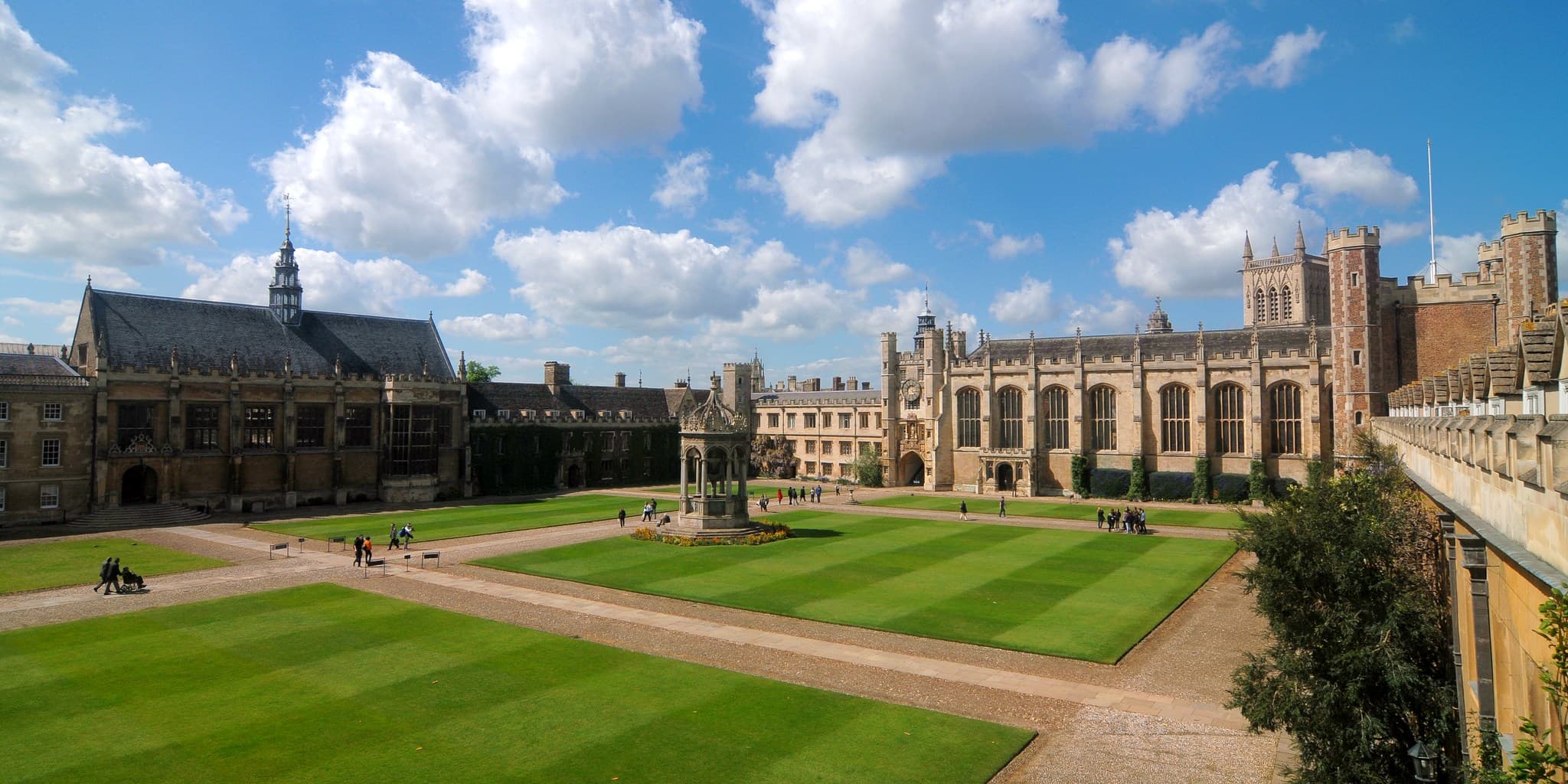
University of Cambridge

Imperial College London
Research
- · Lectures
- · Workshops
- · Weekly mentoring
- · The research paper
Application
- · Admissions tests
- · Personal statement
- · Mock interviews
- · Planning and advice
Our Partnership
How the Partnership Works
The fellowship combines research mentoring from SPARK with admissions support from Oxbridge Mentors. Students benefit from both, and we plan the two together so that each supports the other.
Research Led by SPARK
The lectures, workshops and weekly mentoring are delivered by SPARK’s PhD researchers, who guide each team from the first reading to the final paper.
Application Support From Oxbridge Mentors
Our tutors, all Oxford or Cambridge graduates, support students with admissions test preparation, the personal statement and interview practice, including how to talk about their research.
One Team to Speak To
Enquiries and planning start with us, so families have a single point of contact for how the fellowship fits into the rest of the application year.
Why SPARK
Why We Partnered With SPARK
Researchers Working in the Field
Every mentor is a PhD researcher with published work at major AI conferences, including ACL and EMNLP. Their publication records are public on Google Scholar.
A Current Curriculum
The programme covers the areas the field is working on now, including language models, retrieval, fine-tuning, AI agents and model evaluation.
Small Teams
Students work in teams of two to four with a dedicated mentor, so each weekly mentoring session is focused on their own project.
Planned Around the Application
At eight to ten hours a week and fully online, the fellowship fits alongside school. We plan it around admissions tests and interviews with each student.
- PhD
- research mentors
- ACL · EMNLP
- mentor publications
- 2 to 4
- students per team
- 8 weeks
- fully online
How It Works
Three Sessions Each Week
The fellowship takes around 8 to 10 hours a week, including the sessions and the team's own reading, coding and experiments. Session times are agreed with each cohort.

Lecture · the concept
A short foundational lecture on one core idea, from transformers and how large language models are trained through to world models.

Mentoring · the project
A team session with the mentor, focused on the research project and the progress made that week.

Workshop · a practical skill
A hands-on session covering the research skill needed at that stage, from literature reviews to reproducible experiments.
Programme Outline
The Eight Weeks
★ Mentoring sessions are tailored to each project. The focus shown for each week is typical, and the mentor adapts every session to the team's progress.
Lecture · the concept
What is machine learning? How systems learn from data rather than rules: supervised and unsupervised learning, training and inference, and why neural networks have become so powerful.
Mentoring · the project ★
Project framing. The team meets its mentor, agrees the broad research question and ways of working, and divides the initial reading. By the end of the week there is a shared Overleaf project and the start of a literature review.
Workshop · a practical skill
Research foundations: finding papers on Google Scholar, arXiv and Semantic Scholar, reading an academic paper, running a literature review, and managing citations in Overleaf.
Lecture · the concept
How ChatGPT works: tokenisation, embeddings, attention, transformer blocks, pretraining and instruction tuning.
Mentoring · the project ★
From reading to a plan. The team identifies a gap in the literature, narrows the scope and agrees a first experiment. By the end of the week there is a written research question and hypothesis.
Workshop · a practical skill
Setting up for experiments: configuring cloud accounts, running models through an API, and mapping out the first set of experiments.
Lecture · the concept
Adapting large language models: prompting, few-shot learning, retrieval-augmented generation, fine-tuning, and parameter-efficient methods such as LoRA.
Mentoring · the project ★
The first experimental pipeline. The team builds and debugs its setup and agrees how results will be recorded. By the end of the week a first experiment is running end to end.
Workshop · a practical skill
Prompt engineering: few-shot prompting, structured output, and building a reliable, reproducible code pipeline.
Lecture · the concept
Multimodal AI: vision-language models, image generation, speech and video, and how these systems work with more than text.
Mentoring · the project ★
Refining the design. The team reviews its first results, looks at where the approach fails, and plans stronger baselines, metrics or datasets.
Workshop · a practical skill
Evaluation and error analysis: defining success, designing an evaluation rubric, and comparing human evaluation with automated judging.
Lecture · the concept
AI agents: tool use, planning, memory and function calling, and when an agent should decide not to act.
Mentoring · the project ★
Core results. The team runs larger experiments, adds baselines and ablations, and begins error analysis. By the end of the week there is a first complete results table.
Workshop · a practical skill
Understanding results: reviewing the first findings, identifying where and why models fail, and categorising failure modes.
Lecture · the concept
Trust in AI: benchmarks, calibration, uncertainty and hallucination, and why evaluation is harder than it first appears.
Mentoring · the project ★
From results to claims. The team establishes what the evidence supports and structures the paper around its main contribution. A first full draft is underway.
Workshop · a practical skill
Writing up: how an AI conference paper is structured, presenting results clearly, and designing figures and tables.
Lecture · the concept
When AI goes wrong: bias, jailbreaks, prompt injection, adversarial examples and robustness, and why safety is a technical research problem.
Mentoring · the project ★
Final experiments and revision. The team completes its remaining experiments, strengthens the analysis and revises the draft for review.
Workshop · a practical skill
Robust results: repeated runs and variance, choosing baselines that isolate the contribution, and organising code so results can be reproduced.
Lecture · the concept
AI and science: world models, reasoning, theorem proving, scientific discovery and the future of AI research.
Mentoring · the project ★
Presentation and submission. The team finalises the paper and presents the project to the cohort.
Workshop · a practical skill
Submission and peer review: how AI conferences review papers, writing a strong title and abstract, and preparing the final presentation.
Your Application
Support for Every Stage of Your Application
The fellowship is one part of a wider plan. Our tutors support students through every other stage of the application, and we time the fellowship so it works alongside each of them.

Admissions Tests →
TMUA and ESAT preparation with Oxbridge graduates, planned around the October test dates.

Personal Statements →
Support in writing about the research clearly and specifically, in the student’s own words.

Mock Interviews →
Realistic Computer Science interview practice with Oxford and Cambridge graduates.